

U.S. President Donald Trump issued an Executive Order.
GK and monthly revision
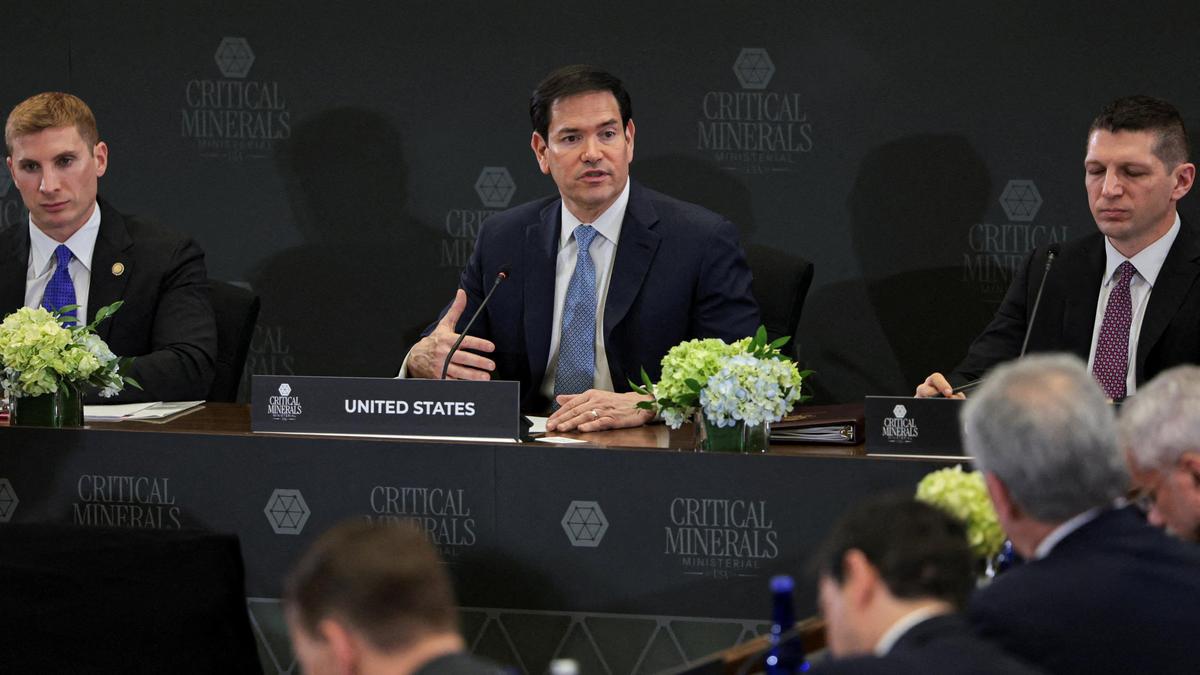
Very excited to invite India to join Pax Silica, says top U.S. official
U.S. President Donald Trump issued an Executive Order removing the punitive 25% tariffs previously imposed on India. These tariffs were levied due to India's purchases of Russian oil, marking a significant policy shift in U.S.-India trade relations. This decision impacts India's energy security and its geopolitical standing, making it a key development for competitive exam preparation focusing on international affairs and economics.
Revision structure
Monthly events and exam calendar context
Static GK and one-liner notes
Quiz and mock-test revision path
Key points
Exam-ready takeaways
The Executive Order specifically removed punitive tariffs.
The tariffs that were removed amounted to 25%.
These 25% tariffs were previously imposed on India.
The tariffs were linked to India's purchases of Russian oil.
Detailed analysis
Full exam-oriented breakdown
The recent Executive Order by former U.S. President Donald Trump, which removed the punitive 25% tariffs previously imposed on India for its purchases of Russian oil, marks a significant development in global geopolitics and India's strategic autonomy. This decision, though attributed to the Trump administration, reflects broader shifts in international relations and the recognition of India's growing strategic importance. **Background Context: Navigating Sanctions and Energy Needs** To fully grasp the significance, we must understand the context in which these tariffs were imposed. The primary driver behind potential U.S. sanctions on countries dealing with Russia, Iran, and North Korea is the Countering America's Adversaries Through Sanctions Act (CAATSA), enacted in 2017. CAATSA aims to deter countries from engaging in significant transactions with these nations, particularly in the defense and energy sectors, by imposing secondary sanctions. India, with its long-standing defense ties with Russia (dating back to the Cold War era) and its substantial energy import needs, found itself in a precarious position. Despite numerous waivers granted by the U.S. to various allies, the threat of CAATSA sanctions, including tariffs, loomed large over India's purchases of Russian S-400 missile defense systems and, as seen here, Russian oil. India is the world's third-largest energy consumer and is heavily dependent on imports to meet its oil and gas requirements, importing over 85% of its crude oil. Diversifying its energy sources and ensuring energy security is a paramount national interest. Russia, a major global oil producer, became an increasingly attractive option, especially when offered at discounted rates, as was often the case following geopolitical events like the conflict in Ukraine. **What Happened: A Policy Reversal** The article highlights that U.S. President Donald Trump issued an Executive Order to remove these specific punitive 25% tariffs. While the immediate trigger for this specific tariff imposition isn't detailed in the quick summary, it's clear it was a direct consequence of India's decision to continue or increase its purchases of Russian oil, likely in defiance of broader U.S. pressure or sanctions regimes related to the Russia-Ukraine conflict. The removal of these tariffs signals a strategic reconsideration by the U.S., potentially acknowledging India's unique geopolitical position and its critical role in the Indo-Pacific strategy. **Key Stakeholders and Their Motivations** 1. **United States (President Donald Trump/Administration):** The U.S. aims to maintain global leadership, counter perceived adversaries (like Russia), and align allies with its foreign policy objectives. The imposition of tariffs was a tool to exert pressure. The removal, however, suggests a shift—perhaps a recognition of India's indispensability as a strategic partner, a desire to strengthen bilateral ties, or an understanding of India's legitimate energy security concerns. It could also be a pragmatic move to ensure India remains aligned with U.S. interests in other areas, such as counterbalancing China. 2. **India (Government, Oil Companies, Consumers):** India's primary motivation is to secure its energy needs at competitive prices while maintaining its strategic autonomy. The government's decision to purchase Russian oil, despite U.S. objections, underscores its commitment to national interests. Indian oil companies benefit from diverse supply sources, and consumers benefit from stable, affordable energy. The removal of tariffs is a significant relief, reducing import costs and easing potential economic burdens. 3. **Russia:** As a major oil exporter, Russia seeks to maintain its market share and economic ties, especially with large consumers like India. India's continued purchases, even under U.S. pressure, are vital for Russia's economy and its geopolitical influence. **Significance for India: A Testament to Strategic Autonomy** This development holds immense significance for India. Firstly, it's a boost for **energy security**. The removal of tariffs means India can continue to purchase Russian oil without incurring additional costs, helping to stabilize energy prices and manage inflation. This diversification of energy sources reduces reliance on any single region, making India less vulnerable to geopolitical shocks in the Middle East or other traditional supply hubs. Secondly, it reinforces India's **strategic autonomy**. By successfully navigating U.S. pressure and securing a waiver or removal of tariffs, India demonstrates its ability to pursue an independent foreign policy, balancing its relationships with multiple global powers. This is a crucial aspect of India's foreign policy doctrine, often termed 'multi-alignment' or 'strategic autonomy,' where it seeks to maximize its options without being tethered to any single bloc. Thirdly, it positively impacts **India-U.S. bilateral relations**. While sanctions create friction, their removal signals a willingness from the U.S. to accommodate India's unique position, fostering trust and potentially paving the way for deeper cooperation in other strategic areas, such as defense technology transfer, trade, and regional security in the Indo-Pacific. **Historical Context and Broader Themes** Historically, India has pursued a policy of non-alignment during the Cold War, maintaining ties with both the U.S. and the USSR. In the post-Cold War era, this has evolved into strategic autonomy, where India prioritizes its national interests and engages with various partners on its own terms. This incident underscores the challenges and successes of this approach in a multipolar world. It also highlights the broader theme of **energy geopolitics**, where energy resources are often intertwined with political leverage and international relations. India's robust democratic framework and economic potential make it a crucial player that the U.S. finds hard to isolate. **Future Implications** Looking ahead, this decision could set a precedent for how the U.S. approaches sanctions against its strategic partners. It suggests a more nuanced approach, where the U.S. might be willing to offer flexibility to allies whose cooperation is deemed more valuable than strict adherence to sanctions regimes. For India, it reinforces the confidence to continue its path of strategic autonomy, diversifying its defense and energy partners. However, India must remain vigilant, as U.S. policy can shift with administrations. India will likely continue to explore domestic energy sources, invest in renewable energy, and diversify its global oil suppliers to further bolster its energy security and reduce future vulnerabilities to external pressures. While direct Indian constitutional articles are not directly invoked by U.S. tariffs, India's foreign policy is guided by the **Directive Principles of State Policy** (Part IV of the Constitution), particularly **Article 51**, which promotes international peace and security, fosters respect for international law, and encourages settlement of international disputes by arbitration. India's trade policies are framed within its international commitments, including those under the World Trade Organization (WTO). The government's actions reflect its executive power in conducting foreign relations, as outlined in **Article 73** of the Constitution.
How to study
Turn news into exam marks
Revise monthly events by exam family instead of reading random updates.
Pair one-liners with mock tests so mistakes become the next revision list.
Keep state job pages, calendar pages and GK packs connected in one path.