

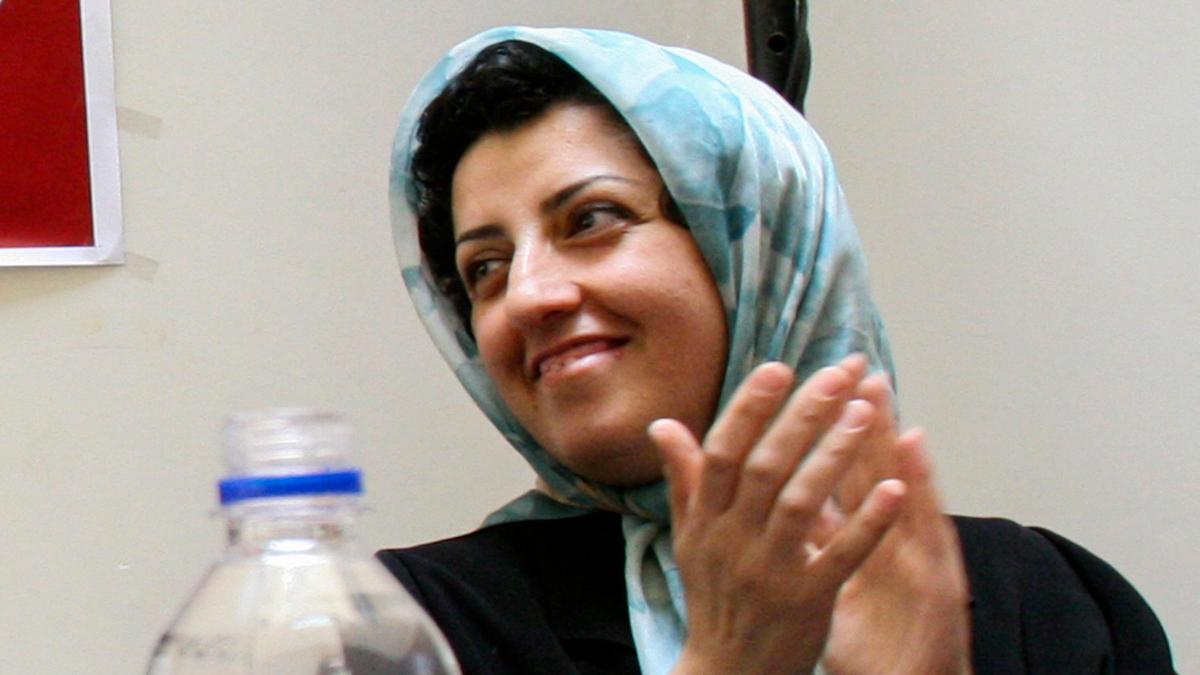
Nobel Peace laureate Narges Mohammadi was sentenced to six years in prison.
GK and monthly revision
Iran sentences Nobel peace laureate Mohammadi to six years in prison: lawyer
Iranian Nobel Peace laureate Narges Mohammadi has been sentenced to six years in prison on charges of "gathering and collusion to commit crimes," her lawyer Mostafa Nili confirmed. This sentencing, which also includes a two-year travel ban, underscores Iran's severe crackdown on dissent and human rights activism. It is crucial for competitive exams focusing on international affairs, human rights, and significant global figures, especially Nobel laureates.
Revision structure
Monthly events and exam calendar context
Static GK and one-liner notes
Quiz and mock-test revision path
Key points
Exam-ready takeaways
She is an Iranian human rights activist.
The charges against her were "gathering and collusion to commit crimes."
An additional penalty includes a two-year ban on her leaving Iran.
Her lawyer, Mostafa Nili, announced the sentencing.
Detailed analysis
Full exam-oriented breakdown
The sentencing of Nobel Peace laureate Narges Mohammadi to six years in prison by the Iranian authorities on charges of "gathering and collusion to commit crimes" is a stark reminder of the ongoing human rights challenges in Iran and the global struggle for freedom of expression. This event, while specific to Iran, carries significant implications for international relations, human rights advocacy, and India's foreign policy considerations, making it a crucial topic for competitive exam aspirants. **Background: A Voice for Freedom** Narges Mohammadi is a prominent Iranian human rights activist and journalist who has dedicated her life to advocating for women's rights, the abolition of the death penalty, and freedom of expression in Iran. Her activism has come at a severe personal cost, marked by numerous arrests, imprisonments, and a deteriorating health condition. Mohammadi served as the vice-president of the Defenders of Human Rights Center, founded by fellow Nobel Peace laureate Shirin Ebadi. Her relentless efforts to expose the plight of political prisoners, torture, and the systemic discrimination against women in Iran led to her being awarded the Nobel Peace Prize in October 2023, while she was already incarcerated. The Nobel Committee recognized her "fight against the oppression of women in Iran and her fight to promote human rights and freedom for all." **The Charges and Sentencing** The latest sentencing, confirmed by her lawyer Mostafa Nili, adds six years to her already extensive prison terms. The charges, "gathering and collusion to commit crimes," are frequently used by the Iranian judiciary to suppress peaceful dissent. In addition to the prison term, Mohammadi has been handed a two-year ban on leaving the country, further restricting her ability to speak out or seek medical treatment abroad. This pattern of repeated arrests, trials, and lengthy sentences against activists like Mohammadi underscores the Iranian government's firm stance against internal opposition, viewing any form of organized protest or advocacy as a threat to national security. **Key Stakeholders in Focus** At the heart of this situation are **Narges Mohammadi** herself, representing the resilience of human rights defenders; the **Iranian government and its judiciary**, which act to enforce state control and silence dissent; and the **international community**, including the United Nations, human rights organizations like Amnesty International, and various Western governments, which have largely condemned Iran's actions. Mohammadi's lawyer, Mostafa Nili, plays a critical role in navigating the complex legal system and bringing these developments to international attention. The Iranian government views such activists as threats to national stability and portrays their actions as collaboration with foreign adversaries, often dismissing international criticism as interference in its internal affairs. **Why This Matters for India** For India, this event presents a complex diplomatic challenge. While India upholds democratic values and human rights as enshrined in its own Constitution, its foreign policy often balances these ideals with strategic and economic interests. Iran is a crucial partner for India, particularly concerning energy security and connectivity projects like the Chabahar Port and the International North-South Transport Corridor (INSTC). These projects are vital for India's access to Afghanistan and Central Asia, bypassing Pakistan. Therefore, India's response to human rights issues in Iran tends to be measured, often advocating for human rights through multilateral forums rather than direct condemnation, to avoid jeopardizing its strategic partnerships. However, the sentencing of a Nobel laureate on charges related to peaceful activism does put pressure on India to articulate its commitment to universal human rights principles, aligning with Article 51 of the Indian Constitution, which promotes international peace and security and respect for international law. **Historical Echoes and Broader Themes** Mohammadi's ordeal is not an isolated incident but part of a long history of state suppression of dissent in Iran, particularly since the 1979 Islamic Revolution. The "Woman, Life, Freedom" protests that erupted in 2022 following the death of Mahsa Amini in morality police custody further highlighted the deep-seated grievances against the regime's strict social controls and lack of fundamental freedoms. Mohammadi's activism directly supported these movements, advocating for women's autonomy and challenging the compulsory hijab laws. This situation connects to broader themes of governance, civil liberties, the role of women in society, and the conflict between state sovereignty and universal human rights. **Constitutional and International Frameworks** From an Indian perspective, this case resonates with the fundamental rights guaranteed by the Indian Constitution, particularly **Article 19 (Freedom of Speech and Expression)** and **Article 21 (Protection of Life and Personal Liberty)**. While these apply domestically, they inform India's moral stance on human rights globally. Additionally, **Article 51** of the Indian Constitution directs the state to foster respect for international law and treaty obligations, which include instruments like the Universal Declaration of Human Rights (UDHR) and the International Covenant on Civil and Political Rights (ICCPR), both of which guarantee rights such as freedom of assembly and expression, and to which Iran is a signatory, albeit with reservations and criticisms regarding its implementation. The international community often invokes these instruments when criticizing Iran's human rights record. **Future Implications** Mohammadi's continued imprisonment and repeated sentencing signal Iran's unwavering resolve to maintain its internal security apparatus and suppress any form of organized opposition. This could further isolate Iran internationally, particularly from Western countries, and complicate diplomatic efforts on issues like its nuclear program. Internally, it may embolden some hardliners while potentially further fueling public discontent. For human rights activists, it serves as a grim reminder of the risks involved but also as a source of inspiration, as Mohammadi herself continues to speak out from behind bars. The international community faces the challenge of finding effective ways to pressure Iran without undermining critical diplomatic engagements or exacerbating regional tensions. The long-term implications will depend on the interplay of internal dissent, government response, and global diplomatic pressure.
How to study
Turn news into exam marks
Revise monthly events by exam family instead of reading random updates.
Pair one-liners with mock tests so mistakes become the next revision list.
Keep state job pages, calendar pages and GK packs connected in one path.