

A significant trade deal framework has been announced between India and the United States.
GK and monthly revision
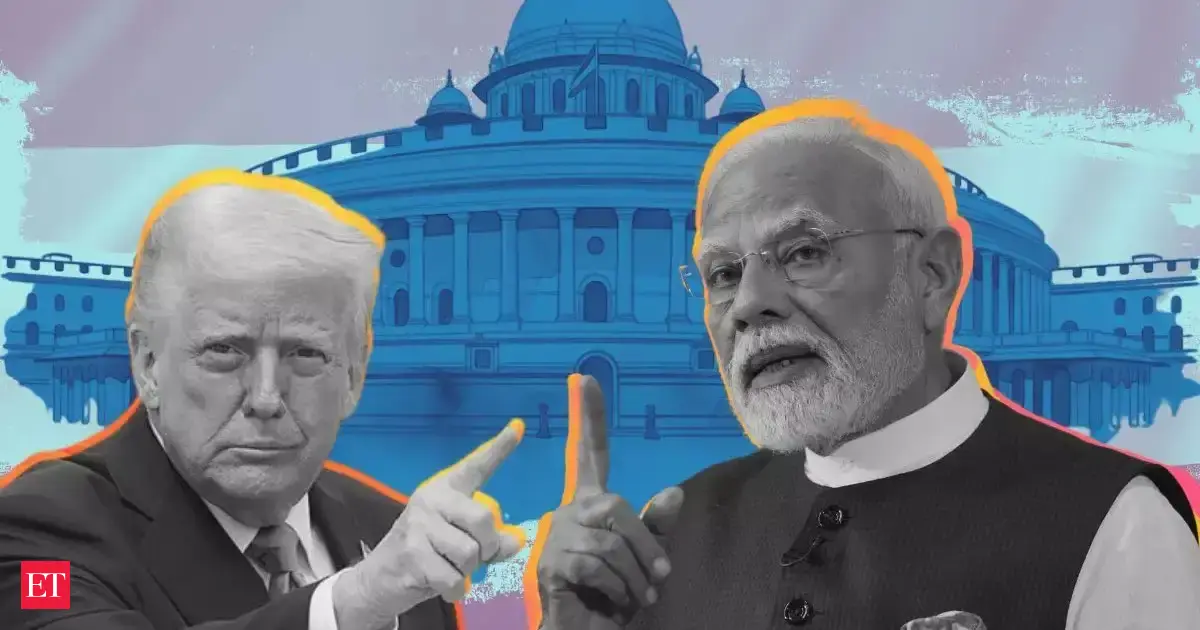
India–US trade deal: US envoy hails Modi, Trump’s leadership
A significant trade deal framework has been announced between India and the United States, aimed at reducing trade barriers and tariffs. This agreement seeks to open India's market to American products, marking a new era in US-India economic relations. US Ambassador Sergio Gor praised the leadership of President Donald Trump and Prime Minister Narendra Modi for this development, which is crucial for understanding bilateral economic policy.
Revision structure
Monthly events and exam calendar context
Static GK and one-liner notes
Quiz and mock-test revision path
Key points
Exam-ready takeaways
The agreement aims to reduce trade barriers and tariffs between the two nations.
It is designed to open India's market for American products.
US Ambassador Sergio Gor praised President Donald Trump and Prime Minister Narendra Modi for their leadership.
This framework signifies a new era in US-India economic relations.
Detailed analysis
Full exam-oriented breakdown
The announcement of a significant trade deal framework between India and the United States marks a crucial juncture in their bilateral economic relations. This development, hailed by US Ambassador Sergio Gor, underscores the commitment of both President Donald Trump and Prime Minister Narendra Modi to deepen economic ties, moving beyond previous trade frictions. The core objective of this framework is to reduce trade barriers and tariffs, thereby facilitating greater market access for products from both nations, particularly opening India's market to American goods. **Background and Historical Context:** India-US trade relations have seen remarkable growth over the past two decades, with bilateral trade in goods and services reaching nearly $160 billion in 2019-2020. However, this growth has often been accompanied by persistent trade disputes and disagreements. The US has frequently raised concerns about India's high tariffs, non-tariff barriers, and market access restrictions in sectors like agriculture, medical devices, and dairy. India, on its part, has voiced concerns over visa issues, subsidies provided by the US, and the withdrawal of its Generalized System of Preferences (GSP) status by the US in June 2019. The GSP program, which allowed duty-free entry for certain Indian products into the US, was a significant point of contention, leading to retaliatory tariffs from India on 28 US products. These tensions necessitated renewed negotiations, with both sides seeking a limited trade package that could pave the way for a more comprehensive Free Trade Agreement (FTA) in the future. **What Happened and Key Stakeholders:** This announced framework is essentially a preliminary agreement, likely addressing specific long-standing irritants rather than a full-fledged FTA. It aims to reduce tariffs on certain American products entering India and potentially offer market access for Indian goods in the US. Key stakeholders include: 1. **Governments of India and the US:** The primary architects and negotiators of the deal, represented by their respective trade ministries (Ministry of Commerce and Industry in India, and the Office of the United States Trade Representative - USTR). Their motivation is to boost economic growth, strengthen strategic partnerships, and deliver on promises of job creation and market expansion. 2. **Indian Industries and Consumers:** While some sectors (e.g., IT, pharmaceuticals, textiles) might gain from increased access to the US market, others, particularly in agriculture, dairy, and medical devices, could face increased competition from cheaper or technologically superior American imports. Consumers might benefit from a wider array of products and potentially lower prices. 3. **American Industries and Consumers:** US agricultural producers (e.g., dairy, almonds, apples), medical device manufacturers, and industrial goods sectors stand to gain from reduced tariffs and greater market penetration in India. American consumers could benefit from a wider range of Indian goods. 4. **US Ambassador Sergio Gor:** As a diplomatic representative, his praise highlights the political significance and diplomatic efforts involved in reaching this framework. **Significance for India:** This trade framework holds multifaceted significance for India: * **Economic Boost:** Reduced trade barriers can stimulate bilateral trade, potentially boosting India's exports and attracting more Foreign Direct Investment (FDI) from the US, crucial for job creation and economic growth, especially in the context of the 'Make in India' and 'Atmanirbhar Bharat' initiatives. It also helps diversify India's trade basket. * **Strategic Partnership:** A robust economic relationship underpins the broader strategic partnership between India and the US, particularly important in the Indo-Pacific region where both nations share concerns regarding regional security and stability. This deal reinforces India's position as a key global player. * **Addressing Trade Deficit:** While the US has a trade deficit with India in goods, India has a deficit in services. A balanced trade deal can help both nations address their respective trade imbalances. * **Domestic Reforms:** To fully leverage such agreements, India may need to undertake further domestic reforms to enhance competitiveness and ease of doing business. **Constitutional and Policy Context:** From a constitutional perspective, international agreements fall under the ambit of the Union Government. **Article 253** of the Indian Constitution empowers Parliament to make laws for implementing any international treaty, agreement, or convention. Any changes to tariffs or trade regulations arising from this deal would likely require legislative action or executive orders within the framework of existing laws like the **Customs Act, 1962**, and India's **Foreign Trade Policy (FTP)**. The deal operates within India's broader economic policies such as 'Make in India' and 'Atmanirbhar Bharat Abhiyan', aiming to balance the promotion of domestic manufacturing with global integration. The Seventh Schedule of the Constitution places 'Foreign Affairs' (Entry 10) and 'Trade and commerce with foreign countries' (Entry 41) in the Union List, underscoring the central government's exclusive jurisdiction over such matters. **Future Implications:** This framework could be a significant step towards a more comprehensive Free Trade Agreement (FTA) between India and the US, which has been a long-standing aspiration. A successful implementation of this limited deal would build trust and momentum for future, more ambitious negotiations. It also signals India's continued engagement with bilateral trade agreements, even as multilateral trade bodies like the WTO face challenges. However, the exact impact will depend on the details of the agreement, its implementation, and the ability of Indian industries to adapt to increased competition. The evolving geopolitical landscape and changes in political leadership in both countries will also influence the long-term trajectory of this economic partnership. It is a testament to the deepening strategic convergence between the two largest democracies, transcending specific administration tenures.
How to study
Turn news into exam marks
Revise monthly events by exam family instead of reading random updates.
Pair one-liners with mock tests so mistakes become the next revision list.
Keep state job pages, calendar pages and GK packs connected in one path.