

India and the U.S. are engaged in discussions for an interim trade deal.
GK and monthly revision
India-U.S. interim trade deal: Closely engaged with America for electronics and IP, Union Minister Vaishnaw says
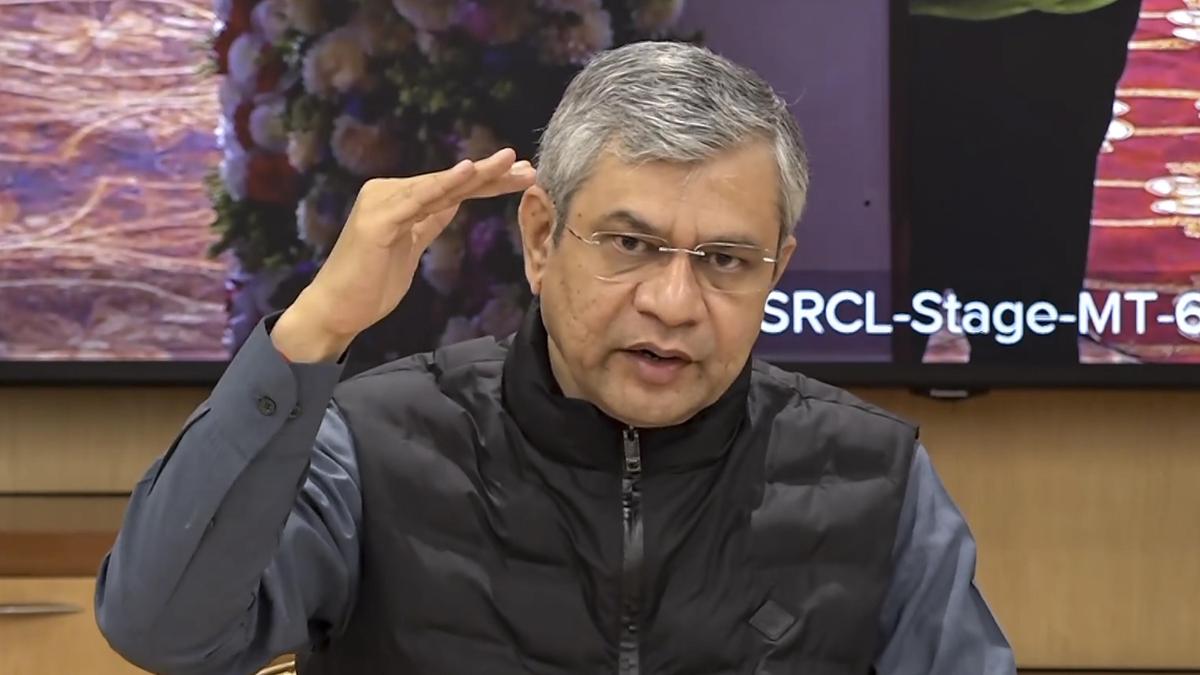
India and the U.S. are closely engaged in discussions for an interim trade deal, focusing on critical areas like electronics and Intellectual Property (IP). Union Minister Vaishnaw highlighted these ongoing talks, which specifically address and aim to remove trade barriers concerning U.S. medical devices and Information and Communication Technology (ICT) goods. This engagement is crucial for strengthening bilateral trade relations and understanding India's economic diplomacy for competitive exams.
Revision structure
Monthly events and exam calendar context
Static GK and one-liner notes
Quiz and mock-test revision path
Key points
Exam-ready takeaways
The discussions are led by Union Minister Vaishnaw from the Indian side.
Key focus areas of engagement include electronics and Intellectual Property (IP).
The joint statement specifically mentions barriers related to trade in U.S. medical devices.
Trade barriers concerning U.S. Information and Communication Technology (ICT) goods are also a point of discussion.
Detailed analysis
Full exam-oriented breakdown
The ongoing discussions between India and the United States for an interim trade deal, particularly focusing on crucial sectors like electronics and Intellectual Property (IP), signify a maturing and strategically important economic partnership. This engagement, highlighted by Union Minister Ashwini Vaishnaw, aims to dismantle trade barriers for U.S. medical devices and Information and Communication Technology (ICT) goods, laying the groundwork for deeper economic integration. **Background Context and Historical Trajectory:** India-U.S. trade relations have seen significant evolution since India's economic liberalization in 1991. While traditionally marked by periods of both cooperation and friction, the relationship gained strategic momentum in the 21st century, especially after the 2005 Civil Nuclear Deal. However, trade tensions escalated during the Trump administration, notably with the U.S. revoking India's Generalized System of Preferences (GSP) status in 2019, impacting Indian exports. Despite these hurdles, both nations have recognized the imperative of a robust trade relationship, driven by shared democratic values, geopolitical alignments (like the Quad), and the need for resilient supply chains, especially post-pandemic. The current engagement for an interim deal is a pragmatic step to address immediate concerns and build trust before potentially pursuing a more comprehensive Free Trade Agreement (FTA). **What's Happening Now and Key Focus Areas:** Union Minister Ashwini Vaishnaw's statements underscore the active engagement between New Delhi and Washington. The core of these discussions revolves around an 'interim trade deal' – a limited scope agreement designed to quickly resolve specific trade irritants and facilitate easier market access. The explicit mention of electronics and Intellectual Property (IP) as key focus areas is highly significant. For electronics, India aims to boost its domestic manufacturing capabilities under initiatives like 'Make in India' and the Production Linked Incentive (PLI) schemes, while the U.S. seeks greater market access and reduced tariffs. On IP, the U.S. often raises concerns regarding India's IP regime, particularly in pharmaceuticals and digital goods, advocating for stronger protections. Addressing barriers related to U.S. medical devices and ICT goods directly tackles long-standing issues such as tariff structures, regulatory hurdles, and local content requirements that have restricted U.S. companies' access to the Indian market. **Key Stakeholders Involved:** From the Indian side, the Ministry of Commerce and Industry, along with the Ministry of Electronics and Information Technology, are central, representing the interests of domestic industries, consumers, and strategic economic objectives. Union Minister Vaishnaw, holding portfolios for Railways, Communications, and Electronics & Information Technology, plays a crucial role in these sector-specific negotiations. The U.S. side is primarily represented by the Office of the United States Trade Representative (USTR), advocating for American businesses, particularly in technology, medical devices, and digital services. Industry bodies from both countries (e.g., U.S.-India Business Council, NASSCOM) also play an advisory and lobbying role, pushing for favorable trade policies. **Significance for India:** This interim trade deal holds immense significance for India. Economically, it promises to enhance market access for Indian goods and services in the U.S. and vice-versa, potentially boosting bilateral trade which stood at over $120 billion in goods and services in 2022. For electronics, it could facilitate technology transfer, attract foreign direct investment (FDI) into India's manufacturing sector, and integrate India more deeply into global supply chains, aligning with the 'Atmanirbhar Bharat' vision. Addressing IP concerns could foster innovation and R&D, while simultaneously safeguarding India's strategic interests in critical sectors like pharmaceuticals. Politically, a successful deal strengthens the India-U.S. strategic partnership, vital for regional stability and addressing global challenges, and signals India's commitment to open trade and economic reforms. This also positions India as a reliable partner in the Indo-Pacific region, especially in the context of initiatives like the Indo-Pacific Economic Framework for Prosperity (IPEF). **Constitutional and Policy Framework:** India's engagement in international trade is guided by its constitutional framework. **Article 246** of the Constitution, particularly the Union List (List I in the Seventh Schedule), grants the Union Parliament exclusive power over matters like 'foreign affairs', 'customs duties', and 'foreign trade' (Entry 10, 41). This empowers the central government to negotiate and enter into such trade agreements. Furthermore, **Article 253** enables Parliament to make laws for implementing any international treaty, agreement, or convention. Key policy frameworks influencing these talks include India's Foreign Trade Policy (FTP), the 'Make in India' initiative aimed at boosting domestic manufacturing, the 'Atmanirbhar Bharat Abhiyan' emphasizing self-reliance, and specific sectoral policies like the National Policy on Electronics, which aims to position India as a global hub for electronics manufacturing. On IP, India's legal framework, including the Patents Act, 1970, and Copyright Act, 1957, is compliant with the WTO's Agreement on Trade-Related Aspects of Intellectual Property Rights (TRIPS), though specific interpretations and enforcement mechanisms remain points of discussion. **Future Implications:** A successful interim deal could pave the way for a more ambitious Comprehensive Economic Partnership Agreement (CEPA) or FTA between India and the U.S. This would signal greater confidence in India's economic policies and regulatory environment. It could lead to increased foreign investment, job creation, and technological advancements in India. Furthermore, it reinforces the broader strategic alignment between the two nations, particularly concerning geopolitical dynamics in the Indo-Pacific and the need for diversified, resilient global supply chains, reducing over-reliance on single countries. Failure to reach an agreement, however, could perpetuate existing trade frictions and potentially hinder the full realization of the bilateral economic potential, impacting India's ambitions in advanced manufacturing and digital economy.
How to study
Turn news into exam marks
Revise monthly events by exam family instead of reading random updates.
Pair one-liners with mock tests so mistakes become the next revision list.
Keep state job pages, calendar pages and GK packs connected in one path.