

The statement was made by Amitabh Kant, India's former G20 Sherpa.
GK and monthly revision
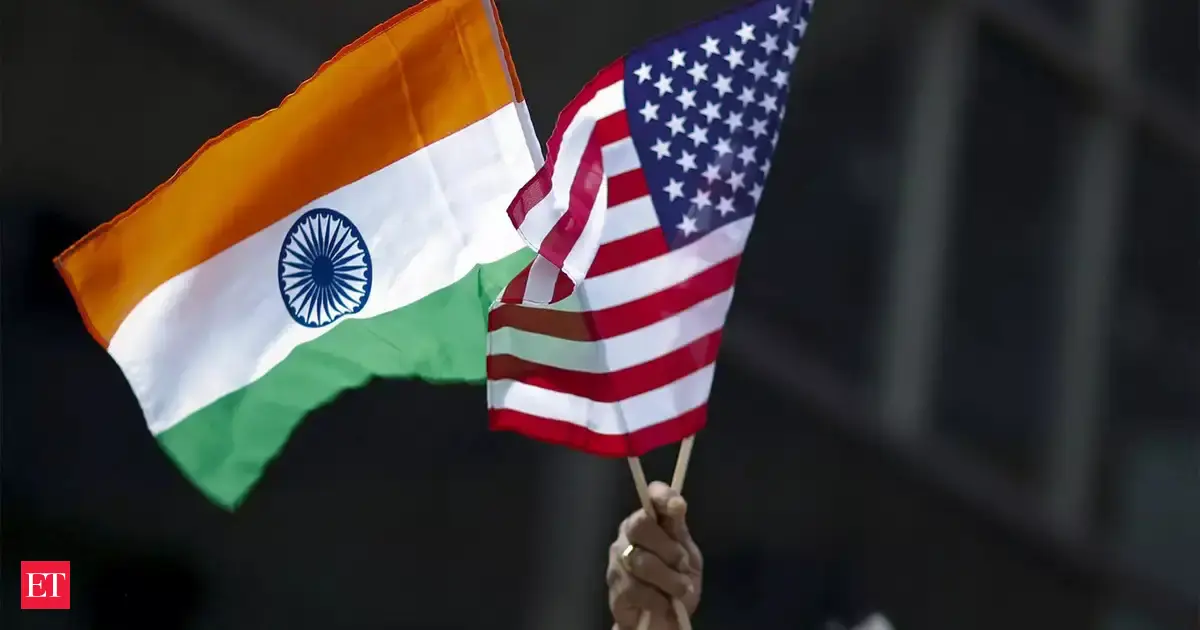
'India gains a competitive edge over rivals like Vietnam and Bangladesh...': Amitabh Kant on India-US trade deal framework
Former G20 Sherpa Amitabh Kant stated that an interim trade agreement between India and the US is crucial. This deal aims to significantly boost Indian exports by reducing tariffs from 50% to 18%, enhancing India's competitive edge against rivals like Vietnam and Bangladesh. For exams, this highlights India's trade policy, economic diplomacy, and efforts to strengthen global supply chains, particularly in relation to the US and China.
Revision structure
Monthly events and exam calendar context
Static GK and one-liner notes
Quiz and mock-test revision path
Key points
Exam-ready takeaways
The discussion centers on an interim trade agreement between India and the US.
The proposed deal aims to reduce tariffs on Indian exports to the US from 50% to 18%.
This agreement is expected to enhance India's competitive edge over countries like Vietnam and Bangladesh.
The deal also seeks to strengthen supply chains against China and provide support to the Indian Rupee.
Detailed analysis
Full exam-oriented breakdown
The statement by India's former G20 Sherpa, Amitabh Kant, regarding a potential interim trade agreement between India and the United States, marks a significant development in India's economic diplomacy and trade strategy. This proposed deal, aiming to reduce tariffs on Indian exports to the US from a high 50% to a more competitive 18%, underscores India's proactive approach to enhancing its global trade footprint and strengthening economic partnerships. **Background Context: A Shifting Global Trade Landscape** India-US trade relations have historically been complex, characterized by both strategic convergence and persistent trade frictions. While the two nations share a robust strategic partnership, particularly in defense and geopolitics, economic ties have often faced hurdles. A major setback occurred in June 2019 when the US, under the Trump administration, withdrew India's designation as a beneficiary country under its Generalized System of Preferences (GSP) program. This move, which eliminated duty-free access for billions of dollars worth of Indian exports, highlighted the need for a more structured and mutually beneficial trade framework. India, on its part, has been pushing its 'Make in India' initiative and aiming to become a global manufacturing hub, necessitating greater market access for its products. The COVID-19 pandemic and subsequent geopolitical events (like the Russia-Ukraine conflict) further exposed vulnerabilities in global supply chains, predominantly reliant on China, prompting a global push for diversification and resilience. **What Happened: A Strategic Move Towards Deeper Integration** Amitabh Kant's statement points to ongoing efforts to forge an 'interim' trade agreement, which is typically a precursor to a more comprehensive Free Trade Agreement (FTA). The core of this proposed interim deal is the substantial reduction of US tariffs on Indian exports. A drop from 50% to 18% would dramatically improve the price competitiveness of Indian goods in the American market. Kant specifically highlighted that this would give India a crucial edge over regional rivals like Vietnam and Bangladesh, particularly in labor-intensive sectors such as textiles and apparel, where these countries currently enjoy significant tariff advantages. Furthermore, the agreement is envisioned to bolster supply chain resilience by offering an alternative to China and provide much-needed support to the Indian Rupee by boosting export earnings. **Key Stakeholders and Their Interests** Multiple stakeholders stand to gain or be impacted by such an agreement. On the **Indian side**, the primary stakeholders include the Government of India (specifically the Ministry of Commerce and Industry and the Ministry of External Affairs), which is keen on boosting exports and achieving its foreign trade policy objectives. Indian exporters, particularly those in sectors like textiles, pharmaceuticals, engineering goods, and IT services, would be significant beneficiaries. Farmers could also see benefits through increased agricultural exports. For the **United States**, the Biden administration's focus on strengthening alliances and diversifying supply chains away from China aligns with the strategic objectives of such a deal. American importers would benefit from cheaper Indian goods, while specific US industries might face increased competition from Indian imports. **Rival nations** like Vietnam and Bangladesh, whose economies are heavily reliant on exports to the US, would face intensified competition, potentially impacting their market share. China, while not directly involved, is a significant backdrop, as the deal aims to reduce reliance on its supply chains. **Significance for India: A Multifaceted Boost** This interim trade deal holds immense significance for India. Economically, a tariff reduction would lead to a surge in Indian exports to the US, creating employment opportunities, particularly in manufacturing. Increased export earnings would also help in stabilizing and strengthening the Indian Rupee by increasing demand for the currency. This aligns with India's Foreign Trade Policy (FTP) 2023, which aims to boost exports and integrate India into global value chains. Strategically, it deepens the economic dimension of the India-US partnership, complementing their existing cooperation in defense and security, including through platforms like the Quad. It positions India as a reliable and attractive manufacturing and sourcing hub, aligning with global efforts towards supply chain diversification and resilience. Politically, it signals India's growing confidence in engaging in complex trade negotiations and its commitment to a rules-based international trading system. **Historical Context and Broader Themes** India's journey towards robust trade agreements has seen its share of cautious steps. Post-withdrawal from the Regional Comprehensive Economic Partnership (RCEP) in 2019, India has adopted a more selective approach, focusing on bilateral agreements that are strategically beneficial, such as the Comprehensive Economic Partnership Agreement (CEPA) with the UAE (signed in February 2022) and the Economic Cooperation and Trade Agreement (ECTA) with Australia (signed in April 2022). This proposed US deal fits into this evolving strategy, emphasizing mutually beneficial outcomes and addressing specific trade barriers. It reflects India's broader commitment to 'Vasudhaiva Kutumbakam' (the world is one family) in its economic diplomacy, seeking prosperity through global integration. **Future Implications: Paving the Way Forward** An interim trade deal could serve as a crucial stepping stone towards a full-fledged India-US Free Trade Agreement, which would encompass a much broader range of goods, services, and investment issues. Such a comprehensive agreement would require resolving complex issues like intellectual property rights, agricultural market access, and non-tariff barriers. The success of this interim agreement will build trust and momentum for future negotiations. Geopolitically, it reinforces the Indo-Pacific strategy, aiming to create a stable and prosperous region through strengthened economic ties among like-minded democracies. However, challenges remain, including ensuring domestic industry protection, navigating agricultural sensitivities, and addressing environmental and labor standards, which are often part of modern trade deals. **Related Constitutional Articles, Acts, and Policies** The constitutional framework for international agreements in India is primarily governed by **Article 253** of the Constitution, which empowers Parliament to make any law for implementing any treaty, agreement, or convention with any other country or any decision made at any international conference, association, or other body. Trade with foreign countries falls under the **Union List (Entry 14: entering into treaties and agreements with foreign countries; Entry 41: trade and commerce with foreign countries; Entry 42: customs)** of the Seventh Schedule. The **Foreign Trade (Development and Regulation) Act, 1992**, provides the legal framework for foreign trade. Furthermore, the **Foreign Trade Policy (FTP)**, updated periodically (currently FTP 2023), outlines the government's strategy and incentives for exports and imports. Policies like 'Make in India' and Production Linked Incentive (PLI) schemes are complementary initiatives aimed at boosting domestic manufacturing and exports, which would directly benefit from enhanced market access through such trade agreements.
How to study
Turn news into exam marks
Revise monthly events by exam family instead of reading random updates.
Pair one-liners with mock tests so mistakes become the next revision list.
Keep state job pages, calendar pages and GK packs connected in one path.