

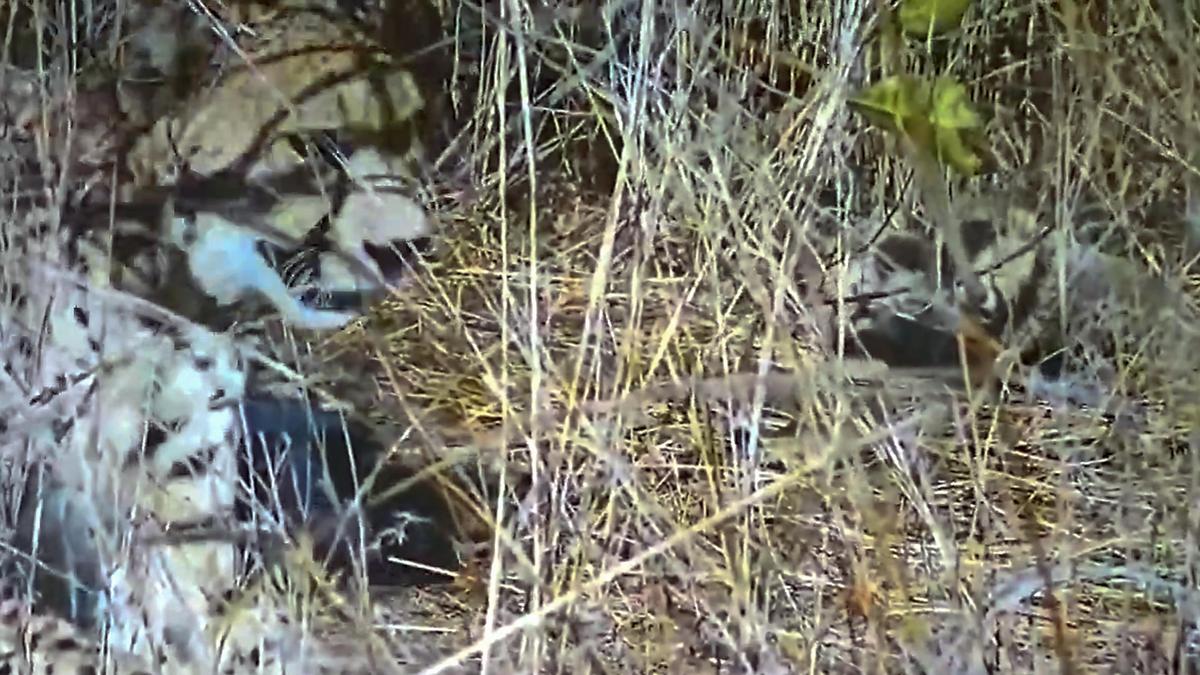
Five cheetah cubs were born to a Namibian cheetah at Madhya Pradesh’s Kuno National Park.
GK and monthly revision
Five cubs born to Namibian cheetah at Madhya Pradesh’s Kuno National Park; population rises to 35
Five cheetah cubs were born to a Namibian cheetah at Madhya Pradesh’s Kuno National Park, significantly increasing India's cheetah population to 35. This development marks a major success for Project Cheetah, India's ambitious reintroduction programme launched on September 17, 2022. It underscores the progress in wildlife conservation efforts and is highly relevant for competitive exams focusing on environment, ecology, and government initiatives.
Revision structure
Monthly events and exam calendar context
Static GK and one-liner notes
Quiz and mock-test revision path
Key points
Exam-ready takeaways
The birth of the five cubs has increased India's total cheetah population to 35.
Project Cheetah, India’s reintroduction programme, was officially launched on September 17, 2022.
Initially, eight cheetahs were translocated from Namibia and released at Kuno National Park.
Kuno National Park, a critical site for cheetah reintroduction, is located in Madhya Pradesh.
Detailed analysis
Full exam-oriented breakdown
The recent birth of five cheetah cubs to a Namibian cheetah at Madhya Pradesh's Kuno National Park marks a significant milestone in India's ambitious Project Cheetah. This event has propelled India's cheetah population to 35, showcasing tangible progress in the nation's efforts to reintroduce a species that was declared extinct in the country in 1952. This development is not just a biological success but also a testament to sustained conservation initiatives and international collaboration. Project Cheetah, a flagship conservation programme, was officially launched on September 17, 2022, when Prime Minister Narendra Modi released eight cheetahs translocated from Namibia into specially built enclosures at Kuno National Park. This initial cohort was followed by the introduction of 12 more cheetahs from South Africa in February 2023, bringing the total translocated population to 20. The project aims to establish a viable, free-ranging cheetah population in India, thereby contributing to global cheetah conservation efforts and restoring a crucial element of India's ecological heritage. Kuno National Park was chosen due to its suitable habitat, healthy prey base, and minimal human disturbance, having previously been identified as a potential relocation site for Asiatic lions. Key stakeholders in this monumental project include the Government of India, particularly the Ministry of Environment, Forest and Climate Change (MoEFCC), which oversees the entire initiative. The National Tiger Conservation Authority (NTCA) is the implementing agency, responsible for the on-ground execution, monitoring, and management of the cheetahs. The Madhya Pradesh Forest Department plays a critical role in park management, protection, and local community engagement. International partners, primarily Namibia and South Africa, have been instrumental in providing the cheetahs and sharing their expertise in translocation and conservation. Organizations like the Cheetah Conservation Fund (CCF) based in Namibia have also provided technical support and training. Local communities residing around Kuno National Park are also crucial stakeholders, as their cooperation is vital for minimizing human-wildlife conflict and ensuring the long-term success of the project. This project holds immense significance for India on multiple fronts. Ecologically, the reintroduction of cheetahs, a top predator, helps restore the natural food web and ecological balance in grassland ecosystems. It also signals India's commitment to biodiversity conservation and its role in global efforts to protect endangered species. Scientifically, it provides an unprecedented opportunity for research into cheetah behavior, adaptation, and population dynamics in a new environment. Economically, a thriving cheetah population can boost ecotourism in the region, generating revenue and creating livelihoods for local communities. This also enhances India's 'soft power' on the global stage, demonstrating its capacity for large-scale conservation projects and fostering international cooperation in wildlife management. Historically, the Asiatic cheetah (Acinonyx jubatus venaticus) was once widespread across India but was declared extinct in 1952, primarily due to hunting, habitat loss, and prey depletion. The last three recorded cheetahs in India were shot by Maharaja Ramanuj Pratap Singh Deo of Koriya in 1947. Efforts to reintroduce cheetahs have been contemplated for decades, with discussions dating back to the 1970s. However, the current 'Project Cheetah' gained significant momentum and political will, culminating in its successful launch. The project draws lessons from successful conservation initiatives like 'Project Tiger,' launched in 1973, which showcased India's capability in conserving large carnivores. From a constitutional perspective, wildlife conservation is enshrined in India's legal framework. Article 48A of the Directive Principles of State Policy (DPSP) mandates that "The State shall endeavor to protect and improve the environment and to safeguard the forests and wildlife of the country." Furthermore, Article 51A(g), a Fundamental Duty, states that it shall be the duty of every citizen of India "to protect and improve the natural environment including forests, lakes, rivers and wildlife, and to have compassion for living creatures." The legal backbone for such projects is the Wildlife Protection Act, 1972, which provides for the protection of wild animals, birds, and plants, and for matters connected therewith or ancillary or incidental thereto. Cheetahs, though reintroduced, are now protected under the provisions of this Act. Looking ahead, the future implications of Project Cheetah are multifaceted. While the birth of cubs is a positive sign, challenges remain. Ensuring the long-term survival of the cheetah population requires continuous monitoring, managing human-wildlife conflict, securing a stable prey base, and potentially identifying more suitable habitats for future reintroduction efforts to prevent overpopulation and genetic bottlenecking in a single location. The project's success will be measured not just by the number of births but by the establishment of a self-sustaining, wild population that can thrive independently. This pioneering initiative could pave the way for similar reintroduction programs for other extinct or critically endangered species, further solidifying India's position as a leader in global conservation efforts.
How to study
Turn news into exam marks
Revise monthly events by exam family instead of reading random updates.
Pair one-liners with mock tests so mistakes become the next revision list.
Keep state job pages, calendar pages and GK packs connected in one path.