

China's Southern Theater Command conducted naval and air patrols.
GK and monthly revision
China conducts naval, air patrols around disputed South China Sea
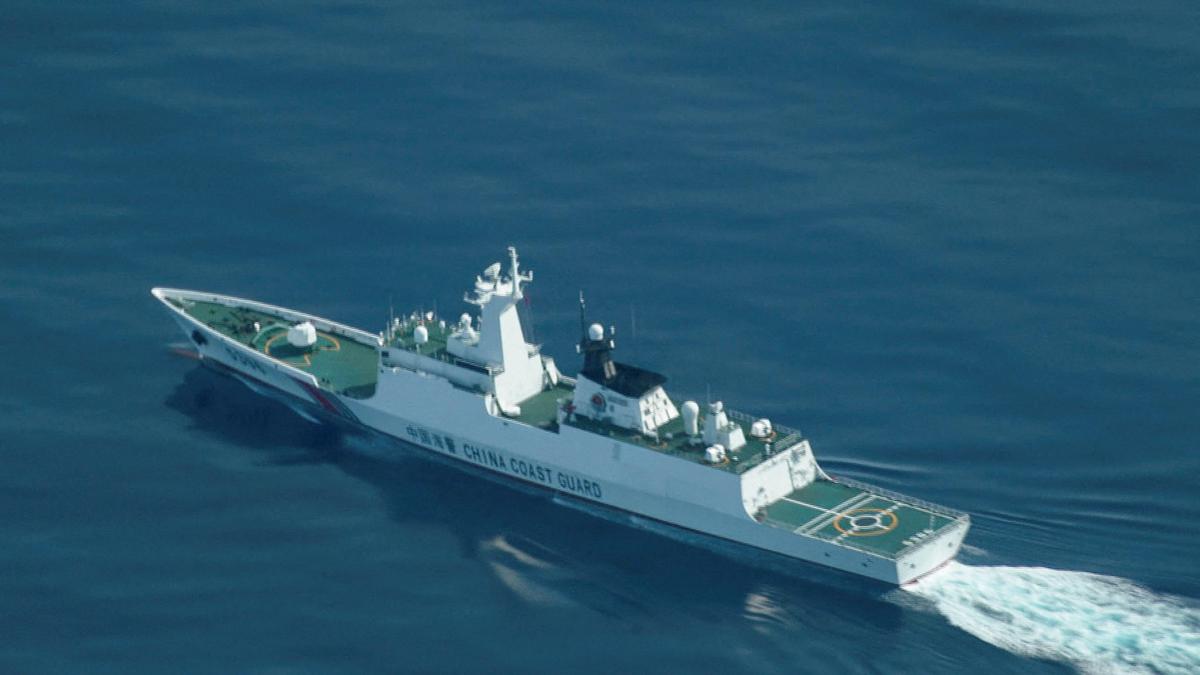
China's Southern Theater Command conducted naval and air patrols around the disputed South China Sea. This action was a direct response to the Philippines' 'bilateral air patrol' conducted with countries outside the region, which China views as provocative. The incident highlights the escalating geopolitical tensions and ongoing territorial disputes in the strategically vital South China Sea, crucial for understanding international relations and maritime law for competitive exams.
Revision structure
Monthly events and exam calendar context
Static GK and one-liner notes
Quiz and mock-test revision path
Key points
Exam-ready takeaways
The patrols were conducted around the disputed South China Sea.
China's action was a response to the Philippines' 'bilateral air patrol'.
The Philippine 'bilateral air patrol' involved "countries outside the region", as stated by China.
The South China Sea is a major geopolitical flashpoint with multiple territorial claimants.
Detailed analysis
Full exam-oriented breakdown
The South China Sea (SCS) is one of the most strategically vital and hotly contested maritime regions globally, a veritable geopolitical chessboard. This recent incident, where China's Southern Theater Command conducted naval and air patrols in response to the Philippines' 'bilateral air patrol' with external countries, underscores the escalating tensions and persistent territorial disputes that define this critical waterway. Understanding this complex issue is paramount for competitive exam aspirants, as it touches upon international relations, maritime law, and regional security. At its core, the dispute revolves around extensive territorial claims by China, Vietnam, the Philippines, Malaysia, Brunei, and Taiwan over various islands, reefs, and shoals, as well as the vast maritime areas surrounding them. China's claims are particularly expansive, encapsulated by its 'Nine-Dash Line' – a U-shaped line on maps that encompasses roughly 90% of the SCS, including areas far from its mainland coast. This claim is largely rejected by other claimants and the international community, as it is inconsistent with the United Nations Convention on the Law of the Sea (UNCLOS) of 1982, which delineates maritime zones based on coastal states' sovereign rights. The SCS is not just about sovereignty; it's a conduit for over one-third of global maritime trade, estimated at $3.4 trillion annually, and is rich in untapped oil and natural gas reserves, as well as highly lucrative fishing grounds. What happened recently is a clear manifestation of China's assertive posture and its 'grey-zone tactics' – actions below the threshold of armed conflict designed to achieve strategic objectives. The Philippines, a traditional ally of the United States, has been increasingly vocal in asserting its sovereign rights, especially after the 2016 Permanent Court of Arbitration (PCA) ruling in The Hague. This ruling, stemming from a case filed by the Philippines against China, largely invalidated China's historical claims under the Nine-Dash Line and its activities in the SCS. China, however, rejected this ruling, calling it 'null and void.' The Philippines' recent 'bilateral air patrol' with 'countries outside the region' (a thinly veiled reference to allies like the US, Australia, or others) was likely an attempt to demonstrate solidarity and uphold freedom of navigation, which China perceives as a direct challenge to its sovereignty and a provocation orchestrated by external powers. Key stakeholders in this dispute include, first and foremost, **China**, which views the SCS as its backyard, essential for its economic growth, energy security, and naval power projection. Its strategy involves island building, militarization of artificial islands, and employing its coast guard and maritime militia to enforce its claims. **The Philippines**, under President Ferdinand Marcos Jr., has adopted a more confrontational stance than its predecessor, actively seeking to strengthen alliances with the US and other like-minded nations to bolster its position. **Other ASEAN claimants** like Vietnam and Malaysia also have significant claims and have experienced confrontations with Chinese vessels, though their responses vary. **The United States**, a major non-claimant power, plays a crucial role through its 'Freedom of Navigation Operations' (FONOPs) and security alliances, asserting its commitment to a rules-based international order and freedom of navigation. Other 'outside' countries like Australia, Japan, the UK, and France are increasingly conducting joint exercises and patrols, further internationalizing the issue. For **India**, this situation carries profound significance. Economically, over 50% of India's maritime trade passes through the SCS. Any disruption or militarization of these vital sea lanes directly impacts India's economic interests and energy security, as Indian energy companies like ONGC Videsh have exploration interests in oil and gas blocks in the SCS, particularly in partnership with Vietnam. Strategically, China's growing assertiveness in the SCS is part of its broader regional power projection, which extends into the Indian Ocean Region (IOR). India, a rising naval power, is deeply invested in maintaining a free, open, and inclusive Indo-Pacific. Its 'Act East Policy' and 'SAGAR' (Security and Growth for All in the Region) vision underscore its commitment to engaging with Southeast Asian nations and upholding international law, particularly UNCLOS 1982, to which India is a signatory. India consistently advocates for peaceful resolution of disputes and adherence to international law, without taking a direct stance on territorial claims but emphasizing freedom of navigation. The escalating tensions also reinforce the importance of multilateral groupings like the Quad (Quadrilateral Security Dialogue) for India, which seeks to ensure regional stability and a rules-based order. Looking ahead, the future implications are concerning. The SCS could remain a flashpoint for regional instability, with a persistent risk of miscalculation or accidental escalation. China's continued militarization of features and its rejection of international arbitration will likely lead to further counter-actions from claimant states and external powers, potentially increasing the frequency and scale of joint patrols and exercises. The role of ASEAN centrality in resolving the dispute might diminish if external powers become more involved. For India, this means a continued need to balance its strategic autonomy with its commitment to a rules-based order, strengthening its maritime capabilities, and fostering robust diplomatic and security partnerships in the Indo-Pacific. The ongoing saga in the SCS is a litmus test for international law and the future of global maritime governance. While India's Constitution does not directly address the South China Sea, India's foreign policy, as outlined in the Directive Principles of State Policy (Article 51), advocates for the promotion of international peace and security, maintenance of just and honorable relations between nations, respect for international law and treaty obligations, and encouragement of settlement of international disputes by arbitration. India's adherence to UNCLOS 1982, a foundational international treaty, reflects these constitutional principles. Policies like the Act East Policy and the SAGAR vision are practical applications of these principles in India's engagement with its extended neighbourhood, aiming to ensure maritime security and foster regional cooperation in line with international norms.
How to study
Turn news into exam marks
Revise monthly events by exam family instead of reading random updates.
Pair one-liners with mock tests so mistakes become the next revision list.
Keep state job pages, calendar pages and GK packs connected in one path.