

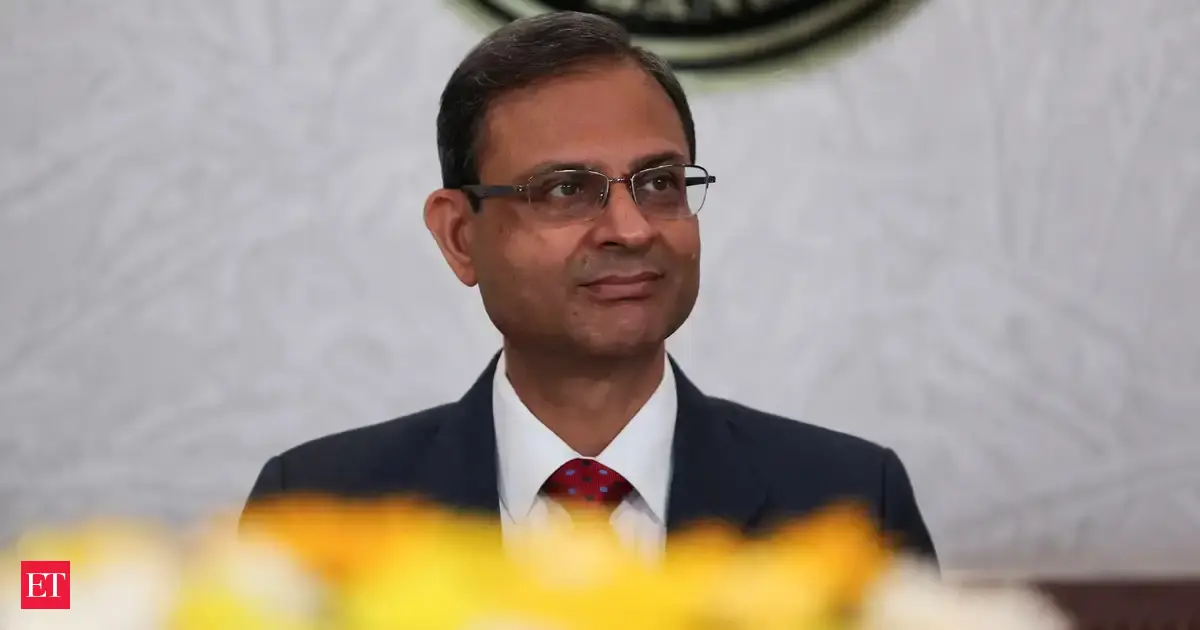
RBI Governor Sanjay Malhotra stated that interest rates are expected to remain low and potentially fall further.
GK and monthly revision
RBI leaves door open for more rate cuts
RBI Governor Sanjay Malhotra indicated that interest rates are likely to remain low and could see further cuts, with deposit rates also adjusting downwards. This signals a potential easing of monetary policy to stimulate economic growth. The RBI anticipates trade deals will boost GDP by 20 basis points and data center incentives will attract significant foreign investment, demonstrating confidence in economic management and growth drivers. This is crucial for understanding India's monetary policy stance and economic outlook for competitive exams.
Revision structure
Monthly events and exam calendar context
Static GK and one-liner notes
Quiz and mock-test revision path
Key points
Exam-ready takeaways
Deposit rates are also anticipated to adjust downwards in line with the overall interest rate trend.
Trade deals are projected to boost India's GDP by approximately 20 basis points (0.20%).
Incentives for data centers are expected to attract significant foreign investment into the country.
The Reserve Bank of India (RBI) expressed confidence in its ability to effectively manage the government's borrowing program.
Detailed analysis
Full exam-oriented breakdown
The recent statement from RBI Governor Sanjay Malhotra, indicating a likely continuation of low interest rates and potential further cuts, along with downward adjustments in deposit rates, offers a crucial insight into India's current monetary policy stance. This outlook is not an isolated decision but is deeply rooted in the prevailing global and domestic economic conditions, reflecting a carefully calibrated approach by the Reserve Bank of India to foster economic growth while maintaining financial stability. **Background Context and What Happened:** Globally, central banks have been navigating a complex environment characterized by persistent inflationary pressures, geopolitical tensions, and varying growth trajectories. In India, after a period of aggressive rate hikes aimed at taming post-pandemic inflation, the RBI has gradually shifted its focus towards supporting growth as inflation shows signs of moderation. The current statement suggests that the RBI is confident that inflation is either within or moving towards its target band, thereby providing room to ease monetary conditions. The Governor's explicit mention of low and potentially falling interest rates signals an accommodative stance, aiming to reduce the cost of borrowing for businesses and consumers. This, in turn, is expected to stimulate investment, consumption, and overall economic activity. The corresponding downward adjustment in deposit rates is a natural consequence, as banks typically adjust their deposit offerings in line with the broader interest rate environment to maintain their Net Interest Margins (NIMs). Beyond monetary policy, the RBI's optimism extends to specific growth drivers. The projection of trade deals boosting GDP by approximately 20 basis points (0.20%) highlights the government's strategic emphasis on enhancing international trade through Free Trade Agreements (FTAs). Such agreements, like the Comprehensive Economic Partnership Agreement (CEPA) with the UAE or the Economic Cooperation and Trade Agreement (ECTA) with Australia, aim to reduce tariffs and non-tariff barriers, thereby increasing India's exports and attracting foreign investment. Furthermore, the anticipation of significant foreign investment due to incentives for data centers underscores the government's push for digital infrastructure development. Data centers are crucial for the digital economy, and attracting FDI in this sector aligns with initiatives like 'Digital India' and 'Make in India,' aiming to create jobs and enhance technological capabilities. Finally, the RBI's confidence in managing the government's borrowing program is vital for financial market stability. Large government borrowing can put upward pressure on bond yields, increasing the cost of funds for both the government and the private sector. The RBI, as the government's debt manager, plays a critical role in ensuring a smooth and orderly borrowing process, thereby preventing undue volatility in the bond market. **Key Stakeholders Involved:** * **Reserve Bank of India (RBI):** The primary monetary authority, responsible for setting interest rates, managing liquidity, and supervising the banking system. The Monetary Policy Committee (MPC), established under the RBI Act, 1934, is central to interest rate decisions. The Governor is the ex-officio chairperson of the MPC. * **Government of India:** Through the Ministry of Finance, the government formulates fiscal policy, trade policy, and investment promotion schemes (like data center incentives). Its borrowing program directly impacts financial markets. * **Commercial Banks:** They transmit the RBI's policy rates to the real economy by adjusting their lending and deposit rates. Their profitability and lending capacity are directly influenced. * **Businesses:** Benefit from lower borrowing costs, which can incentivize new investments, capacity expansion, and job creation. * **Consumers:** Are impacted by changes in interest rates on loans (home loans, car loans) and returns on savings. * **Foreign Investors:** Their decisions regarding Foreign Direct Investment (FDI) and Foreign Portfolio Investment (FPI) are influenced by India's economic outlook, policy stability, and growth prospects. **Why This Matters for India and Future Implications:** This monetary policy stance, combined with targeted growth initiatives, holds immense significance for India. Lower interest rates can be a powerful stimulant for economic growth, encouraging credit uptake and capital expenditure. This can lead to increased industrial output, higher employment, and improved consumer sentiment. The focus on trade deals and data centers points towards structural reforms aimed at enhancing India's competitiveness and attracting long-term capital. If successful, these measures could propel India towards sustained higher growth rates, potentially making it a more attractive destination for global capital. However, future implications also include potential challenges. While inflation is currently perceived to be under control, global commodity price volatility, supply chain disruptions, or domestic demand pressures could re-ignite inflationary concerns, forcing the RBI to reverse its accommodative stance. The impact on savers, particularly those reliant on fixed deposits, will also be a consideration, as lower deposit rates reduce their returns. Nevertheless, the overall signal is one of cautious optimism, with the RBI balancing its mandate for price stability with the imperative of supporting economic expansion. **Historical Context and Related Constitutional Articles/Acts:** Historically, the RBI has evolved from a purely advisory body to a powerful central bank with a clear mandate. A significant milestone was the establishment of the Monetary Policy Committee (MPC) in 2016, following the signing of the Monetary Policy Framework Agreement between the Government of India and the RBI. This agreement formally mandated the RBI to maintain consumer price index (CPI) inflation within a target range of 4% with a band of +/- 2%. This institutionalized framework ensures transparency and accountability in monetary policy decisions. The legal basis for the RBI's functions and powers is primarily derived from the **Reserve Bank of India Act, 1934**. While there isn't a direct Constitutional Article dictating monetary policy, the economic well-being of the nation, as implicitly sought by Directive Principles of State Policy (e.g., Article 39 for securing economic justice), underpins the government's and RBI's actions. The RBI's confidence in managing government borrowing is also rooted in its role as 'banker to the government' as enshrined in the RBI Act. This holistic approach—combining an accommodative monetary policy with strategic fiscal and trade initiatives—is crucial for India to achieve its aspirational growth targets and navigate the complexities of the global economic landscape.
How to study
Turn news into exam marks
Revise monthly events by exam family instead of reading random updates.
Pair one-liners with mock tests so mistakes become the next revision list.
Keep state job pages, calendar pages and GK packs connected in one path.