

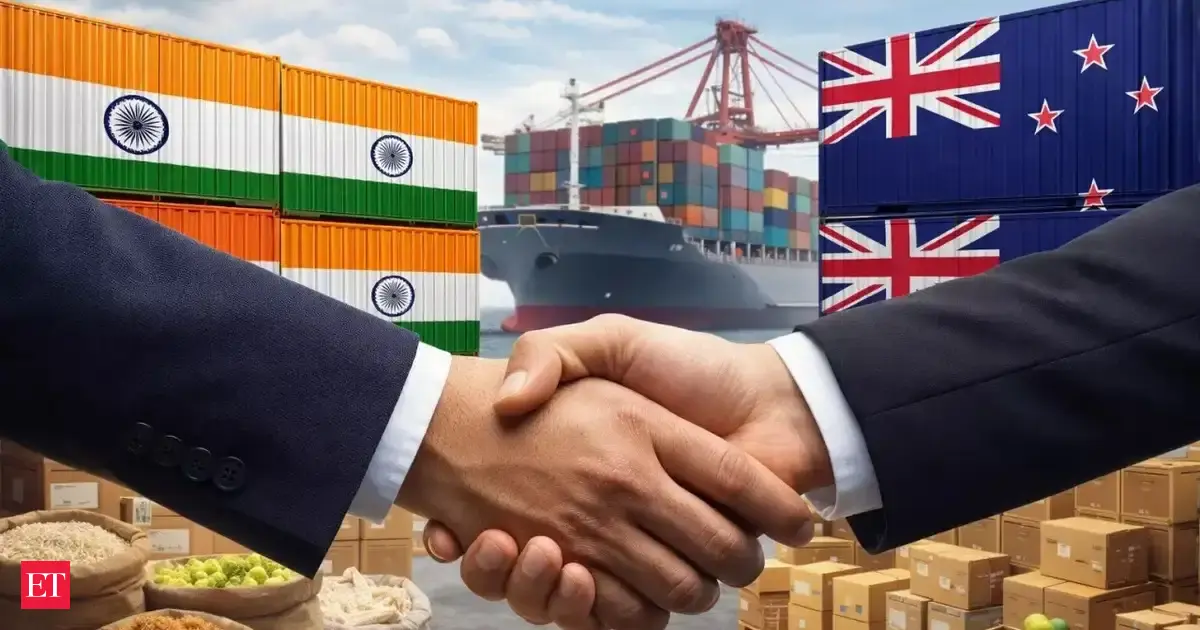
India and New Zealand are engaged in negotiations for a Free Trade Agreement (FTA).
GK and monthly revision
Dairy, sugar kept out of New Zealand FTA
India and New Zealand are negotiating a Free Trade Agreement (FTA), from which several sensitive product categories for India have been explicitly excluded. This move aims to protect India's domestic dairy, sugar, and edible oil industries from potential competition. Understanding these exclusions is crucial for competitive exams, as it highlights India's trade policy priorities and defensive interests in international trade negotiations.
Revision structure
Monthly events and exam calendar context
Static GK and one-liner notes
Quiz and mock-test revision path
Key points
Exam-ready takeaways
Major product categories have been specifically excluded from the India-New Zealand FTA.
Dairy products are a significant exclusion from the scope of the India-NZ FTA.
Sugar and sugar confectionery have also been kept out of the bilateral trade agreement.
Animal, vegetable or microbial fats and oils are explicitly excluded from the India-NZ FTA.
Detailed analysis
Full exam-oriented breakdown
India's recent negotiations with New Zealand for a Free Trade Agreement (FTA) have brought to the forefront critical aspects of its trade policy, particularly the strategic exclusion of sensitive product categories. This move, which specifically keeps out dairy products, sugar and sugar confectionery, and animal, vegetable or microbial fats and oils, is not merely a negotiating tactic but a reflection of India's deep-seated domestic priorities and a cautious approach to global trade liberalization. **Background Context: India's Evolving Trade Strategy** India has historically pursued trade agreements to boost its economic growth and integrate into global supply chains. However, experiences from previous FTAs and multilateral trade talks have instilled a degree of caution, especially concerning sectors vital for the livelihoods of millions. The push for an FTA with New Zealand aligns with India's broader strategy to diversify its trade partners and enhance economic ties with countries in the Indo-Pacific region. New Zealand, a highly developed economy with a strong agricultural base, particularly in dairy, presents both opportunities and challenges for India. The negotiations aim to reduce tariffs and non-tariff barriers, fostering greater bilateral trade and investment. **What Happened: Strategic Exclusions** During the ongoing discussions for the India-New Zealand FTA, India explicitly sought and secured the exclusion of key agricultural products from the agreement's scope. These include dairy products, sugar and sugar confectionery, and various animal, vegetable, or microbial fats and oils. This means that even if the FTA is finalized, these products from New Zealand will not enjoy preferential tariff treatment when entering the Indian market. This defensive stance is a direct response to the potential flood of highly competitive imports that could severely impact India's vast domestic production bases in these sectors. **Key Stakeholders Involved** Several key stakeholders are at play. On the Indian side, the **Ministry of Commerce and Industry** leads the negotiations, balancing trade liberalization goals with domestic protection. The most significant stakeholders are the **millions of Indian farmers** engaged in dairy farming, sugarcane cultivation, and oilseed production. Their livelihoods are directly dependent on the viability of these sectors. **Domestic dairy cooperatives** (like Amul), **sugar mills**, and **edible oil producers** also form a powerful lobby, advocating for protection against cheaper imports. On the New Zealand side, the **New Zealand government** and its highly efficient **dairy industry** (dominated by giants like Fonterra) are key players, keen to expand market access for their world-class products. Their agricultural sector is heavily export-oriented and highly competitive globally. **Why This Matters for India: Economic, Social, and Political Impact** These exclusions are profoundly significant for India. Economically, they protect large, employment-intensive sectors from global competition. India is the world's largest milk producer, with the dairy sector supporting over 80 million rural households. The sugar industry is also a major employer, particularly in states like Uttar Pradesh and Maharashtra. The edible oil sector addresses a critical food security concern. Socially, opening these sectors to unfettered imports could decimate rural incomes, leading to widespread distress and migration. Politically, the government faces immense pressure from farmer lobbies to safeguard their interests, especially given the agricultural sector's electoral significance. The decision reflects a pragmatic approach, prioritizing food security and farmer welfare over complete trade liberalization in sensitive areas. **Historical Context and Broader Themes** India's current stance is not new. A critical historical precedent is India's decision in November 2019 to withdraw from the Regional Comprehensive Economic Partnership (RCEP) negotiations. A major reason for this withdrawal was the inability to secure adequate protection for its dairy and agricultural sectors from imports, particularly from Australia and New Zealand. This demonstrated a consistent policy line: while India is open to trade, it will not compromise on the livelihoods of its farmers and the food security of its population. This approach links to broader themes of **economic nationalism**, **food sovereignty**, and **balancing global integration with domestic protection** in governance. **Constitutional and Policy Linkages** India's trade policy falls squarely under the purview of the Union government, as per the **Seventh Schedule of the Indian Constitution**. Specifically, **Entry 41 of the Union List** (Article 246) grants Parliament the exclusive power to legislate on "Trade and commerce with foreign countries; import and export across customs frontiers; customs." This constitutional framework empowers the Ministry of Commerce and Industry to negotiate and sign FTAs. Furthermore, the decision to protect dairy, sugar, and edible oil sectors aligns with various government policies aimed at supporting agriculture, such as the **Minimum Support Price (MSP)** mechanism for sugarcane, various **subsidy schemes** for dairy farmers, and the **National Mission on Edible Oils – Oil Palm**, all designed to enhance domestic production and reduce import dependence. These exclusions are a practical application of these domestic policy objectives in the international trade arena. **Future Implications** This cautious approach in the New Zealand FTA could set a precedent for India's future trade negotiations with other countries, including ongoing talks with the UK, EU, and Canada. It signals that India will adopt a nuanced strategy, seeking liberalization where it benefits its economy while robustly protecting its sensitive sectors. This might lead to 'carve-outs' becoming a standard feature of India's future FTAs. While this approach might limit the overall depth and breadth of some FTAs, it ensures domestic stability and political feasibility. It also underscores India's growing confidence in asserting its national interests on the global trade stage, moving beyond a purely liberalizing framework to one that is more strategic and self-protective.
How to study
Turn news into exam marks
Revise monthly events by exam family instead of reading random updates.
Pair one-liners with mock tests so mistakes become the next revision list.
Keep state job pages, calendar pages and GK packs connected in one path.