

The government will prioritize the 'Build-Own-Transfer' (BOT) model for highway projects.
GK and monthly revision
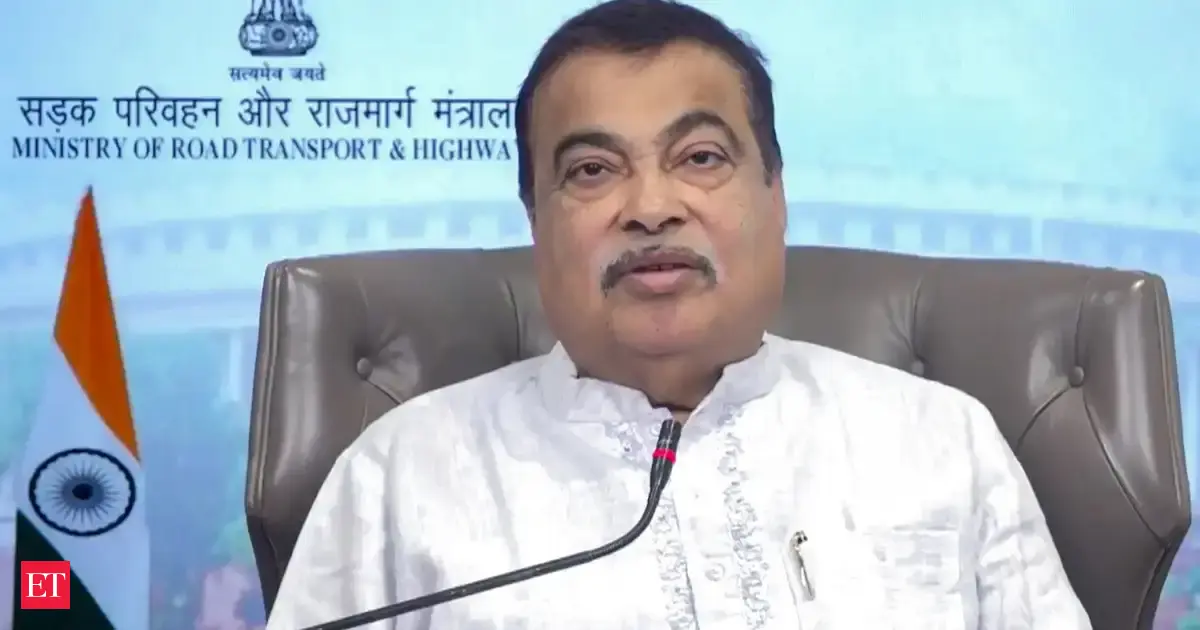
Build-own-transfer to be priority for highway projects in FY27: Nitin Gadkari
The Indian government, led by Union Minister Nitin Gadkari, plans to prioritize the Build-Own-Transfer (BOT) model for highway projects starting in FY27. This strategy, coupled with asset monetization of existing highways, aims to significantly boost infrastructure development. The initiative is crucial for strengthening India's connectivity and supporting its ambition to become the world's third-largest economy, making it a key topic for economic and infrastructure-related exam questions.
Revision structure
Monthly events and exam calendar context
Static GK and one-liner notes
Quiz and mock-test revision path
Key points
Exam-ready takeaways
This prioritization for highway construction will commence from Financial Year 2027 (FY27).
Union Minister Nitin Gadkari announced the plan to boost highway construction via public-private partnerships.
The strategy also includes asset monetization of existing highways to generate funds for new projects.
The overarching goal is to strengthen India's infrastructure to support its ambition of becoming the world's third-largest economy.
Detailed analysis
Full exam-oriented breakdown
India's ambitious drive to become the world's third-largest economy hinges significantly on robust infrastructure, particularly in the transportation sector. Union Minister Nitin Gadkari's announcement to prioritize the Build-Own-Transfer (BOT) model for highway projects starting from Financial Year 2027 (FY27), coupled with asset monetization, signals a strategic shift in the government's approach to infrastructure development. This move is not merely an administrative decision but a critical economic policy aimed at accelerating growth, attracting private investment, and ensuring sustainable funding for future projects. Historically, India has grappled with an infrastructure deficit, a legacy that constrained its economic potential. Post-independence, the focus was primarily on public sector-led development. However, with economic liberalization in the 1990s, the concept of Public-Private Partnerships (PPPs) gained traction. The initial push for BOT projects in the early 2000s saw private players construct, operate, and then transfer assets back to the government after a concession period, typically recovering their investment through tolls. While successful in some instances, this model faced challenges, including land acquisition delays, traffic projection risks, and funding difficulties for developers, leading to a period of stress for many private infrastructure companies. This prompted a shift towards models like Engineering, Procurement, and Construction (EPC) where the government bears the financial risk, and later the Hybrid Annuity Model (HAM) which shares risks between the government and private entities, proving quite successful in recent years. What has happened now is a re-evaluation of these models. The government, through the Ministry of Road Transport and Highways (MoRTH), is signaling a renewed confidence in the private sector's ability and willingness to take on more risk, especially given the improved policy environment and a stronger financial ecosystem. Prioritizing BOT from FY27 implies that a significant portion of new highway projects will be offered to private developers who will design, finance, construct, operate, and maintain the highway for a specified period (the concession period), typically collecting tolls directly from users. After this period, ownership is transferred back to the government. This model is capital-intensive for the private sector but offers higher potential returns if traffic projections are met. Alongside this, asset monetization, through instruments like Toll-Operate-Transfer (ToT) or Infrastructure Investment Trusts (InvITs), involves leasing out operational highway assets to private entities for a lump sum, freeing up government capital for new projects. Key stakeholders in this paradigm shift include the **Ministry of Road Transport and Highways (MoRTH)**, which sets policy and oversees implementation; the **National Highways Authority of India (NHAI)**, the primary implementing agency responsible for awarding contracts, land acquisition, and project monitoring; **private infrastructure developers/concessionaires**, who will bid for, finance, and execute these projects; **financial institutions and banks**, which provide the necessary capital; and ultimately, the **citizens of India**, who benefit from improved connectivity, reduced travel times, and enhanced economic opportunities. The emphasis on BOT also involves a crucial role for regulatory bodies ensuring fair practices and dispute resolution. This strategy holds immense significance for India. Economically, it can unlock substantial private capital, reducing the burden on public finances and potentially accelerating project completion. Better roads reduce logistics costs, making Indian goods more competitive globally and boosting sectors like manufacturing and agriculture. This aligns with the 'Make in India' initiative and contributes directly to GDP growth. Socially, improved connectivity enhances access to markets, education, healthcare, and employment opportunities, especially in remote regions, fostering inclusive growth. Strategically, a world-class road network is fundamental for India to achieve its aspiration of becoming the world's third-largest economy, projected to happen by 2027-28 according to some estimates. The historical context of PPPs in India shows a learning curve. Initial challenges with BOT projects, especially during 2012-2017, led to a preference for HAM. However, with policy reforms, a more transparent bidding process, and a clearer understanding of risks, the government feels the private sector is better positioned to undertake BOT projects now. The National Infrastructure Pipeline (NIP) (2020-2025) and the National Monetisation Pipeline (NMP) (2021-2025) are crucial policy frameworks that support this renewed focus. The NIP envisages significant infrastructure investment, and the NMP aims to unlock value from existing public assets to fund new ones, directly complementing the BOT and asset monetization strategy. Constitutionally, the development of National Highways falls under the **Union List (Entry 23)** of the Seventh Schedule, granting the central government exclusive power to legislate on this subject. The **National Highways Act, 1956**, and the **National Highways Authority of India Act, 1988**, are the primary statutes governing the declaration, development, maintenance, and management of National Highways. The government's policy decisions regarding funding models and private sector participation operate within the framework established by these Acts. Looking ahead, the future implications are multi-faceted. If successfully implemented, this approach could usher in a new era of rapid infrastructure development, attracting more foreign and domestic investment into the sector. However, challenges persist, including accurate traffic forecasting, ensuring timely land acquisition, environmental clearances, and maintaining a robust dispute resolution mechanism. The success of asset monetization will also depend on investor confidence and the attractiveness of the underlying assets. This strategic pivot towards BOT and monetization reflects India's dynamic approach to infrastructure financing, adapting to market realities while relentlessly pursuing its economic growth objectives.
How to study
Turn news into exam marks
Revise monthly events by exam family instead of reading random updates.
Pair one-liners with mock tests so mistakes become the next revision list.
Keep state job pages, calendar pages and GK packs connected in one path.