

Delhi Police counsel opposed bail for three accused in the Parliament security breach case.
GK and monthly revision
Parliament security breach case: police oppose bail to 3
Delhi Police opposed bail for three accused in the Parliament security breach case, labeling them "lead players." The police counsel cited pamphlets carried by the accused containing an "open threat" to Prime Minister Narendra Modi and an alleged intent to "usurp power." This ongoing national security case highlights the gravity of the breach and its implications for India's democratic institutions, making it crucial for competitive exam knowledge on current affairs and internal security.
Revision structure
Monthly events and exam calendar context
Static GK and one-liner notes
Quiz and mock-test revision path
Key points
Exam-ready takeaways
The accused were termed "lead players" by the police counsel during the proceedings.
Pamphlets carried by the accused allegedly contained an "open threat" to Prime Minister Narendra Modi.
Police counsel stated that the accused intended to "usurp power" through their actions.
The case pertains to the significant security breach that occurred at the Parliament.
Detailed analysis
Full exam-oriented breakdown
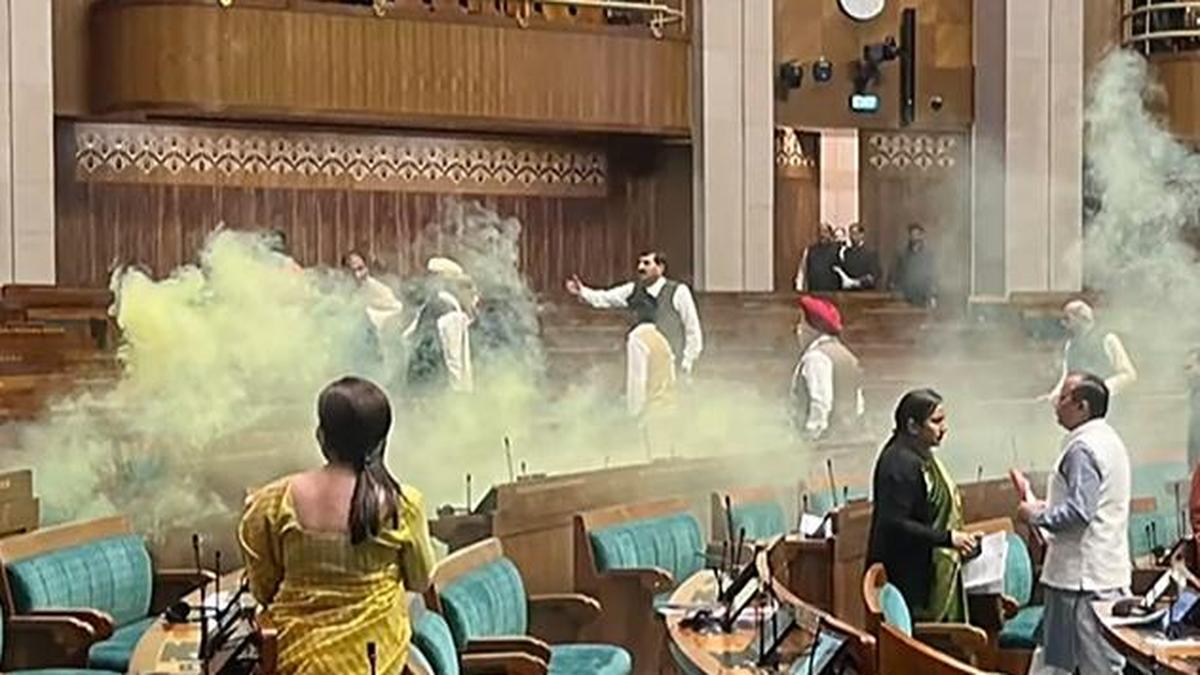
The recent opposition by Delhi Police to the bail applications of three accused in the Parliament security breach case underscores the gravity of the incident and its far-reaching implications for India's internal security and democratic institutions. This development is not merely a legal procedural step but highlights the state's firm stance against acts perceived as threats to national sovereignty and the functioning of the legislative body. **Background Context: The Incident of December 13, 2023** The incident occurred on December 13, 2023, a date chillingly reminiscent of the 2001 Parliament attack. During Zero Hour in the Lok Sabha, two individuals, Sagar Sharma and Manoranjan D, jumped into the chamber from the visitors' gallery, shouting slogans and releasing coloured smoke from canisters. Simultaneously, two others, Amol Shinde and Neelam Azad, engaged in similar disruptive activities outside the Parliament building, also releasing coloured smoke and shouting slogans. This audacious breach immediately triggered widespread alarm, raising serious questions about the security apparatus protecting India's highest legislative body. The accused were subsequently apprehended, and investigations were launched by various agencies, including the Delhi Police Special Cell. **The Current Development: Police Opposition to Bail** The latest report details the Delhi Police counsel's strong opposition to the bail pleas of three accused, whom they termed "lead players" in the conspiracy. The police's argument hinges on critical evidence, specifically pamphlets allegedly carried by the accused. These pamphlets, according to the prosecution, contained an "open threat" to Prime Minister Narendra Modi and indicated an intent to "usurp power." Such allegations elevate the nature of the crime from mere trespass or disruption to potentially seditious or terroristic acts, warranting a more stringent legal approach. The police's stance reflects the seriousness with which the state views any challenge to its constitutional authority and the safety of its leaders. **Key Stakeholders Involved** Several key stakeholders are central to this ongoing case. The **Delhi Police**, specifically its Special Cell, is the primary investigating agency, responsible for gathering evidence, interrogating suspects, and building the prosecution's case. Their counsel represents the state's interests in court. The **accused individuals** are at the heart of the legal proceedings, exercising their right to legal representation and seeking bail. The **Indian Judiciary**, comprising various court levels, plays a crucial role in ensuring due process, evaluating evidence, and making impartial decisions on bail applications and the ultimate verdict. **Parliament and the Government of India** are the direct victims of the breach, with the incident posing a direct challenge to their authority and security. Finally, the **citizens of India** are stakeholders as the case impacts their trust in democratic institutions and the government's ability to ensure national security. **Significance for India** This incident holds immense significance for India across multiple dimensions. From an **internal security** perspective, it exposed glaring vulnerabilities in the security architecture of one of the country's most vital installations. It necessitated an immediate review and overhaul of Parliament's security protocols, leading to enhanced measures and the constitution of a high-level committee. Politically, the breach was a direct affront to India's **democratic institutions**, particularly the Parliament, which is the cornerstone of its democratic framework. The alleged intent to "usurp power" underlines a perceived challenge to the constitutional order. Socially, the incident sparked a national debate on youth unemployment, disillusionment, and the potential for radicalization, as some of the accused claimed their actions were a protest against government policies. Economically, while not directly impacting the economy, any perceived instability can affect investor confidence and national image. **Historical Context and Broader Themes** The choice of December 13 for the breach was not coincidental, given the 2001 Parliament attack by Lashkar-e-Taiba and Jaish-e-Mohammed terrorists on the same date. This historical parallel amplified the sense of alarm and the need for robust security. The incident connects to broader themes of **governance and dissent**. While freedom of speech and the right to protest are fundamental under **Article 19(1)(a) and (b)** of the Constitution, these rights are not absolute and are subject to reasonable restrictions in the interest of public order, national security, and the integrity of India, as outlined in **Article 19(2)**. The Parliament breach clearly crossed the line from peaceful protest to a direct security threat. The case also brings into focus the **Unlawful Activities (Prevention) Act (UAPA), 1967**, which is likely invoked given the severity of the charges, including conspiracy and acts threatening national security. UAPA has stringent provisions regarding bail, requiring the court to be satisfied that there are no reasonable grounds for believing that the accusation against such person is prima facie true. **Future Implications** The future implications of this case are substantial. Firstly, it will undoubtedly lead to a permanent overhaul of Parliament's security, potentially involving technological upgrades, stricter access controls, and enhanced coordination among security agencies. Secondly, the legal outcome will set precedents for how India deals with acts of internal disruption targeting its democratic symbols. If the UAPA charges are upheld, it will reinforce the state's zero-tolerance policy towards such acts. Thirdly, the case might intensify discussions on addressing root causes of disillusionment among youth, if that is indeed found to be a motivating factor. Finally, the verdict will be closely watched for its balance between upholding national security and safeguarding individual liberties, a recurring challenge in any robust democracy. The investigation's findings and the court's decisions will shape future policy and public discourse on internal security for years to come.
How to study
Turn news into exam marks
Revise monthly events by exam family instead of reading random updates.
Pair one-liners with mock tests so mistakes become the next revision list.
Keep state job pages, calendar pages and GK packs connected in one path.