

India acknowledges its innovation lag compared to China, especially in AI.
GK and monthly revision
India is facing up to its innovation lag
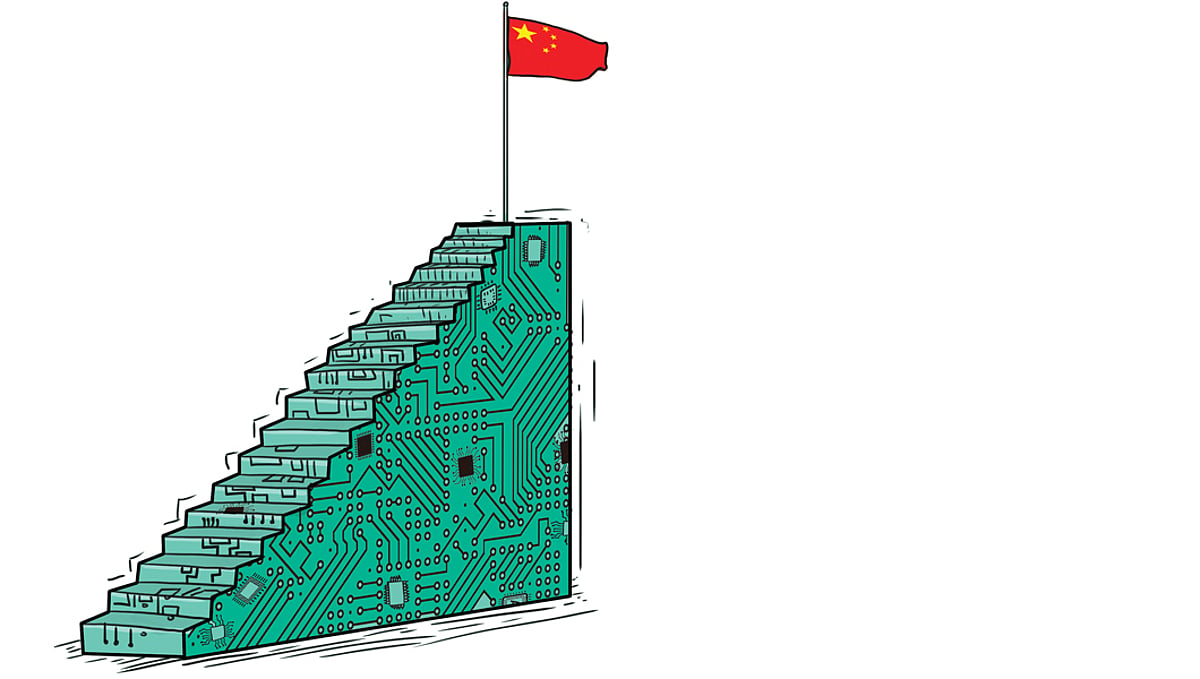
The article highlights India's growing recognition of its innovation gap, particularly in frontier technologies like Artificial Intelligence (AI), when compared to China. It suggests that India is beginning to acknowledge China's superior advancements in this field. The piece implies a need for India to bolster its R&D and innovation ecosystem to compete effectively on a global scale, especially in strategically important technological domains. This acknowledgment is seen as a crucial first step towards addressing the lag and fostering a more innovation-driven economy and a stronger technological future for the country. The focus on AI signifies its growing importance as a key driver of future economic and strategic power.
Revision structure
Monthly events and exam calendar context
Static GK and one-liner notes
Quiz and mock-test revision path
Key points
Exam-ready takeaways
China has made superior strides in frontier technology like AI.
There is an implied need for India to strengthen its R&D and innovation ecosystem.
Addressing the innovation gap is crucial for India's future economic and strategic positioning.
Detailed analysis
Full exam-oriented breakdown
India's recent acknowledgment of an innovation lag, particularly when compared to China's rapid strides in frontier technologies like Artificial Intelligence (AI), marks a pivotal moment in the nation's technological journey. This realization is not merely an admission of a deficit but a crucial catalyst for recalibrating national priorities and strategies in the global tech race. **Background Context and What Happened:** For decades, India has been renowned as the 'back office of the world,' excelling in IT services and software development, largely leveraging its vast pool of English-speaking, skilled labor. This model, while successful in generating employment and foreign exchange, often focused on service delivery rather than deep-tech research and product innovation. Meanwhile, countries like China, driven by a strategic state-led vision and massive investments, aggressively pursued core technological advancements. China's 'Made in China 2025' initiative, launched in 2015, explicitly targeted dominance in high-tech fields including AI, robotics, and biotechnology. This sustained push has allowed China to become a global leader in AI research, patent filings, and application deployment, with companies like Baidu, Alibaba, and Tencent driving significant innovation. India's current acknowledgment stems from observing this stark contrast: while India has a vibrant startup ecosystem and a growing digital economy, its foundational research and development (R&D) in cutting-edge areas like AI, quantum computing, and advanced materials have not kept pace with global leaders, especially China. **Key Stakeholders Involved:** The push for addressing this innovation lag involves multiple critical stakeholders. The **Government of India**, particularly ministries like the Ministry of Electronics and Information Technology (MeitY), the Department of Science and Technology (DST), and think tanks like NITI Aayog, are central to policy formulation, funding allocation, and setting strategic direction. NITI Aayog's 2018 'National Strategy for Artificial Intelligence' (dubbed #AIforAll) was an early attempt to outline a vision for India's AI future. The **Private Sector**, including large corporations, startups, and venture capitalists, plays a crucial role in R&D, commercialization, and product development. Initiatives like Startup India and the Atal Innovation Mission aim to foster this ecosystem. **Academia and Research Institutions** (e.g., IITs, IISc, various universities) are vital for fundamental research, talent development, and fostering a scientific temper. Finally, **International Partners and Competitors** influence India's approach, providing benchmarks, collaboration opportunities, and competitive pressure. **Significance for India:** This acknowledgment carries profound implications for India across economic, strategic, and social dimensions. **Economically**, a robust innovation ecosystem in frontier technologies is critical for sustained economic growth, job creation, and global competitiveness. Failure to innovate could relegate India to a recipient of technology rather than a creator, impacting its GDP and industrial growth. **Strategically and Geopolitically**, technological self-reliance, or 'Atmanirbhar Bharat' in the tech domain, is paramount for national security and digital sovereignty. Dependence on foreign technology, especially in critical infrastructure and defense, poses significant risks. Dominance in AI also translates into geopolitical influence and leadership in global tech governance. **Socially**, AI has the potential to revolutionize public services, from healthcare diagnostics and personalized education to smart agriculture and disaster management, directly impacting the quality of life for millions of citizens. **Historical Context and Future Implications:** Historically, India's scientific and technological progress has seen periods of brilliance (e.g., ancient Indian contributions to mathematics and astronomy) followed by colonial suppression and, post-independence, a focus on foundational industries and then IT services. The current phase demands a shift towards deep-tech innovation. This realization is likely to spur several future implications: a significant increase in **R&D investment** (both public and private), **policy reforms** aimed at creating an enabling environment for innovation (e.g., easier access to funding, streamlined regulatory processes, data governance frameworks), and a renewed focus on **talent development** through skilling and reskilling initiatives aligned with emerging technologies. The **National Education Policy (NEP) 2020** already emphasizes critical thinking, computational thinking, and interdisciplinary studies, which are crucial for fostering an innovation mindset. India's commitment to building a robust digital public infrastructure, like Aadhaar and UPI, provides a unique platform for AI application at scale. The **India Semiconductor Mission** is another example of a targeted effort to build capabilities in a critical technology. Furthermore, constitutional provisions, while not directly addressing AI, underpin the scientific pursuit. **Article 51A (h)**, a fundamental duty, mandates citizens to 'develop the scientific temper, humanism and the spirit of inquiry and reform.' This ethos is vital for fostering innovation. Policies like the **Information Technology Act, 2000**, will also need continuous updates to address the legal and ethical challenges posed by AI. **Broader Themes:** This issue intertwines with broader themes of governance (effective policy implementation), economy (moving up the value chain), and international relations (balancing cooperation with competition). India's ability to 'face up' to its innovation lag and strategically address it will determine its trajectory as a global power in the 21st century, defining its role not just as a consumer but as a significant producer of cutting-edge technology.
How to study
Turn news into exam marks
Revise monthly events by exam family instead of reading random updates.
Pair one-liners with mock tests so mistakes become the next revision list.
Keep state job pages, calendar pages and GK packs connected in one path.