

The Supreme Court of India has issued a notice regarding a challenge to a Kerala High Court decision.
GK and monthly revision
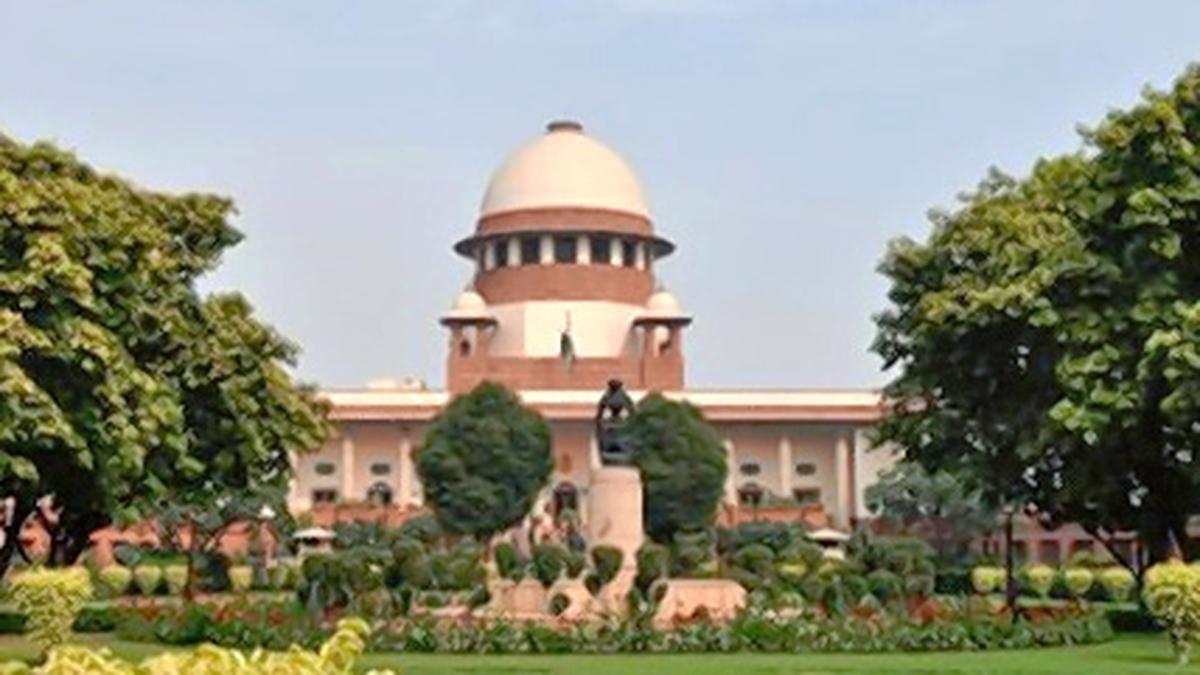
Supreme Court notice on challenge to Kerala HC’s dismissal of plea on appointment of temple priests
The Supreme Court has issued a notice on a plea challenging a Kerala High Court decision which mandated that temple priests must be appointed in accordance with religious texts. This development is significant for competitive exams as it touches upon constitutional provisions related to religious freedom (Articles 25 and 26), temple administration, and the judiciary's role in religious matters. It highlights the ongoing debate on the balance between religious traditions and administrative practices in public temples.
Revision structure
Monthly events and exam calendar context
Static GK and one-liner notes
Quiz and mock-test revision path
Key points
Exam-ready takeaways
The Kerala High Court had ruled that temple priests must be appointed strictly in accordance with religious texts.
The plea before the Supreme Court contests this specific decision by the Kerala High Court.
This case involves legal interpretations concerning the administration of temples and religious practices.
It has implications for constitutional articles related to freedom of religion, particularly Articles 25 and 26.
Detailed analysis
Full exam-oriented breakdown
The Supreme Court's recent issuance of a notice concerning a challenge to the Kerala High Court's decision on the appointment of temple priests marks a significant juncture in India's ongoing discourse on religious freedom, temple administration, and social justice. This development brings to the fore the delicate balance between ancient religious traditions and modern constitutional principles, particularly in a secular democratic republic like India. **Background Context and What Happened:** Temple administration in India has a long and complex history, often intertwined with state patronage and societal structures. Post-independence, many temples, especially those with significant public endowments, came under the purview of state-controlled statutory bodies like the Devaswom Boards in Kerala. These boards, established under acts such as the Travancore-Cochin Hindu Religious Institutions Act, 1950, are tasked with managing temples and their properties, ensuring proper conduct of rituals, and facilitating public access. Over the years, there has been a persistent demand for reforms in temple practices, particularly concerning the appointment of priests, which has historically been restricted to specific Brahmin communities, often on hereditary lines or based on traditional interpretations of religious texts. In this particular instance, the Kerala High Court had ruled that temple priests must be appointed strictly in accordance with religious texts. This decision likely stemmed from a petition or a general administrative directive seeking clarity or adherence to traditional practices. The High Court's rationale would typically revolve around the idea that priesthood is an 'essential religious practice' and thus falls under the protection of Article 26(b) of the Constitution, which grants religious denominations the right to manage their own affairs in matters of religion. However, this ruling was challenged, leading to the current notice from the Supreme Court. The challenge likely argues against the exclusivity or the rigid interpretation of 'religious texts' that could perpetuate discriminatory practices, potentially violating fundamental rights like equality and non-discrimination. **Key Stakeholders Involved:** Several key stakeholders are involved in this legal and social debate. Firstly, the **Petitioner(s)** who challenged the Kerala High Court's decision in the Supreme Court are crucial. These could be individuals or organizations advocating for broader inclusion, challenging caste-based discrimination, or seeking a more progressive interpretation of religious practices. Secondly, the **Kerala High Court**, whose decision is under scrutiny, represents the initial judicial stance on the matter. Thirdly, the **Supreme Court of India** is the ultimate arbiter, tasked with interpreting constitutional provisions and setting precedents. Fourthly, **Temple Boards/Devaswom Boards** (like the Travancore Devaswom Board, Cochin Devaswom Board, etc.) are central, as they are the administrative bodies responsible for appointments. Their practices and policies will be directly impacted. Finally, **religious organizations, traditionalists, and specific priestly communities** who advocate for adherence to ancient texts and established customs are significant stakeholders, as are **social reformers and advocates for anti-caste discrimination**, who push for inclusive appointments regardless of caste or hereditary claims. **Significance for India and Constitutional Provisions:** This case holds immense significance for India's constitutional framework and social fabric. It directly engages with **Articles 25 and 26** of the Indian Constitution, which guarantee freedom of conscience and the right to freely profess, practice, and propagate religion, and the freedom to manage religious affairs, respectively. A critical aspect here is the 'essential religious practice' doctrine, evolved through various Supreme Court judgments (e.g., Shirur Math case, Sabarimala case). The court will have to determine whether the appointment of priests exclusively based on specific religious texts, potentially leading to exclusion, constitutes an 'essential religious practice' protected under Article 26, or if it falls under 'secular aspects' of religious practice that can be regulated by the state, perhaps to enforce **Article 14 (equality before law)**, **Article 15 (prohibition of discrimination)**, or **Article 17 (abolition of untouchability)**. Historically, the administration of Hindu temples has often been a site of social reform. Attempts to allow non-Brahmin priests or to permit entry for all castes into temples have been part of India's post-independence journey towards a more egalitarian society, aligning with the Preamble's ideals of justice, liberty, equality, and fraternity. The Kerala government, for instance, has previously taken steps to appoint non-Brahmin priests, including those from Scheduled Castes, in temples under Devaswom Boards, reflecting a broader push for social inclusion. **Future Implications:** The Supreme Court's eventual ruling will have far-reaching implications. If the Supreme Court upholds the Kerala High Court's decision, it could reinforce traditional, potentially exclusionary, practices in temple appointments, leading to concerns about caste discrimination and hindering social reform efforts. Conversely, if it overturns the decision, it could pave the way for more inclusive appointment policies, aligning temple administration with modern constitutional values of equality and non-discrimination. This could potentially empower Devaswom Boards and other temple trusts to implement merit-based or socially inclusive appointment criteria, irrespective of caste or hereditary claims, drawing from the spirit of the Kerala Hindu Places of Public Worship (Authorisation of Entry) Act, 1965, which abolished caste-based restrictions for temple entry. The judgment will also further clarify the extent of judicial intervention in religious matters and the interpretation of the 'essential religious practice' doctrine, impacting future debates on issues like uniform civil code or other religious practices. This case is a testament to the dynamic interplay between law, religion, and society in India, constantly challenging and redefining what it means to be a secular state with deep-rooted religious traditions.
How to study
Turn news into exam marks
Revise monthly events by exam family instead of reading random updates.
Pair one-liners with mock tests so mistakes become the next revision list.
Keep state job pages, calendar pages and GK packs connected in one path.