

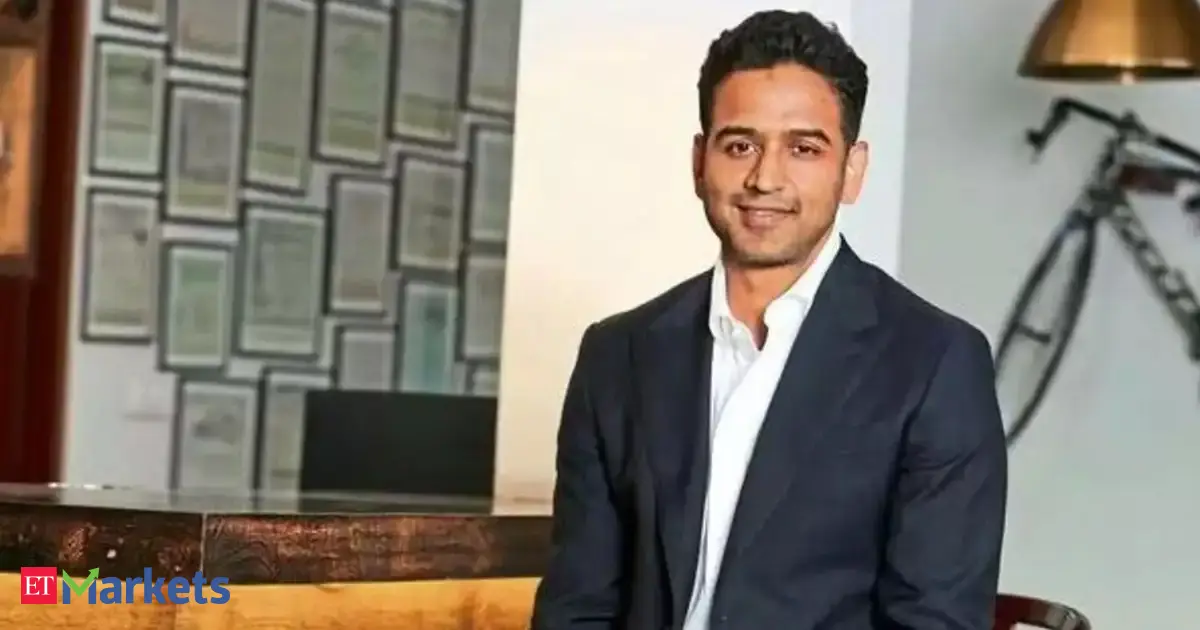
Zerodha founder Nithin Kamath criticized the recent Securities Transaction Tax (STT) hike on equity derivatives.
GK and monthly revision
Nithin Kamath warns STT hike may not curb F&O speculation, instead hits trading volumes
Zerodha founder Nithin Kamath criticized the STT hike on equity derivatives, stating it won't curb speculation, which is predominantly in options. He warned that increased taxes could harm futures volumes, liquidity, and price discovery in financial markets. This issue is crucial for understanding India's financial policy, market regulation, and taxation's impact on economic activity for competitive exams.
Revision structure
Monthly events and exam calendar context
Static GK and one-liner notes
Quiz and mock-test revision path
Key points
Exam-ready takeaways
Kamath argued the STT hike would not curb speculation effectively, as most speculative activity occurs in options, not futures.
He warned that the increased taxation could negatively impact futures trading volumes, market liquidity, and efficient price discovery.
Kamath proposed that implementing "suitability norms" would be a more effective measure to address market speculation.
The discussion highlights the impact of government taxation policies, specifically STT, on India's financial derivatives market.
Detailed analysis
Full exam-oriented breakdown
The criticism leveled by Zerodha founder Nithin Kamath regarding the recent Securities Transaction Tax (STT) hike on equity derivatives is a crucial discussion point for understanding India's financial market dynamics, regulatory approach, and the impact of taxation on economic activity. This issue delves into the heart of how India balances revenue generation, market efficiency, and investor protection. **Background Context: Understanding STT and Derivatives** To fully grasp Kamath's concerns, we first need to understand STT and equity derivatives. Securities Transaction Tax (STT) is a direct tax levied on every transaction of purchase and sale of securities that are listed on Indian stock exchanges. It was introduced in 2004 by then-Finance Minister P. Chidambaram, primarily to simplify the tax regime by replacing the long-term capital gains tax on equity transactions. The rationale was to broaden the tax base and ensure that all equity market participants contribute to government revenue. Over the years, STT rates have been adjusted through various Finance Acts. Equity derivatives, on the other hand, are financial instruments whose value is derived from an underlying equity asset. The two most common types are Futures and Options. Futures contracts obligate the buyer to purchase or the seller to sell an asset at a predetermined future date and price. Options contracts give the holder the right, but not the obligation, to buy or sell an underlying asset at a specified price on or before a certain date. Derivative markets in India were introduced in the year 2000, starting with index futures, and have since grown exponentially, becoming vital for hedging risks, speculation, and price discovery. **What Happened: Kamath's Critique** Nithin Kamath's critique stems from the recent hike in STT on the sale of futures and options contracts. Specifically, the STT on the sale of equity futures was increased from 0.01% to 0.0125%, and on the sale of options, it went up from 0.017% to 0.021% (effective April 1, 2023, as per the Finance Act, 2023). Kamath argues that this hike is unlikely to achieve its stated goal of curbing 'speculation' effectively because the bulk of speculative activity in the Indian market, particularly among retail traders, occurs in options due to their lower capital requirement and higher leverage potential. Futures, while also used for speculation, are often employed by institutional players and sophisticated traders for hedging and arbitrage strategies. Kamath's core warning is that higher taxes on futures could significantly hurt futures trading volumes, subsequently impacting market liquidity and the efficiency of price discovery. Lower liquidity means it's harder to buy or sell large quantities of assets without significantly moving their prices, making markets less efficient and attractive. He suggests that a more effective solution to address excessive speculation, especially among retail participants, would be to implement 'suitability norms'. These norms would involve stricter eligibility criteria or educational requirements for individuals to participate in complex derivative trading, ensuring that only those with adequate understanding and risk appetite engage in such high-risk activities. **Key Stakeholders Involved** 1. **Government (Ministry of Finance):** The primary decision-maker behind STT rates, driven by objectives of revenue generation, market stability, and investor protection. Taxation policy falls under the Union List as per Article 246 read with the Seventh Schedule of the Constitution, empowering Parliament to legislate on 'taxes on income other than agricultural income' and 'duties of excise'. STT is enacted through the annual Finance Act. 2. **SEBI (Securities and Exchange Board of India):** The market regulator, established under the SEBI Act, 1992, responsible for protecting the interests of investors in securities, promoting the development of, and regulating the securities market. SEBI would be instrumental in implementing any 'suitability norms' proposed by Kamath. 3. **Stock Exchanges (NSE, BSE):** The platforms where derivatives are traded. Their business is directly impacted by trading volumes and liquidity. Reduced volumes mean lower transaction fees for exchanges. 4. **Brokers (e.g., Zerodha):** Facilitate trading for millions of retail and institutional investors. Their revenue models are often linked to transaction volumes. They act as a voice for market participants, raising concerns about policy impacts. 5. **Traders and Investors:** The ultimate consumers of financial services, directly bearing the cost of STT and experiencing the effects of market liquidity and efficiency. **Significance for India** This issue holds immense significance for India's financial landscape. A healthy and efficient derivatives market is crucial for several reasons: it provides tools for risk management for businesses and investors, facilitates capital formation, and attracts foreign institutional investment. If STT hikes lead to reduced volumes and liquidity, it could make Indian markets less attractive for both domestic and international participants. This could hinder India's ambition to become a global financial hub. Moreover, the debate highlights the ongoing challenge of balancing government revenue needs with market growth and investor protection. While curbing 'speculation' might sound appealing, an overly restrictive tax regime could stifle legitimate hedging activities and price discovery, which are essential for market maturity. The discussion also touches upon broader themes of financial literacy and responsible participation in complex financial instruments, which are critical for the long-term health of India's capital markets. **Future Implications** The immediate future might see a slight dip in futures trading volumes as market participants adjust to higher costs. However, the long-term impact will depend on whether the government and SEBI heed calls for alternative measures like suitability norms. If suitability norms are implemented, they could significantly alter the landscape of retail participation in derivatives, potentially reducing the number of speculative traders but also improving the overall quality and stability of the market. This could lead to a more mature and less volatile derivatives segment, aligning with SEBI's mandate of investor protection. The debate also underscores the need for continuous dialogue between regulators, market participants, and policymakers to ensure that tax policies support, rather than hinder, the robust growth of India's financial markets.
How to study
Turn news into exam marks
Revise monthly events by exam family instead of reading random updates.
Pair one-liners with mock tests so mistakes become the next revision list.
Keep state job pages, calendar pages and GK packs connected in one path.