

Union Budget 2026 includes a proposal to increase duty-free import limits for processing inputs.
GK and monthly revision
Union Budget 2026: Duty free import of processing inputs to boost export of value added seafood
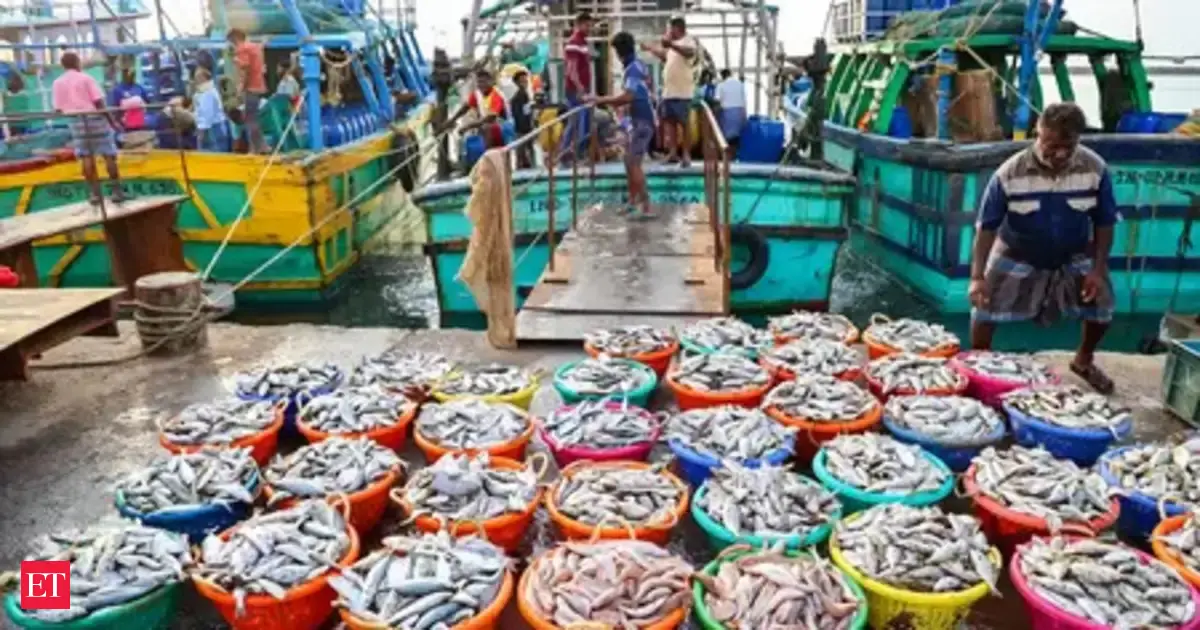
Union Budget 2026 proposes a threefold increase in duty-free import limits for processing inputs for seafood. This strategic move aims to significantly lower production costs for exporters, thereby boosting India's value-added seafood exports and enhancing global competitiveness. This policy change is important for understanding government initiatives to promote exports and strengthen specific economic sectors for competitive exams.
Revision structure
Monthly events and exam calendar context
Static GK and one-liner notes
Quiz and mock-test revision path
Key points
Exam-ready takeaways
The increase in duty-free import limits for processing inputs is threefold.
The specific sector targeted by this measure is India's seafood exports.
The primary objective is to lower production costs and boost the export of value-added seafood products.
This initiative aims to enhance India's competitiveness against rival seafood exporting nations like Vietnam and Thailand.
Detailed analysis
Full exam-oriented breakdown
The Union Budget 2026's proposal to threefold increase duty-free import limits for processing inputs in the seafood sector is a strategic move designed to significantly bolster India's position in the global value-added seafood market. This initiative is not merely an isolated budget announcement but reflects a deeper understanding of India's economic potential and the challenges faced by its export-oriented industries. **Background Context:** India boasts a vast coastline of over 7,500 km, an extensive Exclusive Economic Zone (EEZ), and diverse aquatic resources, making it one of the world's leading fish-producing nations. Historically, India's seafood exports have been dominated by raw or minimally processed items, primarily frozen shrimp. While this has brought in significant foreign exchange, the profit margins and global competitiveness remain limited compared to nations like Vietnam and Thailand, which have successfully pivoted towards high-value, processed, ready-to-eat, or ready-to-cook seafood products. Indian exporters have often struggled with higher input costs for processing, including specialized packaging materials, additives, and certain machinery components that are either not available domestically or are more expensive to procure. This has been a major impediment to scaling up value addition, leading to a smaller share of value-added products in India's total seafood export basket. **What Happened:** The Union Budget 2026 has proposed a crucial policy intervention: a threefold increase in the duty-free import limits for processing inputs specifically for the seafood sector. This means that exporters can now import a significantly larger quantity of essential raw materials, ingredients, or components without incurring customs duties. By exempting these crucial inputs from import duties, the government aims to directly reduce the production cost for value-added seafood products. This makes Indian processed seafood more price-competitive in the international market, thereby enabling exporters to compete more effectively with established players like Vietnam and Thailand, who often benefit from lower input costs or more favorable trade policies. **Key Stakeholders Involved:** Several stakeholders are directly and indirectly impacted by this policy. The **Government of India**, particularly the Ministry of Finance (which frames the budget and customs policies), the Ministry of Commerce and Industry (responsible for foreign trade policy), and the Department of Fisheries (under the Ministry of Fisheries, Animal Husbandry and Dairying, which promotes the sector), are the primary architects and implementers. **Seafood Exporters and Processors** are the direct beneficiaries, as their operational costs will decrease, potentially leading to higher profit margins and increased export volumes. This, in turn, will create a ripple effect, benefiting **Fishermen and Aquaculture Farmers** by increasing demand for their catch and produce. **Logistics and Cold Chain Operators** will also see increased activity. Internationally, rival seafood exporting nations like Vietnam and Thailand will face enhanced competition from India. **Why This Matters for India:** This policy is critical for India's economic growth and aligns with several broader national objectives. Firstly, it will significantly boost **foreign exchange earnings**, contributing positively to India's Balance of Payments. Secondly, by encouraging value addition, it will lead to **job creation** in processing units, packaging industries, and related logistics, especially in coastal areas, thereby promoting rural development. Thirdly, it is a step towards achieving the goals of the 'Make in India' and 'Atmanirbhar Bharat' initiatives by encouraging domestic processing and manufacturing, even if some inputs are imported. The focus shifts from merely exporting raw materials to exporting sophisticated, high-value finished goods. This diversification of the export basket makes India's economy more resilient and less vulnerable to price fluctuations of primary commodities. **Historical Context:** India's trade policy has long recognized the importance of export promotion. Schemes like the Advance Authorisation Scheme, which allows duty-free import of inputs for export production, have been in place under the Foreign Trade Policy (FTP) for decades. This budget proposal is an enhancement or a specific application of such principles, tailored to address the unique challenges of the seafood processing sector. The 'Blue Revolution' initiative, launched in 2016, also aimed at comprehensive development of the fisheries sector, including enhancing production, processing, and exports. This budget measure can be seen as a direct policy tool to further the objectives of the Blue Revolution by addressing a critical cost barrier. **Future Implications:** The threefold increase in duty-free limits is expected to stimulate substantial growth in India's value-added seafood exports. This could lead to greater investment in modern processing technologies, improved quality control, and diversification into new product lines. However, the success of this policy will also depend on other factors such as robust cold chain infrastructure, skilled labor availability, and adherence to international quality and sustainability standards. It also raises the potential for similar export promotion measures in other sectors where value addition is low, and input costs are a barrier. From a constitutional perspective, customs duties are levied under the authority of **Article 265** of the Indian Constitution, which states that no tax shall be levied or collected except by authority of law. The **Customs Act, 1962**, governs the levy and collection of customs duties, and exemptions like this are provided under its provisions. Furthermore, the overall framework for such trade policies is guided by the **Foreign Trade (Development and Regulation) Act, 1992**, which empowers the central government to make provisions for the development and regulation of foreign trade. This policy, therefore, fits within the established legal and constitutional framework for promoting India's international trade.
How to study
Turn news into exam marks
Revise monthly events by exam family instead of reading random updates.
Pair one-liners with mock tests so mistakes become the next revision list.
Keep state job pages, calendar pages and GK packs connected in one path.