

India has successfully finalized eight Free Trade Agreements (FTAs).
GK and monthly revision
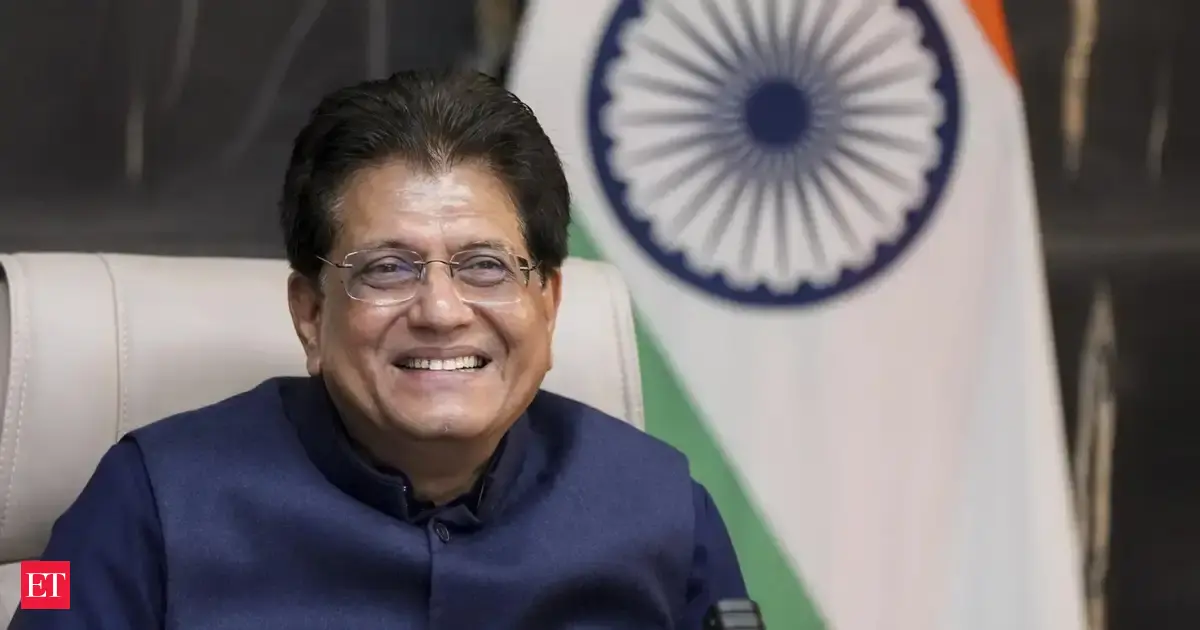
India has finalised eight FTAs covering 37 developed countries: Commerce Minister Goyal
India's Commerce Minister Piyush Goyal announced the finalization of eight Free Trade Agreements (FTAs) covering 37 developed countries, marking a significant stride in India's global trade strategy. This move aims to boost India's exports, attract foreign investment, and foster economic growth by integrating with key global markets. This development is vital for candidates preparing for competitive exams, particularly in topics related to international trade, economy, and government policy.
Revision structure
Monthly events and exam calendar context
Static GK and one-liner notes
Quiz and mock-test revision path
Key points
Exam-ready takeaways
These eight FTAs collectively cover 37 developed countries.
The announcement was made by India's Commerce Minister, Piyush Goyal.
Talks for new trade pacts are currently progressing with Chile, Peru, and Canada.
New trade agreements are also being explored with Mercosur, the Gulf Cooperation Council (GCC), and the Southern African Customs Union (SACU).
Detailed analysis
Full exam-oriented breakdown
India's recent announcement by Commerce Minister Piyush Goyal regarding the finalization of eight Free Trade Agreements (FTAs) covering 37 developed countries marks a pivotal moment in the nation's global trade strategy. This development is not an isolated event but rather a culmination of India's evolving approach to international trade, significantly influenced by its economic liberalization journey and geopolitical aspirations. **Background Context and Historical Trajectory:** Historically, India maintained a relatively protectionist trade policy post-independence, aimed at fostering domestic industries. However, the economic reforms of 1991 ushered in an era of liberalization, gradually opening up the economy to global trade and investment. While India has been a founding member of the GATT (General Agreement on Tariffs and Trade) and its successor, the World Trade Organization (WTO), its engagement with bilateral and regional trade agreements was initially cautious. Early FTAs, such as with Sri Lanka (1998), ASEAN (2009), South Korea (2010), and Japan (2011), provided valuable experience. However, a significant turning point came with India's withdrawal from the Regional Comprehensive Economic Partnership (RCEP) in November 2019, primarily due to concerns over potential adverse impacts on domestic industries and agriculture, particularly from Chinese imports. This withdrawal prompted a strategic re-evaluation, shifting India's focus towards negotiating FTAs with developed economies and like-minded partners, emphasizing reciprocity, market access, and a balanced outcome. **What Happened:** Commerce Minister Piyush Goyal recently announced that India has successfully finalized eight FTAs that encompass 37 developed nations. While the specific list of these eight FTAs wasn't detailed in the immediate statement, it signifies a concrete step towards deeper integration with key global markets. This move aims to expand India's export basket, attract foreign direct investment (FDI), and enhance its position in global supply chains. Furthermore, the announcement highlighted ongoing negotiations for new trade pacts with key economies like Chile, Peru, and Canada. India is also actively exploring agreements with significant regional blocs such as Mercosur (Southern Common Market), the Gulf Cooperation Council (GCC), and the Southern African Customs Union (SACU), indicating a diversified and ambitious trade agenda. **Key Stakeholders Involved:** Several key players are central to this development. The **Government of India**, particularly the **Ministry of Commerce and Industry**, is the primary driver, responsible for conceptualizing, negotiating, and implementing these agreements. **Indian businesses and exporters** are direct beneficiaries, gaining enhanced market access, reduced tariffs, and a more predictable trade environment, which can boost their competitiveness. **Indian consumers** stand to benefit from a wider array of imported goods and potentially lower prices due to reduced duties. The **partner developed countries** involved in these FTAs gain preferential access to India's vast and growing market, fostering their own economic interests. Finally, **international organizations** like the WTO provide the overarching multilateral framework within which these bilateral and regional agreements operate, ensuring adherence to global trade norms. **Significance for India:** These finalized FTAs hold immense significance for India's economic and strategic future. Economically, they are expected to **boost exports**, especially in sectors where India has a competitive advantage, such as textiles, pharmaceuticals, engineering goods, and IT services. This will contribute to **GDP growth** and **job creation**. By diversifying export markets, India can reduce its reliance on a few key destinations, thereby enhancing its **economic resilience** against global shocks. FTAs also act as a magnet for **Foreign Direct Investment (FDI)**, as foreign companies seek to leverage India's production capabilities and market access to partner countries. Strategically, these agreements strengthen India's **geopolitical influence** by forging closer economic ties with developed nations, aligning with its vision of becoming a major global economic power. Furthermore, they can support domestic initiatives like 'Make in India' and 'Production Linked Incentive (PLI)' schemes by providing global market access for domestically manufactured goods, thereby promoting India as a manufacturing hub. **Constitutional Provisions and Policy Framework:** The legal basis for India's engagement in international agreements, including FTAs, primarily stems from **Article 253 of the Indian Constitution**. This article empowers the Parliament to make any law for implementing any treaty, agreement, or convention with any other country or any decision made at any international conference, association, or other body. This provides the legislative authority for the government to enact laws or amend existing ones to give effect to the provisions of an FTA. The **Foreign Trade (Development and Regulation) Act, 1992**, and the periodically announced **Foreign Trade Policy (FTP)** provide the statutory framework and operational guidelines for India's external trade. The **Customs Act, 1962**, is directly impacted by FTAs, as it governs the imposition and collection of customs duties, which are typically reduced or eliminated under these agreements. Balancing these international commitments with domestic policies like 'Atmanirbhar Bharat' (Self-Reliant India) and 'Vocal for Local' is a continuous challenge, requiring careful calibration to ensure that FTAs benefit India without undermining domestic industries. **Future Implications:** Looking ahead, the successful implementation and expansion of these FTAs will be crucial. India aims to achieve a USD 1 trillion merchandise export target by 2030, and these agreements are a critical tool in realizing that ambition. The ongoing talks with Chile, Peru, and Canada, along with explorations with Mercosur, GCC, and SACU, suggest a proactive and diversified strategy to integrate India more deeply into various regional and global value chains. However, challenges remain, including addressing non-tariff barriers, ensuring effective dispute resolution mechanisms, and managing the potential impact on sensitive domestic sectors. The success of these FTAs will depend on continuous monitoring, adaptation, and the ability to leverage these agreements to foster technological upgradation, skill development, and overall economic competitiveness, positioning India as a resilient and dynamic player in the global economy.
How to study
Turn news into exam marks
Revise monthly events by exam family instead of reading random updates.
Pair one-liners with mock tests so mistakes become the next revision list.
Keep state job pages, calendar pages and GK packs connected in one path.