

The Union Budget 2026-27 unveiled dedicated initiatives for high-quality sports goods manufacturing and research.
GK and monthly revision
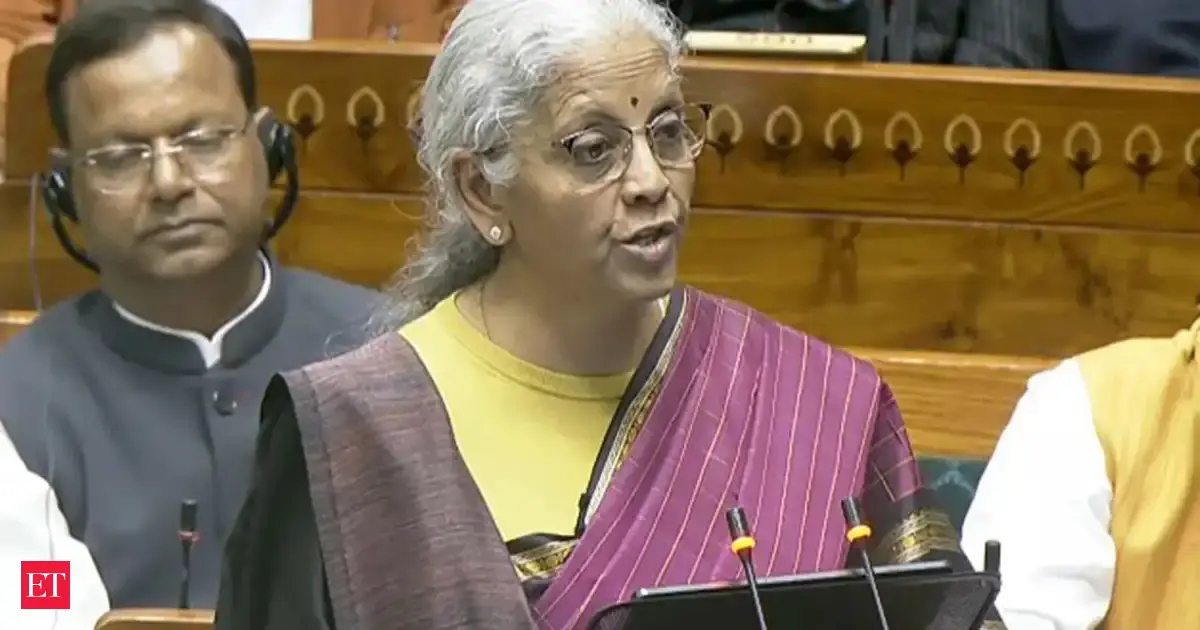
India Budget 2026-27: Sitharaman unveils initiative for high-quality sports manufacturing
The Union Budget 2026-27 has introduced significant initiatives for high-quality sports goods manufacturing and research, alongside a scheme aimed at reviving 200 industrial clusters. It also prioritizes the textile sector with an integrated program for fibre self-reliance, modernization, and handloom support, including the Samarth 2.0 skilling program and the establishment of Mega textile parks. These measures are crucial for boosting domestic manufacturing, creating employment, and enhancing India's economic self-reliance, making them vital for competitive exam preparation on economic policy and government schemes.
Revision structure
Monthly events and exam calendar context
Static GK and one-liner notes
Quiz and mock-test revision path
Key points
Exam-ready takeaways
A new scheme has been introduced to revive 200 industrial clusters.
An integrated program for the textile sector will focus on fibre self-reliance, modernization, and handloom support.
The Samarth 2.0 program is specifically aimed at upgrading textile skilling.
Mega textile parks are planned for establishment to boost production and value addition, particularly in technical textiles.
Detailed analysis
Full exam-oriented breakdown
The Union Budget 2026-27's announcement of dedicated initiatives for high-quality sports goods manufacturing, the revival of 200 industrial clusters, and an integrated program for the textile sector marks a significant stride towards bolstering India's domestic manufacturing capabilities and achieving greater economic self-reliance. These measures are deeply rooted in the government's overarching vision of 'Make in India' and 'Aatmanirbhar Bharat' (Self-Reliant India), aiming to transform India into a global manufacturing hub and reduce import dependence. **Background Context and Historical Significance:** India has historically been a manufacturing nation, particularly in textiles, which boasts a rich heritage dating back millennia. However, post-liberalization, the sector faced stiff global competition, leading to challenges in modernization, technology adoption, and value addition. Similarly, many industrial clusters, vital for small and medium enterprises (SMEs), have struggled with infrastructure deficits, outdated technology, and lack of access to finance and markets. The sports goods manufacturing sector, while having pockets of excellence (like Jalandhar for sports equipment), has largely remained fragmented and often reliant on imported raw materials or finished products. The COVID-19 pandemic further exposed vulnerabilities in global supply chains, intensifying the push for domestic production and resilience. This budget's initiatives are a direct response to these historical challenges and current geopolitical realities, seeking to create a more robust and self-sustaining industrial base. **What Happened (Key Initiatives):** The budget proposes three core areas of intervention. Firstly, the introduction of dedicated initiatives for **high-quality sports goods manufacturing and research** aims to elevate India's position in the global sports economy. This includes promoting innovation, improving product quality, and potentially fostering a 'Made in India' brand in sports. Secondly, a scheme to **revive 200 industrial clusters** is a crucial step towards revitalizing regional economies, enhancing the competitiveness of Micro, Small, and Medium Enterprises (MSMEs), and creating local employment. These clusters often suffer from common infrastructure and technology gaps, which this scheme intends to address. Thirdly, the **textile sector** receives a comprehensive boost through an integrated program focusing on **fibre self-reliance, modernization, and handloom support**. This includes **Samarth 2.0**, an upgraded skilling program, and the establishment of **Mega Textile Parks** (like the existing PM MITRA parks), with a special emphasis on technical textiles. Technical textiles, used in diverse applications from healthcare to automotive, represent a high-growth, high-value segment. **Key Stakeholders Involved:** The primary stakeholders are the **Government of India**, particularly the Ministry of Finance, Ministry of Textiles, Ministry of MSME, and Ministry of Youth Affairs and Sports, which are responsible for policy formulation, funding allocation, and implementation oversight. **Domestic manufacturers and industries**, especially MSMEs operating within industrial clusters and the textile and sports goods sectors, are direct beneficiaries and implementers. **Workers and artisans**, particularly those in handloom and textile industries, will benefit from skilling programs like Samarth 2.0 and increased employment opportunities. **Research and development institutions** will be critical for driving innovation in sports goods and technical textiles. Finally, **consumers** stand to gain from higher quality, more affordable 'Made in India' products. **Significance for India:** These initiatives hold immense significance for India's economic trajectory. They are poised to **boost manufacturing GDP growth**, contribute to **export earnings**, and significantly enhance **employment generation**, especially in labor-intensive sectors like textiles and MSMEs. The focus on fibre self-reliance and high-quality manufacturing aligns perfectly with the 'Aatmanirbhar Bharat' vision, reducing reliance on imports and strengthening domestic value chains. Revival of industrial clusters will foster **balanced regional development** and empower local economies. The emphasis on technical textiles and sports goods manufacturing positions India to tap into niche, high-growth global markets, moving beyond traditional manufacturing into more sophisticated areas. This also has social implications, as skill development and job creation can lead to improved livelihoods and reduced poverty. **Constitutional Provisions and Broader Themes:** The government's commitment to industrial growth and employment generation is underpinned by the **Directive Principles of State Policy (DPSP)** in the Indian Constitution. Articles like **Article 39(a)** (right to an adequate means of livelihood), **Article 41** (right to work, to education, and to public assistance in certain cases), and **Article 43** (living wage, conditions of work ensuring a decent standard of life, and full enjoyment of leisure and social and cultural opportunities, especially promotion of cottage industries) provide the guiding framework for such economic policies. The promotion of industries falls under the **Seventh Schedule**, with Entry 52 of the Union List giving Parliament powers to legislate on industries declared by Parliament to be necessary or expedient in the public interest. The **MSMED Act, 2006**, governs the development of Micro, Small, and Medium Enterprises, directly relevant to industrial cluster revival. These initiatives connect to broader themes of **economic governance**, **sustainable industrialization**, **skill development**, and **export promotion**, aiming to integrate India more effectively into global value chains while safeguarding domestic interests. **Future Implications:** If implemented effectively, these budget proposals could lead to a significant transformation in India's manufacturing landscape. We can expect increased domestic production of sports goods, potentially making India a competitive player in the global market. The revitalization of industrial clusters could create a ripple effect, fostering innovation and creating numerous jobs at the local level. The textile sector, with its focus on modernization and technical textiles, could witness a resurgence, moving up the value chain and reducing reliance on traditional low-value products. However, challenges such as ensuring timely project execution, attracting adequate private investment, overcoming bureaucratic hurdles, and adapting to rapidly changing global market demands will be crucial. The success of these schemes will determine India's ability to capitalize on its demographic dividend and become a truly self-reliant and globally competitive manufacturing economy.
How to study
Turn news into exam marks
Revise monthly events by exam family instead of reading random updates.
Pair one-liners with mock tests so mistakes become the next revision list.
Keep state job pages, calendar pages and GK packs connected in one path.