

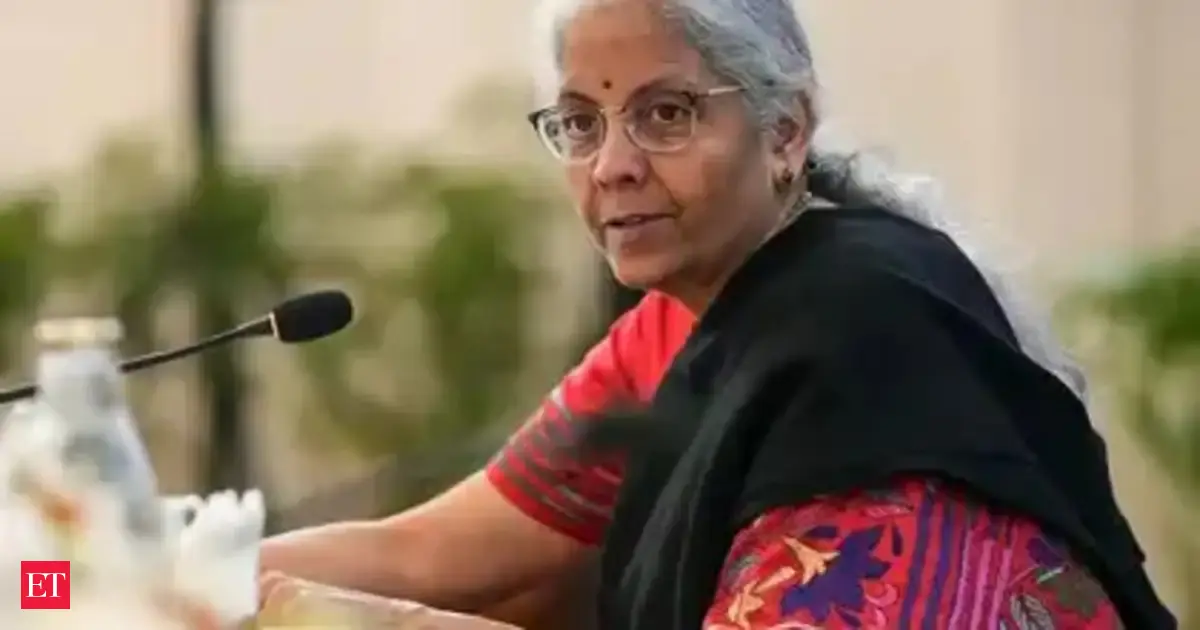
The measure was proposed by Finance Minister Nirmala Sitharaman.
GK and monthly revision
FM proposes one-time measure to facilitate sales from SEZs to domestic market at concessional duty
Finance Minister Nirmala Sitharaman proposed a one-time measure allowing Special Economic Zone (SEZ) manufacturing units to sell products to the domestic market at concessional duty rates. This policy aims to address capacity utilisation challenges faced by SEZ units due to global trade disruptions. It is significant for competitive exams as it pertains to economic policy, SEZ regulations, and government interventions to support manufacturing and trade.
Revision structure
Monthly events and exam calendar context
Static GK and one-liner notes
Quiz and mock-test revision path
Key points
Exam-ready takeaways
It is a special one-time measure for SEZ manufacturing units.
Eligible SEZ units can now sell their products to the domestic market.
Sales to the domestic market will be at concessional duty rates.
The primary aim is to address capacity utilisation issues stemming from global trade disruptions.
Detailed analysis
Full exam-oriented breakdown
The recent announcement by Finance Minister Nirmala Sitharaman, proposing a one-time measure to allow Special Economic Zone (SEZ) manufacturing units to sell products to the Domestic Tariff Area (DTA) at concessional duty rates, marks a significant, albeit temporary, shift in India's SEZ policy. This move is primarily a response to the unprecedented global trade disruptions that have severely impacted the capacity utilization of export-oriented units within SEZs. To understand the gravity of this measure, it's crucial to delve into the background of SEZs in India. India’s journey with export-oriented enclaves began with Asia's first Export Processing Zone (EPZ) established in Kandla in 1965. However, it was the Special Economic Zones Act of 2005 that provided the legal framework for the modern SEZ regime. The primary objective of the SEZ Act, 2005, was to boost exports, attract foreign and domestic investment, and generate employment. SEZs were designed as duty-free enclaves, treated as foreign territory for trade operations, duties, and tariffs. Units operating within these zones enjoyed various tax benefits, including exemption from customs duty, excise duty, service tax, and income tax for an initial period, provided their output was primarily for export. What happened is that the global economy, particularly post-pandemic and due to geopolitical tensions, has experienced significant supply chain bottlenecks, reduced international demand in certain sectors, and increased logistics costs. This environment has made it challenging for many SEZ units to maintain their export targets and fully utilize their installed manufacturing capacities. Recognizing this predicament, the Finance Minister's proposal offers a lifeline: a temporary window for these units to offload their products into the vast Indian domestic market at reduced duties, rather than letting their production lines sit idle or scale down operations drastically. This is a pragmatic, short-term solution to mitigate losses and sustain manufacturing activity. Key stakeholders involved in this policy shift include the **Government of India**, particularly the Ministry of Finance and the Ministry of Commerce & Industry, which conceptualize and implement such economic measures. The **SEZ units and manufacturers** are the direct beneficiaries, as they gain access to an alternative market. This could prevent layoffs and business closures, thereby safeguarding employment. **Domestic Tariff Area (DTA) manufacturers**, who operate outside SEZs, are another critical stakeholder. While the concessional duties are designed to prevent unfair competition, DTA manufacturers might still express concerns about a potential disadvantage. Lastly, **consumers** could indirectly benefit from a more stable supply of goods and potentially competitive pricing. The **Customs Department** plays a crucial role in implementing and monitoring the concessional duty regime. This measure matters significantly for India on several fronts. Economically, it aims to prevent a deeper manufacturing slump, ensuring that production capacity built over years does not go to waste. It supports the 'Make in India' initiative by fostering domestic manufacturing, even if the original intent was export. It also subtly aligns with the 'Atmanirbhar Bharat' (Self-Reliant India) vision by strengthening domestic supply chains and consumption. Politically, it demonstrates the government's responsiveness to industry challenges and its flexibility in adapting policies to dynamic global conditions. Socially, by helping SEZ units sustain operations, it contributes to job retention and stability, particularly in regions where SEZs are major employers. Historically, the strict distinction between SEZs and the DTA has been a cornerstone of India's SEZ policy. The original intent was to create export hubs, not to facilitate domestic sales. Any sales from SEZs to DTA were treated as imports and attracted full customs duties. This new measure, though temporary, signals a recognition that rigid adherence to the original framework might be counterproductive in times of crisis. It sets a precedent for policy adaptability. This move also comes at a time when the government is considering a comprehensive overhaul of the SEZ Act, 2005, through the proposed Development of Enterprise and Service Hubs (DESH) Bill, which aims to make SEZs more flexible and integrated with the domestic economy, moving beyond a purely export-oriented focus. Looking at future implications, this one-time measure could serve as a test case for broader reforms. If successful in alleviating capacity utilization issues without significantly disrupting DTA markets, it might encourage a more permanent, albeit regulated, mechanism for SEZ units to access the domestic market. It could also provide valuable insights for the DESH Bill, informing how SEZs can evolve to become more dynamic economic zones that contribute to both exports and domestic growth. However, careful monitoring will be essential to ensure that the concessional duties do not lead to undue advantage or circumvent existing trade regulations. This policy underscores the delicate balance between promoting exports and nurturing domestic industries. From a constitutional and legal perspective, the **Special Economic Zones Act, 2005**, is the primary legislation governing SEZs. Any changes in duty structures are implemented under the authority of the **Customs Act, 1962**, and related rules, subject to **Article 265 of the Indian Constitution**, which states that no tax shall be levied or collected except by authority of law. The broader framework of India's **Foreign Trade Policy** (FTP) also guides such decisions, although this specific measure is an exception to the general DTA sale rules within the FTP. While not directly a constitutional provision, the principle of **Article 301** (freedom of trade, commerce, and intercourse) underpins economic policy, requiring that trade regulations are in the public interest and do not create unreasonable barriers. This measure, by facilitating trade, aims to support economic activity within these constitutional boundaries.
How to study
Turn news into exam marks
Revise monthly events by exam family instead of reading random updates.
Pair one-liners with mock tests so mistakes become the next revision list.
Keep state job pages, calendar pages and GK packs connected in one path.