

India's gross borrowings for the 2026-27 fiscal year are projected at ₹17.2 lakh crore.
GK and monthly revision
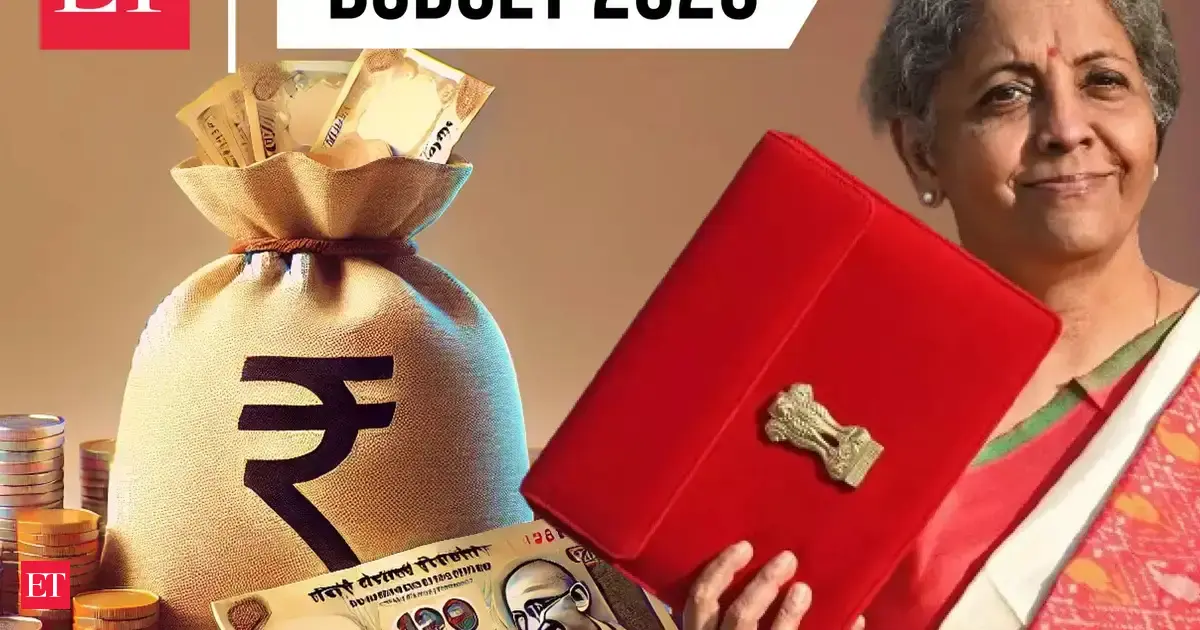
Budget 2026: India to borrow ₹17.2 lakh crore in 2026-27
The Indian government plans significant market borrowings of ₹17.2 lakh crore (gross) and ₹11.7 lakh crore (net) for the 2026-27 fiscal year, as announced by Finance Minister Nirmala Sitharaman in the Union Budget 2026. This substantial borrowing aims to manage the economy amidst a rising bond yield environment. Understanding these figures and their implications for fiscal policy is crucial for competitive exam aspirants, highlighting government's financial strategy.
Revision structure
Monthly events and exam calendar context
Static GK and one-liner notes
Quiz and mock-test revision path
Key points
Exam-ready takeaways
The net borrowings for the 2026-27 fiscal year are estimated at ₹11.7 lakh crore.
The announcement was made by Finance Minister Nirmala Sitharaman during the Union Budget 2026 presentation.
The government's borrowing strategy is aimed at navigating a rising bond yield environment.
These borrowing figures are a key component of the Union Budget for the fiscal year 2026-27.
Detailed analysis
Full exam-oriented breakdown
The announcement by Finance Minister Nirmala Sitharaman regarding India's projected gross borrowings of ₹17.2 lakh crore and net borrowings of ₹11.7 lakh crore for the fiscal year 2026-27 is a critical piece of information that competitive exam aspirants must understand deeply. This substantial borrowing plan reflects the government's fiscal strategy amidst a dynamic economic environment, particularly a rising bond yield scenario. **Background Context: Why Governments Borrow?** Governments, like individuals and businesses, often need to borrow money to meet their expenditure when their revenues fall short. This shortfall is known as the fiscal deficit. In India, the Union Budget outlines the government's estimated receipts and expenditures for the upcoming fiscal year. Borrowing becomes essential to finance critical public services, infrastructure projects (like roads, railways, ports), social welfare schemes, defence spending, and to manage unforeseen economic shocks. Historically, India has often run a fiscal deficit, necessitating market borrowings. The Fiscal Responsibility and Budget Management (FRBM) Act, enacted in 2003, aimed to bring fiscal discipline by setting targets for deficit reduction, though these targets have been periodically revised or relaxed, especially during economic crises like the 2008 global financial crisis or the COVID-19 pandemic. **What Happened: The Borrowing Plan for FY 2026-27** The Union Budget 2026 projects gross market borrowings at ₹17.2 lakh crore and net borrowings at ₹11.7 lakh crore. Gross borrowing refers to the total amount the government plans to raise from the market, including funds to repay maturing debt from previous years. Net borrowing, on the other hand, is the fresh borrowing requirement after accounting for repayment of existing debt. The difference between gross and net borrowing indicates the amount of old debt that needs to be rolled over or refinanced. This significant borrowing target comes at a time when bond yields are rising, meaning the government will have to pay more interest to borrow, making debt servicing more expensive. **Key Stakeholders Involved:** 1. **Ministry of Finance:** This is the primary architect of the Union Budget and fiscal policy. It estimates revenue, expenditure, and the resultant borrowing needs, and is responsible for managing the nation's finances. 2. **Reserve Bank of India (RBI):** The RBI acts as the government's debt manager. It conducts auctions for government securities (G-Secs) on behalf of the government, manages liquidity in the financial system, and uses tools like Open Market Operations (OMOs) to influence bond yields and interest rates. The RBI's monetary policy decisions often interact with the government's fiscal policy. 3. **Investors:** These include commercial banks, insurance companies, provident funds, mutual funds, and foreign portfolio investors (FPIs). They subscribe to government bonds, providing the necessary capital. Their demand for G-Secs, influenced by interest rates, inflation expectations, and liquidity conditions, directly impacts bond yields. 4. **The Public:** Ultimately, the public bears the burden of government debt through taxation. However, they also benefit from the public spending financed by these borrowings, such as improved infrastructure, social safety nets, and economic stability. **Significance for India:** This substantial borrowing has several implications for the Indian economy: * **Fiscal Deficit Management:** The borrowing figures directly reflect the government's projected fiscal deficit. A large deficit can signal potential macroeconomic instability if not managed well. The government's commitment to fiscal consolidation, as outlined in the FRBM Act, will be crucial. * **Interest Rates and Crowding Out:** High government borrowing can increase the demand for funds in the market, potentially pushing up bond yields and interest rates. This can 'crowd out' private investment by making it more expensive for businesses to borrow, thereby dampening economic growth. * **Public Debt Sustainability:** Accumulation of debt adds to India's overall public debt. A high debt-to-GDP ratio can raise concerns about debt sustainability and may even impact India's sovereign credit rating, making future borrowing more expensive. * **Inflationary Pressures:** If borrowed funds are not used productively and lead to an increase in money supply without a corresponding increase in goods and services, it could fuel inflation. * **Infrastructure and Growth:** If the borrowed funds are primarily directed towards capital expenditure (e.g., infrastructure development), it can have a positive long-term impact on economic growth and job creation. **Constitutional and Policy References:** * **Article 112 of the Indian Constitution** mandates that the President shall, in respect of every financial year, cause to be laid before both Houses of Parliament a statement of the estimated receipts and expenditure of the Government of India for that year, known as the 'Annual Financial Statement' or the Union Budget. * **Article 292** empowers the Union government to borrow
How to study
Turn news into exam marks
Revise monthly events by exam family instead of reading random updates.
Pair one-liners with mock tests so mistakes become the next revision list.
Keep state job pages, calendar pages and GK packs connected in one path.