

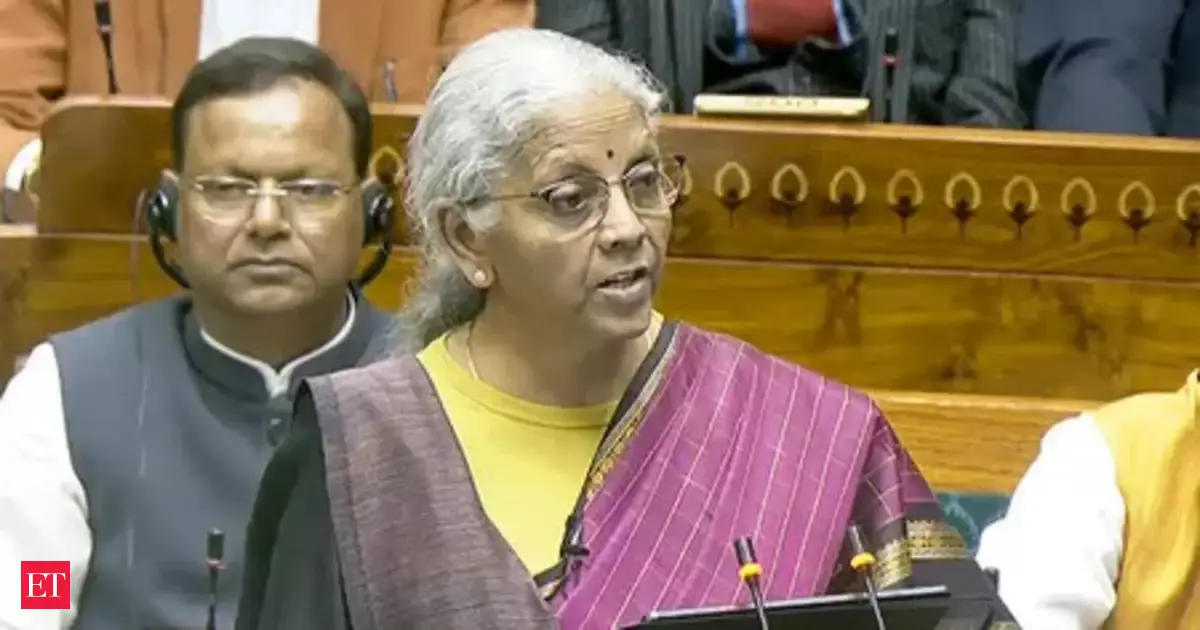
Finance Minister Nirmala Sitharaman proposed a Rs 40,000 crore outlay for the Electronics PLI scheme.
GK and monthly revision
Budget 2026: Finance Minister proposes Rs 40,000-crore Electronics PLI
Finance Minister Nirmala Sitharaman announced a Rs 40,000 crore outlay for the Electronics Production Linked Incentive (PLI) scheme in Budget 2026, specifically for FY 2026-27. This significant initiative aims to bolster India's electronics manufacturing ecosystem and boost exports. It's a key development for 'Make in India' and economic growth, vital for competitive exam preparation in economics and current affairs. The plan also includes establishing high-tech tool rooms for capital goods.
Revision structure
Monthly events and exam calendar context
Static GK and one-liner notes
Quiz and mock-test revision path
Key points
Exam-ready takeaways
The announcement was made as part of Budget 2026, specifically targeting the fiscal year 2026-27.
The Production Linked Incentive (PLI) scheme is designed to strengthen India's electronics manufacturing ecosystem.
A key objective of the initiative is to significantly boost electronics production and exports over the past decade's growth.
The government also plans to establish high-tech tool rooms to support capital goods manufacturing.
Detailed analysis
Full exam-oriented breakdown
The announcement of a substantial Rs 40,000 crore outlay for the Electronics Production Linked Incentive (PLI) scheme in Budget 2026, specifically targeting Fiscal Year 2026-27, marks a pivotal moment in India's journey towards becoming a global manufacturing hub. This initiative is not merely a financial allocation; it represents a strategic commitment to fortify India's electronics manufacturing ecosystem and significantly boost its exports, aligning perfectly with the 'Make in India' and 'Atmanirbhar Bharat' visions. **The Genesis of PLI: A Strategic Shift** India has historically struggled with a robust manufacturing base, particularly in high-tech sectors like electronics, leading to heavy import dependence. Recognizing this vulnerability, especially after global supply chain disruptions highlighted during the COVID-19 pandemic, the government launched the Production Linked Incentive (PLI) schemes in 2020. The core idea behind PLI is to offer incentives to companies for incremental sales from products manufactured in India, thereby encouraging domestic and foreign investment, promoting local value addition, and creating employment. The initial electronics PLI scheme, launched in 2020, covered mobile manufacturing and specified electronic components, attracting significant investment and leading to increased production and exports. The success of these initial schemes laid the groundwork for further expansion and higher allocations, demonstrating the government's belief in this policy instrument. **Budget 2026's Bold Move: Electronics PLI** Finance Minister Nirmala Sitharaman's announcement of an additional Rs 40,000 crore for the Electronics PLI scheme in FY 2026-27 signals a renewed and intensified focus on this sector. This substantial capital infusion aims to attract larger players, encourage deeper localization, and foster innovation within the electronics manufacturing ecosystem. Beyond direct production incentives, the plan to establish high-tech tool rooms for capital goods manufacturing is equally crucial. Tool rooms are foundational for any advanced manufacturing sector, providing precision tools, dies, and molds essential for various industries. Their establishment will reduce reliance on imports for critical manufacturing components and enhance the overall quality and competitiveness of Indian-made capital goods, creating a multiplier effect across the manufacturing landscape. **Key Players and Their Stakes** Several stakeholders are central to the success of this initiative. The **Government of India**, particularly the Ministry of Electronics and Information Technology (MeitY) and the Ministry of Finance, is the primary driver, formulating policies and allocating funds. **Domestic and international electronics manufacturers** are the direct beneficiaries and implementers; their investment decisions, technology transfer, and production capabilities will determine the scheme's efficacy. **Consumers** stand to benefit from more affordable and technologically advanced products. The **Indian workforce** will gain from significant job creation, both directly in manufacturing units and indirectly in ancillary industries. Furthermore, **MSMEs (Micro, Small, and Medium Enterprises)** are critical as they form the backbone of the supply chain, providing components and services to larger manufacturers. Their integration and growth are vital for true ecosystem development. **India's Leap Towards Self-Reliance and Global Leadership** This renewed push for electronics manufacturing holds immense significance for India. Economically, it promises to boost GDP contribution from manufacturing, create millions of jobs across skill levels, and significantly increase exports, thereby improving India's trade balance. Strategically, it enhances India's supply chain resilience, reducing dependence on a few countries for critical electronic components and finished goods. This aligns with the 'Atmanirbhar Bharat Abhiyan' (Self-Reliant India Campaign), aiming to make India a resilient and self-sufficient economy. Technologically, it encourages R&D, skill development, and the adoption of advanced manufacturing processes, positioning India as a global player in high-tech manufacturing. **Constitutional Underpinnings and Policy Framework** While the budget announcement falls under the government's fiscal policy, rooted in **Article 112** of the Constitution (Annual Financial Statement), the underlying objectives align with the Directive Principles of State Policy (DPSP). Articles like **Article 39(a)**, which mandates the state to direct its policy towards securing that the citizens, men and women equally, have the right to an adequate means of livelihood, and **Article 39(c)**, which aims to ensure that the operation of the economic system does not result in the concentration of wealth and means of production to the common detriment, resonate with the job creation and equitable growth aspects of the PLI scheme. Furthermore, **Article 41**, which speaks of the right to work, education, and public assistance in certain cases, is indirectly supported by policies promoting industrial growth and employment. The scheme is also a critical component of India's broader National Policy on Electronics (NPE) 2019, which envisions India as a global hub for electronics system design and manufacturing. **Future Trajectory and Challenges** Looking ahead, this substantial investment has the potential to transform India into a major global electronics manufacturing hub, competing with established players like China and Vietnam. It could attract more Foreign Direct Investment (FDI) into the sector and foster a vibrant ecosystem of innovation and R&D. However, challenges remain. India needs to continuously invest in robust infrastructure (power, logistics), develop a highly skilled workforce through targeted education and training programs, and create an even more business-friendly regulatory environment. Sustained policy support, coupled with industry agility, will be crucial for realizing the full potential of this ambitious endeavor. In essence, the Rs 40,000 crore Electronics PLI outlay is a strategic investment in India's future, aiming to leverage its demographic dividend and growing domestic market to build a resilient, self-reliant, and globally competitive electronics manufacturing sector.
How to study
Turn news into exam marks
Revise monthly events by exam family instead of reading random updates.
Pair one-liners with mock tests so mistakes become the next revision list.
Keep state job pages, calendar pages and GK packs connected in one path.