

Budget 2026-27 introduced a package for livestock, fisheries, and high-value agriculture.
GK and monthly revision
Budget 2026-27 targets rural diversification with fisheries, livestock initiatives
The Budget 2026-27, presented by Finance Minister Nirmala Sitharaman, introduced a significant package targeting rural diversification through initiatives in livestock, fisheries, and high-value agriculture. These measures, including zero duty on marine catch and support for inland fisheries, aim to boost rural incomes beyond traditional farming. This is crucial for competitive exams as it covers government policy, economic reforms, and rural development strategies.
Revision structure
Monthly events and exam calendar context
Static GK and one-liner notes
Quiz and mock-test revision path
Key points
Exam-ready takeaways
The measures were announced by Finance Minister Nirmala Sitharaman.
The primary goal is to boost rural incomes beyond traditional farming.
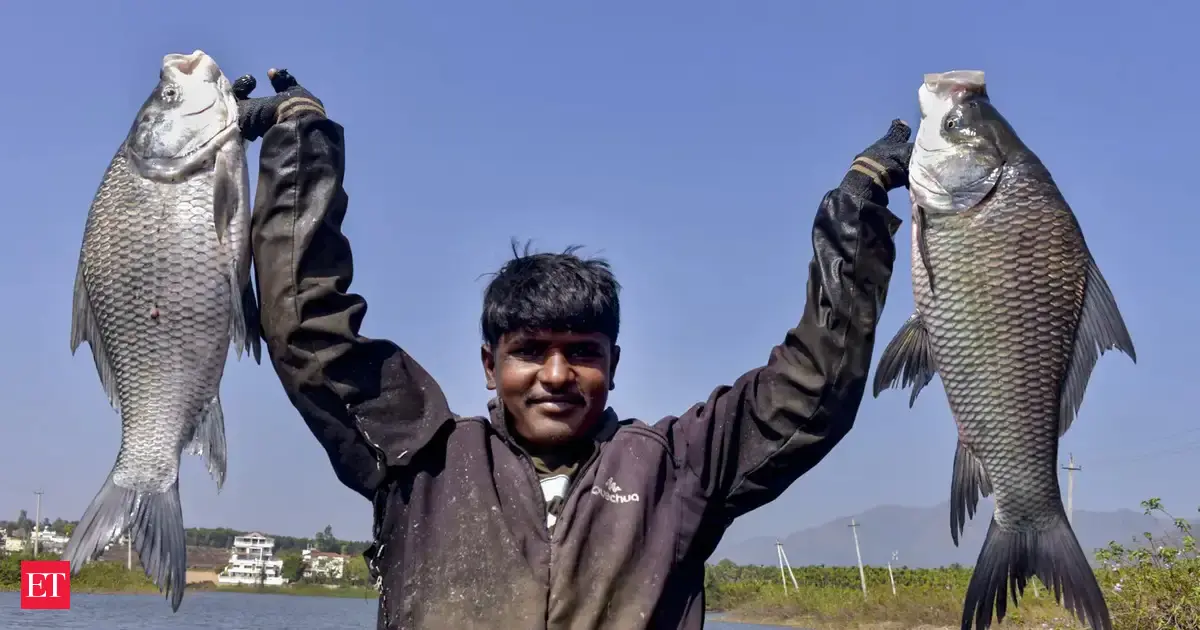
Key initiatives include zero duty on marine catch and support for inland fisheries.
The budget also focuses on increasing veterinary professionals and promoting high-value crops like coconut and sandalwood.
Detailed analysis
Full exam-oriented breakdown
The Budget 2026-27's emphasis on rural diversification through livestock, fisheries, and high-value agriculture marks a strategic pivot in India's economic policy, aiming to unlock new avenues of growth and income for its vast rural population. This move is not merely an incremental adjustment but a comprehensive approach to address the inherent vulnerabilities and limited income potential often associated with traditional, rain-fed agriculture. **Background Context:** For decades, Indian agriculture has been characterized by its dependence on monsoon, fragmentation of land holdings, disguised unemployment, and susceptibility to price volatility, leading to persistent rural distress. Despite significant strides in food grain production, the income of an average farmer has remained relatively low, prompting successive governments to explore ways to enhance rural prosperity. The government's ambitious goal of doubling farmers' income, articulated by the Ashok Dalwai Committee in 2016, underscored the urgent need for structural reforms and diversification beyond staple crops. Allied sectors like animal husbandry, dairying, and fisheries have consistently shown higher growth rates compared to crop cultivation, presenting a natural pathway for income enhancement and risk mitigation. These sectors provide year-round income, act as a buffer during crop failures, and offer significant employment opportunities, particularly for women. **What Happened:** Finance Minister Nirmala Sitharaman, in presenting the Budget 2026-27, unveiled a significant package specifically targeting livestock, fisheries, and high-value agriculture. The core objective is to boost rural incomes by reducing over-reliance on traditional farming practices. Key measures include the announcement of zero duty on marine catch, which aims to boost the export competitiveness of India's seafood industry and benefit coastal communities. Support for inland fisheries is also a crucial component, recognizing the immense potential of aquaculture in rivers, lakes, and ponds across the country. To bolster these sectors, the budget proposes an increase in the number of veterinary professionals, essential for disease prevention, animal health, and productivity enhancement. Furthermore, there's a renewed focus on promoting high-value crops such as coconut and sandalwood, which promise higher returns for farmers due to their niche markets and industrial applications. These initiatives collectively aim to create a more resilient and profitable rural economy. **Key Stakeholders Involved:** The primary beneficiaries and stakeholders are the **farmers, fisherfolk, and livestock rearers** themselves, whose livelihoods are directly impacted by these policy changes. The **Ministry of Finance** is the architect of this budgetary allocation, while the **Ministry of Agriculture & Farmers' Welfare** and the **Ministry of Fisheries, Animal Husbandry & Dairying** are the principal implementing agencies, responsible for translating policy into actionable programs. **State Governments** play an indispensable role, as agriculture, animal husbandry, and fisheries are primarily State subjects under the Seventh Schedule of the Constitution (Entry 14, 15, 21 of the State List). Their cooperation and efficient ground-level implementation are critical. **Veterinary professionals, scientists, and researchers** are crucial for providing technical expertise, developing improved breeds, and managing diseases. The **food processing industry** also stands to benefit from a diversified and consistent supply of raw materials, creating a value chain that extends beyond primary production. **Why This Matters for India:** This budgetary thrust is profoundly significant for India. Economically, it promises to diversify the rural economy, reduce agricultural risk, and contribute substantially to the GDP. The fisheries sector, for instance, has been a 'sunrise sector' with immense export potential, while livestock contributes significantly to agricultural GDP. Socially, it's a powerful tool for poverty reduction, generating employment (especially for marginal farmers and landless laborers), improving nutritional security through enhanced protein availability, and potentially mitigating rural-urban migration. Politically, it addresses the long-standing issue of rural distress and farmer welfare, which are critical electoral considerations. Environmentally, promoting sustainable practices in fisheries and high-value agriculture can lead to better resource management. **Historical Context:** India has a long history of supporting its agricultural sector, from the Green Revolution of the 1960s to various schemes for horticulture and animal husbandry. The focus on allied sectors isn't new; schemes like the Pradhan Mantri Matsya Sampada Yojana (PMMSY), launched in 2020 with a substantial investment, have already laid the groundwork for boosting the fisheries sector. Similarly, the National Livestock Mission aims to improve productivity and genetic upgradation. What Budget 2026-27 does is intensify and integrate these efforts, recognizing the combined potential of these sectors for holistic rural development. The 'zero duty' on marine catch reflects a broader trend of leveraging trade policies to boost specific sectors, aligning with India's efforts to become a major player in global food markets. **Future Implications:** The success of these initiatives could lead to a more resilient, diversified, and prosperous rural India. We can anticipate increased incomes for farmers, enhanced food and nutritional security, and greater export earnings from marine products and high-value agricultural commodities. It could also spur the growth of the rural non-farm sector and allied industries, creating a multiplier effect. However, challenges remain, including the impact of climate change on these sectors, ensuring robust market linkages, upgrading infrastructure, and effectively managing animal diseases. Continued investment in research and development, skill development for new technologies, and robust extension services will be crucial for sustained success. This approach aligns with the Directive Principles of State Policy, particularly Article 48, which mandates the State to organize agriculture and animal husbandry on modern and scientific lines, and Article 47, which emphasizes improving the level of nutrition and standard of living.
How to study
Turn news into exam marks
Revise monthly events by exam family instead of reading random updates.
Pair one-liners with mock tests so mistakes become the next revision list.
Keep state job pages, calendar pages and GK packs connected in one path.