

India has signed a Free Trade Agreement (FTA) with the European Union (EU).
GK and monthly revision
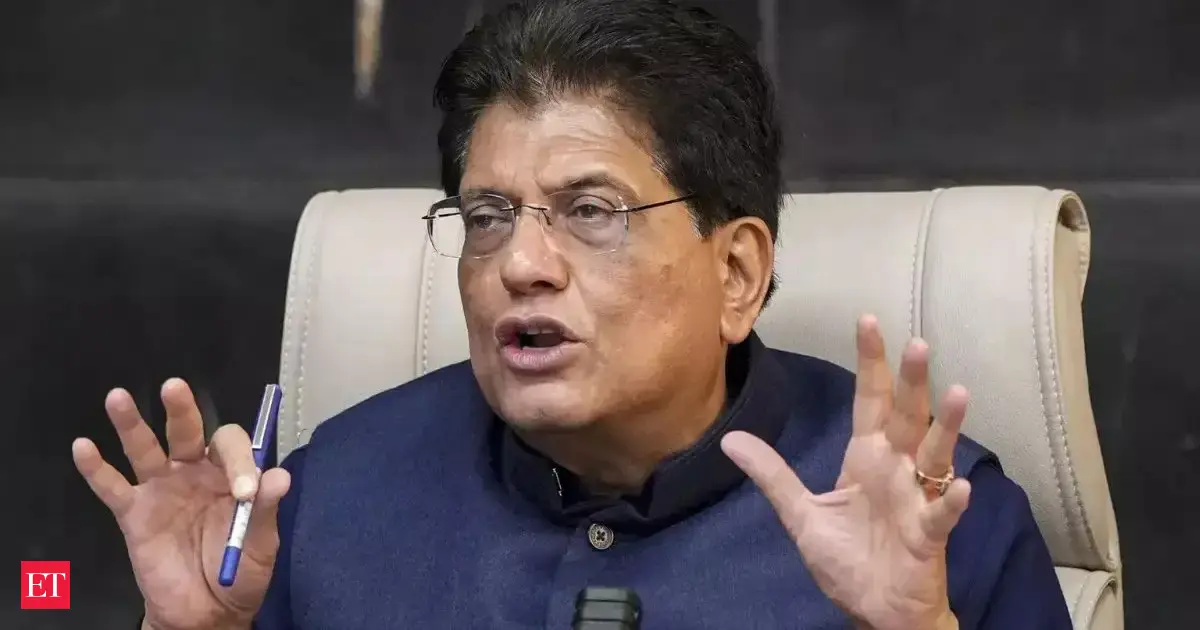
EU FTA brings India to global high table, offers $10-trillion opportunity: Piyush Goyal
India has reportedly signed a Free Trade Agreement (FTA) with the European Union, a significant development in international trade relations. Union Minister Piyush Goyal termed it a "robust and transformational partnership," highlighting its potential to unlock a $10-trillion opportunity. This pact is crucial for competitive exams as it signifies India's growing economic integration and its strategic importance on the global stage, impacting sectors like agriculture, dairy, fisheries, and automobiles.
Revision structure
Monthly events and exam calendar context
Static GK and one-liner notes
Quiz and mock-test revision path
Key points
Exam-ready takeaways
Union Minister Piyush Goyal described the FTA as a "robust and transformational partnership."
The agreement aims to protect key Indian sectors, including dairy, agriculture, and fisheries.
The FTA also addresses regulatory practices and protects the Indian automobile market.
Piyush Goyal stated the deal offers a "$10-trillion opportunity" and elevates India to the "international high table."
Detailed analysis
Full exam-oriented breakdown
The reported Free Trade Agreement (FTA) between India and the European Union marks a pivotal moment in India's global economic engagement, signifying a strategic move towards deeper integration with one of the world's largest economic blocs. Union Minister Piyush Goyal's characterization of this pact as a "robust and transformational partnership" underscores its ambitious scope and potential to unlock a "$10-trillion opportunity," elevating India to an "international high table" in trade discussions. **Background and Historical Context:** The idea of an India-EU FTA, officially known as the Broad-based Trade and Investment Agreement (BTIA), dates back to 2007. Negotiations progressed for several years but stalled in 2013 due to significant differences on key issues such as market access for automobiles, wines, spirits, and intellectual property rights, as well as India's demands for data secure status and easier visa regimes for its professionals. For nearly a decade, the talks remained in limbo. However, a renewed impetus emerged in 2021-2022, driven by a changing geopolitical landscape, the need for supply chain diversification, and a shared commitment to a rules-based international order. Both sides recognized the immense untapped potential in their bilateral economic relationship, leading to the formal relaunch of negotiations in June 2022. This renewed engagement reflects a pragmatic approach to overcoming past hurdles and seizing new opportunities. **What the FTA Entails:** While the full details of the newly signed agreement are yet to be publicly scrutinized, the article highlights several crucial aspects. It aims to protect key Indian sectors like dairy, agriculture, and fisheries, indicating that India has successfully negotiated safeguards for its sensitive domestic industries. This is a significant achievement, as these sectors often face intense competition from highly subsidized European products. Furthermore, the agreement addresses regulatory practices, implying a move towards harmonizing standards and reducing non-tariff barriers, which often impede trade more than tariffs. The protection of the Indian automobile market suggests a calibrated approach to liberalization, ensuring that domestic manufacturing is not unduly disadvantaged while still opening up avenues for growth and technological advancement. The stated $10-trillion opportunity likely refers to the cumulative economic growth and trade expansion expected over the long term, encompassing goods, services, and investments. **Key Stakeholders Involved:** On the Indian side, the primary stakeholders include the Ministry of Commerce and Industry, led by Minister Piyush Goyal, which spearheads the negotiations. Other crucial ministries like Agriculture, Fisheries, Finance, and External Affairs also play vital roles in shaping India's negotiating position. Indian industries – particularly those in textiles, pharmaceuticals, IT services, engineering goods, and potentially the protected sectors like dairy and fisheries – are direct beneficiaries or are impacted. Farmers and fishermen, represented by various associations, are critical stakeholders whose livelihoods depend on fair trade practices. On the EU side, the European Commission, as the executive arm, negotiates on behalf of its 27 member states. Individual member states and their respective industries also exert influence. Consumers in both regions stand to benefit from a wider array of goods and services at competitive prices. **Significance for India:** This FTA is profoundly significant for India across multiple dimensions. Economically, the EU is India's second-largest trading partner, and enhanced market access will boost India's exports, drive economic growth, and create employment opportunities. It could attract substantial Foreign Direct Investment (FDI) from European companies looking to leverage India's vast market and skilled workforce, aligning with initiatives like 'Make in India'. Geopolitically, securing an FTA with the EU strengthens India's strategic autonomy and diversification of its global partnerships, reducing over-reliance on any single region. It also solidifies India's position as a reliable and attractive destination for trade and investment amidst global economic uncertainties, truly bringing India to the "international high table" in trade diplomacy. The agreement's focus on regulatory practices could also lead to an upgrade in India's domestic regulatory environment, fostering better governance and ease of doing business. **Constitutional and Policy Framework:** The power to enter into and implement international treaties and agreements in India primarily rests with the Union Government. **Article 253** of the Indian Constitution empowers Parliament to make any law for implementing any treaty, agreement, or convention with any other country or any decision made at any international conference, association, or other body. This constitutional provision provides the legal basis for the Indian government to ratify and implement such an FTA. Furthermore, matters related to foreign trade, customs duties, and treaties fall under the **Union List (Entry 14 and 41 of Schedule VII)**, granting the central government exclusive legislative competence. This FTA aligns with India's broader economic policies, including the **Foreign Trade Policy**, which aims to boost exports and integrate India into global value chains, and the **'Atmanirbhar Bharat'** (Self-Reliant India) initiative, which, while promoting domestic manufacturing, also recognizes the importance of strategic global partnerships for growth and technology transfer. **Future Implications:** The India-EU FTA is expected to catalyze increased bilateral trade and investment flows, foster technology transfer, and potentially lead to greater economic integration between the two regions. For India, it could mean better access to European technology and capital, crucial for its infrastructure development and industrial modernization. However, challenges may arise in harmonizing standards, addressing non-tariff barriers, and ensuring equitable benefits for all sectors. Domestic industries, even those with protection, will need to enhance their competitiveness. The success of this FTA could also pave the way for similar comprehensive agreements with other major economic blocs, reinforcing India's commitment to multilateralism and open trade. It positions India as a significant player in shaping global trade norms and architecture in the coming decades.
How to study
Turn news into exam marks
Revise monthly events by exam family instead of reading random updates.
Pair one-liners with mock tests so mistakes become the next revision list.
Keep state job pages, calendar pages and GK packs connected in one path.