

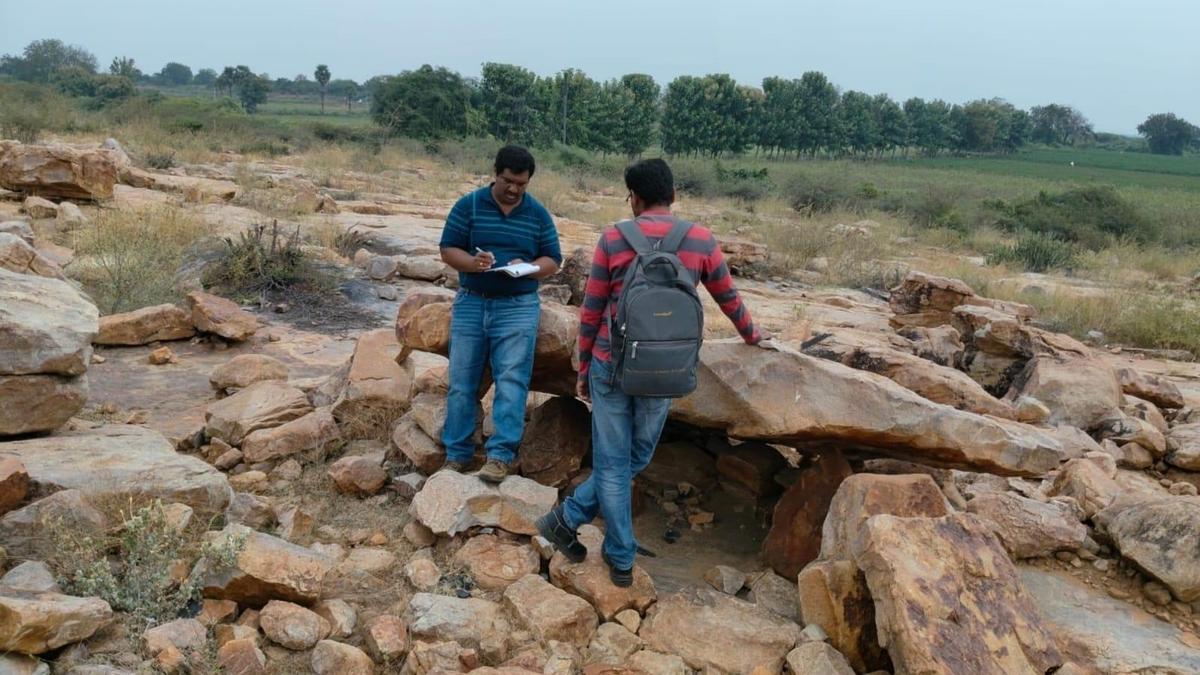
A cluster of megalithic burials was identified in Palnadu district, Andhra Pradesh.
GK and monthly revision
Cluster of megalithic burials identified in Palnadu, Andhra Pradesh
A significant cluster of megalithic burials has been identified in Palnadu, Andhra Pradesh, indicating ancient human habitation and cultural practices. Adjacent to these remains, traces of a disturbed Buddhist site were also discovered, featuring a broken 'ayaka pillar' and large rectangular bricks. This finding is crucial for understanding the historical timeline, cultural evolution, and the spread of Buddhism in the Andhra region, making it highly relevant for history and art & culture sections in competitive exams.
Revision structure
Monthly events and exam calendar context
Static GK and one-liner notes
Quiz and mock-test revision path
Key points
Exam-ready takeaways
Traces of a disturbed Buddhist site were found adjacent to the megalithic remains.
The Buddhist site findings specifically include a broken 'ayaka pillar'.
Large rectangular bricks, damaged by farming activity, were also part of the Buddhist site remains.
The discovery provides insights into ancient human habitation and the presence of Buddhism in the Palnadu region of Andhra Pradesh.
Detailed analysis
Full exam-oriented breakdown
The recent discovery in Palnadu, Andhra Pradesh, of a cluster of megalithic burials alongside traces of a disturbed Buddhist site, including a broken 'ayaka pillar' and large rectangular bricks, offers a fascinating glimpse into India's ancient past. This finding is not merely an isolated archaeological event; it provides crucial insights into the historical continuum, cultural evolution, and the intricate layers of human habitation in the Deccan region, making it highly relevant for competitive exam aspirants. To truly appreciate the significance of this discovery, we must first understand its background context. The megalithic period in India, generally spanning from around 1000 BCE to 500 CE, is characterized by the construction of large stone structures, typically associated with burial sites. These megaliths, found extensively across peninsular India, particularly in the South, represent a distinct cultural phase marked by advancements in iron technology, agriculture, and complex social structures. They serve as invaluable markers for understanding the transition from the Stone Age to the Iron Age, revealing sophisticated funerary practices, pottery traditions, and early forms of social organization. Parallel to this, the Andhra region has a rich history of Buddhism. Following its emergence in the Gangetic plains, Buddhism spread rapidly across India, finding fertile ground in the Deccan. The Satavahana dynasty (c. 2nd century BCE to 3rd century CE) and later the Ikshvaku dynasty (c. 3rd-4th century CE) were significant patrons of Buddhism in Andhra Pradesh. Sites like Amaravati, Nagarjunakonda, Ghantasala, and Bhattiprolu became renowned centers of Buddhist learning and art, attracting monks and devotees from far and wide. The 'ayaka pillar' is a distinctive architectural feature found in stupas of the Andhra region, typically part of the 'ayaka platforms' used for veneration, further cementing the region's unique contribution to Buddhist art and architecture. What happened in Palnadu is the identification of multiple megalithic burials, hinting at a settled population with established death rituals. Adjacent to these, the discovery of a disturbed Buddhist site—evidenced by the broken ayaka pillar and large bricks—suggests that the area was also inhabited or utilized by Buddhist communities. The proximity of these two distinct cultural phases, potentially overlapping or succeeding each other, is what makes this finding particularly intriguing. The damage to the Buddhist remains by farming activity underscores the constant challenge of preserving ancient heritage in rapidly developing areas. Key stakeholders in such archaeological discoveries primarily include the Archaeological Survey of India (ASI) and the respective State Departments of Archaeology and Museums (in this case, the Andhra Pradesh Department of Archaeology and Museums). These governmental bodies are responsible for the exploration, excavation, conservation, and protection of ancient monuments and archaeological sites. Local communities often play a crucial role as initial informants or guardians of these sites. Historians, archaeologists, and researchers are vital for interpreting the findings, placing them within broader historical narratives, and contributing to academic discourse. This discovery matters immensely for India. Firstly, it enriches our understanding of the historical timeline, potentially bridging gaps between prehistoric and early historic periods. Secondly, it illuminates the cultural evolution of the region, showing how different cultures coexisted or succeeded one another, adapting to the landscape. The presence of Buddhist remains further solidifies Andhra's historical role as a significant hub for the religion, potentially revealing new insights into its spread and local adaptations. Moreover, it highlights the pressing need for heritage preservation against modern encroachment, balancing agricultural development with the protection of invaluable historical assets. Such findings also boost archaeological tourism, contributing to local economies and fostering a sense of cultural pride. From a constitutional perspective, the protection of such sites is enshrined in Article 49 of the Indian Constitution, a Directive Principle of State Policy, which mandates the State to protect every monument or place or object of artistic or historic interest. This principle is operationalized through legislation like the Ancient Monuments and Archaeological Sites and Remains Act, 1958 (AMASR Act), which provides for the preservation of ancient monuments and archaeological sites and remains of national importance. The ASI operates under this Act, ensuring the systematic study and protection of India's vast heritage. Looking ahead, the future implications are significant. Further systematic excavations in Palnadu could unearth more artifacts and structures, providing a clearer picture of the settlements, their chronology, and the interactions between different cultural groups. This could lead to a re-evaluation of historical narratives concerning the spread of Buddhism and the nature of megalithic societies. It also presents a challenge to implement effective heritage management strategies that involve local communities, ensuring both development and preservation. These findings contribute to a richer, more nuanced understanding of India's pluralistic past, reinforcing its identity as a cradle of diverse cultures and traditions.
How to study
Turn news into exam marks
Revise monthly events by exam family instead of reading random updates.
Pair one-liners with mock tests so mistakes become the next revision list.
Keep state job pages, calendar pages and GK packs connected in one path.