

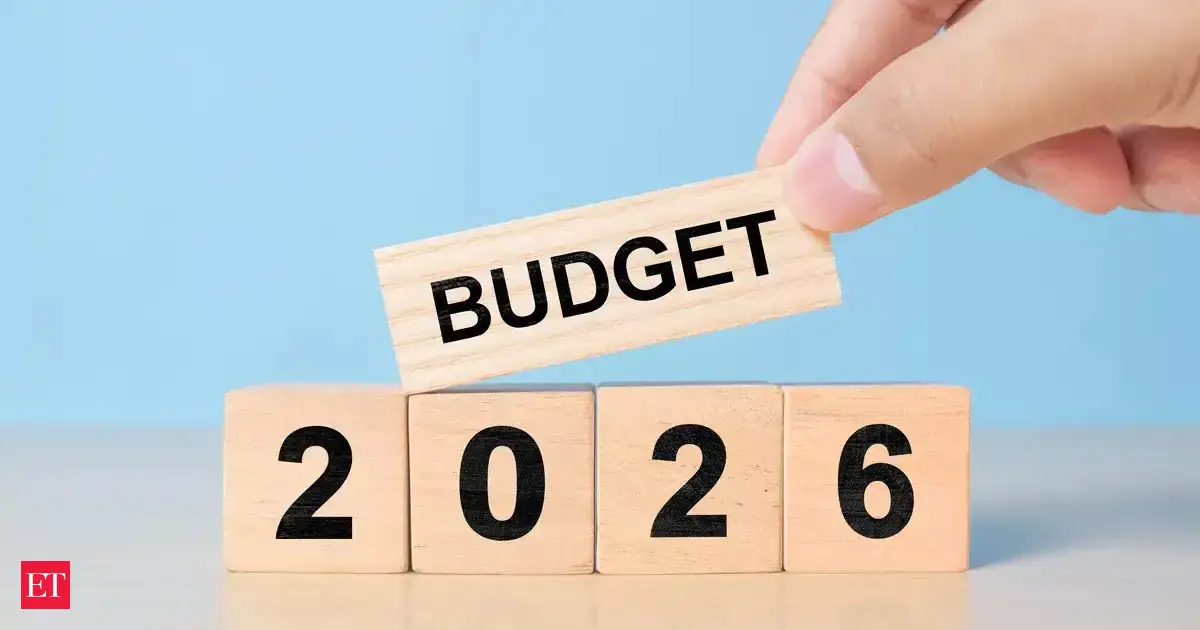
Finance Minister Nirmala Sitharaman is scheduled to present the Budget 2026.
GK and monthly revision
Budget for power shift: Key numbers to be watched
Finance Minister Nirmala Sitharaman is slated to present the Budget 2026, emphasizing customs reforms and fiscal consolidation. Key economic targets include a fiscal deficit of 4.4% of GDP and a capital expenditure of ₹11.2 lakh crore. This information is vital for competitive exams to comprehend India's economic policy framework and fiscal management strategies, reflecting the government's financial priorities.
Revision structure
Monthly events and exam calendar context
Static GK and one-liner notes
Quiz and mock-test revision path
Key points
Exam-ready takeaways
The Budget 2026 will prioritize customs reforms and fiscal consolidation.
The fiscal deficit target for Budget 2026 is set at 4.4% of GDP.
Capital expenditure in the Budget 2026 is projected at ₹11.2 lakh crore.
Total tax revenue is estimated at ₹42.7 lakh crore, with GST projected at ₹11.78 lakh crore.
Detailed analysis
Full exam-oriented breakdown
The Union Budget is not merely an accounting exercise; it is a critical statement of the government's economic philosophy, priorities, and roadmap for the nation's future. When Finance Minister Nirmala Sitharaman presents Budget 2026, the focus on 'customs reforms' and 'fiscal consolidation' signals a clear intent to foster a more competitive and stable economic environment. For competitive exam aspirants, understanding these pillars and the key numbers is paramount to grasping India's economic policy framework. The background to this budget lies in India's continuous pursuit of robust economic growth while maintaining macroeconomic stability. Post-pandemic, the government adopted an expansionary fiscal stance to revive demand and stimulate growth, leading to higher fiscal deficits. Now, the emphasis shifts towards consolidating these gains and ensuring sustainable growth. Historically, Indian budgets have evolved from a socialist-leaning approach to a more liberalized, market-oriented one, especially post-1991 reforms. The introduction of Goods and Services Tax (GST) in 2017 was a landmark reform in indirect taxation, streamlining the tax structure and enhancing ease of doing business. Similarly, customs reforms are a natural progression to further integrate India into global supply chains and boost its manufacturing competitiveness. At the heart of the Budget 2026's strategy are key numbers that reflect these priorities. The fiscal deficit target of 4.4% of GDP is a crucial indicator of the government's commitment to fiscal prudence. Fiscal deficit, simply put, is the difference between the government's total expenditure and its total revenue (excluding borrowings). A lower fiscal deficit generally signifies better financial health and reduces the government's reliance on borrowing, which can crowd out private investment and lead to higher interest rates. This target is aligned with the broader goal of fiscal consolidation, which aims to improve the government's financial position through reduced spending or increased revenues. The Fiscal Responsibility and Budget Management (FRBM) Act, 2003, provides a statutory framework for the government to ensure inter-generational equity in fiscal management and long-term macroeconomic stability. Equally significant is the projected capital expenditure of ₹11.2 lakh crore. Capital expenditure (CapEx) involves spending on creating long-term assets like roads, railways, ports, and other infrastructure. Unlike revenue expenditure, CapEx has a high multiplier effect, meaning every rupee spent generates multiple rupees in economic activity, creates jobs, and enhances the economy's productive capacity. This focus on infrastructure development aligns with India's 'Gati Shakti' national master plan, aiming for integrated planning and coordinated implementation of infrastructure projects to reduce logistics costs and boost economic growth. Customs reforms are another critical element. These reforms typically aim to simplify procedures, reduce compliance costs, enhance transparency, and facilitate trade. By streamlining customs processes, the government seeks to improve India's ranking in the 'Ease of Doing Business' index, make Indian exports more competitive, and attract foreign direct investment (FDI) into manufacturing sectors, thereby supporting initiatives like 'Make in India'. The Customs Act, 1962, provides the legislative framework for customs administration, and any reforms would be implemented through amendments to this act or related rules. Key stakeholders involved in the budget process are numerous. The **Finance Ministry**, led by the Finance Minister, prepares the budget. The **Parliament**, particularly the Lok Sabha, plays a crucial role in debating and approving the budget, as outlined in **Article 112** (Annual Financial Statement) and **Article 110** (Money Bills) of the Constitution. The **NITI Aayog** provides strategic inputs and long-term policy vision. The **Reserve Bank of India (RBI)**, while independent, coordinates monetary policy with the government's fiscal policy. Businesses, industries, and citizens are profoundly impacted by the budget's provisions, affecting investment decisions, consumption patterns, and overall economic sentiment. International rating agencies and foreign investors closely monitor India's fiscal numbers, as they influence sovereign credit ratings and investment flows. The significance of these budgetary provisions for India is profound. A committed path to fiscal consolidation ensures macroeconomic stability, which is vital for sustained growth and attracting investment. Increased capital expenditure lays the foundation for future economic expansion, creating jobs and improving living standards. Customs reforms enhance India's competitiveness in global trade and manufacturing. The estimated tax revenue of ₹42.7 lakh crore, with GST projected at ₹11.78 lakh crore, highlights the government's revenue mobilization efforts, crucial for funding public services and development projects. **Article 265** of the Constitution states that no tax shall be levied or collected except by authority of law, underscoring the legal basis for tax collection. Looking ahead, the successful implementation of Budget 2026's proposals will be critical. Achieving the fiscal deficit target will depend on prudent spending and robust revenue collection, which could be challenged by global economic uncertainties or unforeseen domestic events. The debt roadmap, aiming to reduce the debt-to-GDP ratio, is essential for long-term financial stability and inter-generational equity. If successful, these measures could lead to an improved sovereign credit rating, lower borrowing costs for the government, and a more predictable investment environment, ultimately fostering higher economic growth and employment for India's vast population. The budget reflects a delicate balance between growth imperatives and fiscal responsibility, a challenge every major economy faces.
How to study
Turn news into exam marks
Revise monthly events by exam family instead of reading random updates.
Pair one-liners with mock tests so mistakes become the next revision list.
Keep state job pages, calendar pages and GK packs connected in one path.