

Israel Military reportedly accepted a death toll of around 70,000 in Gaza.
GK and monthly revision
Israel Military reported to accept death toll of around 70,000 in Gaza
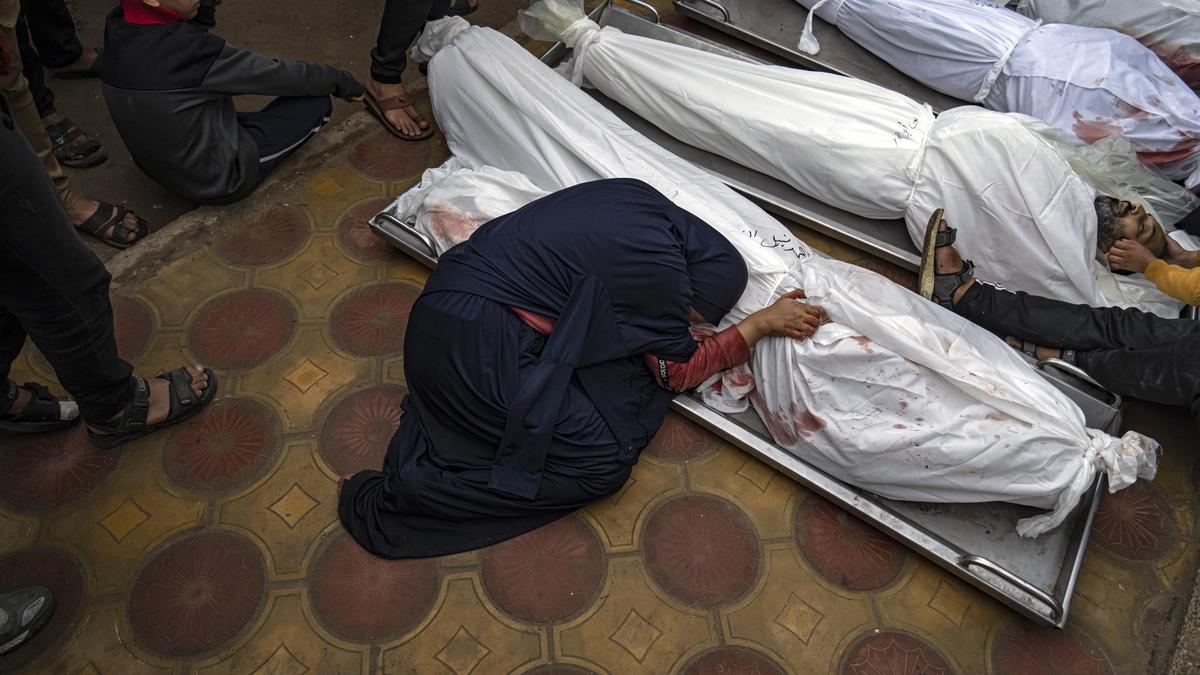
The Israel Military has reportedly accepted a death toll of around 70,000 in Gaza, a figure previously disputed by Israel but long accepted by the United Nations. Israel had cast doubt on the accuracy of figures from the Gaza health ministry, citing its control by Hamas. This development is significant for understanding the humanitarian impact of the conflict and the differing perspectives on casualty figures, crucial for international relations and current affairs sections of competitive exams.
Revision structure
Monthly events and exam calendar context
Static GK and one-liner notes
Quiz and mock-test revision path
Key points
Exam-ready takeaways
The United Nations has consistently accepted death tolls recorded by health authorities in Gaza as accurate.
Israel previously cast doubt on these figures, arguing the health ministry in Gaza was run by Hamas.
The reported death toll and conflict are centered in the Gaza Strip.
Hamas is identified by Israel as the entity controlling the health ministry in the Gaza enclave.
Detailed analysis
Full exam-oriented breakdown
The recent reports indicating that the Israeli military has reportedly accepted a death toll of around 70,000 in Gaza mark a significant development in understanding the profound human cost of the ongoing conflict. This figure, previously disputed by Israel but consistently upheld by the United Nations, underscores the immense humanitarian tragedy unfolding in the enclave and brings to the forefront the contentious issue of casualty verification in conflict zones. For competitive exam aspirants, this topic is critical for its implications across international relations, humanitarian law, and global geopolitics. **Background Context:** The Gaza Strip, a densely populated Palestinian territory, has been at the heart of the Israeli-Palestinian conflict for decades. Since 2007, it has been under the control of Hamas, an Islamist militant group. The current escalation began dramatically on October 7, 2023, when Hamas launched unprecedented multi-pronged attacks on Israel, resulting in significant Israeli casualties and the abduction of hundreds. Israel responded with a large-scale military operation aimed at dismantling Hamas's military capabilities and infrastructure, leading to widespread destruction and a severe humanitarian crisis in Gaza. Throughout this period, the Gaza health ministry, administered by Hamas, has been the primary source of casualty figures, which the United Nations and various international organizations have largely cited, given the lack of alternative comprehensive reporting mechanisms on the ground. **What Happened:** For months, Israel had publicly cast doubt on the casualty figures released by the Gaza health ministry, arguing that a body controlled by Hamas could not be trusted to provide accurate data. Israeli officials often suggested that the figures inflated civilian deaths and included combatants. However, recent reports suggest a shift, with the Israeli military reportedly accepting a death toll closer to the 70,000 mark. This reported acceptance, if confirmed and widely acknowledged, would signify a significant validation of the humanitarian impact articulated by Palestinian authorities and international bodies, even as the exact breakdown of combatants versus civilians remains a point of contention. The initial discrepancy and subsequent reported alignment highlight the challenges of information dissemination and verification during active warfare. **Key Stakeholders Involved:** * **Israel (and the IDF):** As the primary military actor, Israel's government and its military are responsible for the operations in Gaza. Their perspective is rooted in national security, aiming to eliminate Hamas and ensure the safety of Israeli citizens. Their acceptance of higher casualty figures could impact international perceptions and diplomatic pressure. * **Hamas (and the Gaza Health Ministry):** Hamas, as the de facto governing authority in Gaza, controls the health ministry, which collects and disseminates casualty data. While their figures are often viewed with skepticism by Israel due to their political agenda, they represent the only systematic collection of data from within the besieged territory. * **United Nations (e.g., OCHA, UNRWA):** The UN agencies play a crucial role in humanitarian aid and monitoring the conflict's impact. They have consistently relied on the Gaza health ministry's figures, often cross-referencing them where possible, as the most credible available data in a highly restricted environment. Their validation lends international legitimacy to the numbers. * **Palestinian Civilians:** The ultimate stakeholders, enduring the direct consequences of the conflict, including displacement, starvation, and death. Their suffering forms the core of the humanitarian crisis. * **International Community:** Governments, NGOs, and human rights organizations worldwide are observing the conflict, advocating for humanitarian aid, and often pressing for ceasefires and adherence to international humanitarian law. **Why This Matters for India:** India's foreign policy regarding the Israel-Palestine conflict has historically been nuanced. Traditionally, India has expressed solidarity with the Palestinian cause, advocating for a sovereign, independent Palestinian state living side-by-side with Israel, often referred to as the 'two-state solution.' However, in recent decades, India has also forged a robust strategic partnership with Israel, particularly in defence, technology, and agriculture. This reported acceptance of a high death toll by Israel could intensify international scrutiny and pressure, potentially complicating India's diplomatic balancing act. From an economic perspective, instability in West Asia directly impacts India's energy security, given its heavy reliance on oil imports from the region. The humanitarian crisis also resonates with India's long-standing commitment to human rights and international law, as enshrined in **Article 51 of the Directive Principles of State Policy (DPSP)**, which mandates the state to promote international peace and security, maintain just and honourable relations between nations, and foster respect for international law. India's stance will continue to reflect its commitment to these principles while safeguarding its strategic interests in a volatile region. **Historical Context:** The current conflict is a continuation of a century-old struggle over land and self-determination. The creation of Israel in 1948, the subsequent Arab-Israeli wars, and Israel's occupation of Palestinian territories (including Gaza until its unilateral disengagement in 2005) have shaped the present dynamics. Gaza's blockade since 2007, following Hamas's takeover, has created a perpetual state of humanitarian fragility, setting the stage for recurring escalations and severe civilian impact. **Future Implications:** The reported acceptance of a higher death toll could have several implications. It might increase international pressure on Israel regarding its military conduct and the need for greater civilian protection. It could also fuel calls for immediate ceasefires, increased humanitarian aid access, and sustained diplomatic efforts towards a lasting political resolution. For the Palestinians, it validates their narrative of immense suffering. Long-term, the scale of destruction and loss of life will pose monumental challenges for post-conflict reconstruction, governance, and the prospects of peace in the region. The credibility of information in conflict zones will also remain a critical issue, influencing public opinion and policy decisions globally. **Related Constitutional Articles, Acts, or Policies:** As mentioned, **Article 51 of the Indian Constitution** is directly relevant, guiding India's foreign policy towards promoting international peace, respecting international law, and encouraging the settlement of international disputes. India's historical adherence to the principles of the **Non-Aligned Movement (NAM)** also shapes its approach, emphasizing national sovereignty, anti-colonialism, and support for self-determination. Furthermore, India's 'Act West' policy, aimed at strengthening engagement with West Asian countries, underscores the strategic importance of regional stability for India's economic and security interests. While no specific Indian act directly governs this international conflict, these constitutional and policy frameworks dictate India's diplomatic response and engagement with the crisis.
How to study
Turn news into exam marks
Revise monthly events by exam family instead of reading random updates.
Pair one-liners with mock tests so mistakes become the next revision list.
Keep state job pages, calendar pages and GK packs connected in one path.