

India's fiscal deficit for the April-December period was Rs 8.55 lakh crore.
GK and monthly revision
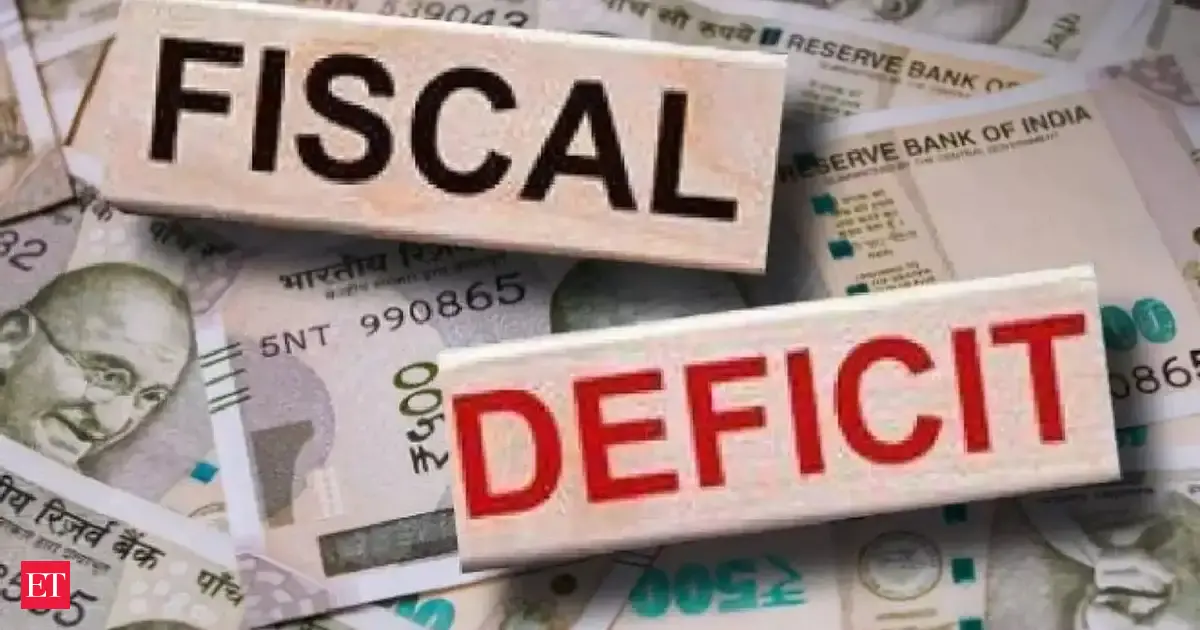
India's April-December fiscal deficit at Rs 8.55 lakh crore, narrows on-year to 54.5% of FY26 aim
India's fiscal deficit for April-December reached Rs 8.55 lakh crore, constituting 54.5% of the annual estimates for the current fiscal year. This indicates a narrowing trend compared to 56.7% in the previous year, reflecting the government's efforts towards fiscal consolidation. This data is crucial for understanding India's economic health and the government's budgetary discipline, making it highly relevant for competitive exam questions on economy and public finance.
Revision structure
Monthly events and exam calendar context
Static GK and one-liner notes
Quiz and mock-test revision path
Key points
Exam-ready takeaways
This deficit accounted for 54.5% of the annual estimates for the current financial year (FY24).
The April-December fiscal deficit narrowed from 56.7% recorded in the previous year.
The government aims to narrow the fiscal gap to 4.4% of GDP in the current financial year (FY24).
The fiscal deficit stood at 4.8% of GDP in the previous financial year (FY23).
Detailed analysis
Full exam-oriented breakdown
India's fiscal deficit, a critical indicator of the government's financial health, stood at Rs 8.55 lakh crore for the April-December period of the current fiscal year (FY24). This figure represents 54.5% of the annual estimate, marking a significant narrowing compared to 56.7% recorded in the same period of the previous year. This trend signals the government's sustained efforts towards fiscal consolidation and adherence to its budgetary targets. Understanding this data is paramount for competitive exam aspirants, as it provides insights into India's macroeconomic stability and future policy direction. **Background Context: What is Fiscal Deficit and Why Does it Matter?** The fiscal deficit is essentially the difference between the government's total expenditure and its total receipts (excluding borrowings). It reflects the total amount of borrowing the government needs to undertake to meet its expenses. A high fiscal deficit can lead to several economic challenges, including increased government borrowing, which can 'crowd out' private investment by raising interest rates. It can also fuel inflation, weaken the currency, and potentially lead to a sovereign credit rating downgrade, making international borrowing more expensive. India has historically grappled with managing its fiscal deficit, especially during periods of economic slowdowns or global crises like the 2008 financial crisis and the recent COVID-19 pandemic, which necessitated massive government spending and increased borrowing. **What Happened: The Current Fiscal Scenario** The reported Rs 8.55 lakh crore fiscal deficit for April-December FY24, which is 54.5% of the annual target, indicates that the government is on track to meet its revised fiscal deficit target of 5.8% of GDP for FY24 (as per the Interim Budget 2024-25, initially 5.9%) and subsequently 4.4% of GDP for FY25. This is a positive development, as it shows a disciplined approach to public finance. The narrowing from 56.7% in the previous year (FY23, when the deficit was 6.4% of GDP) suggests improved revenue collection and calibrated expenditure. Key drivers for this trend include robust tax collections (both direct and indirect, particularly GST), prudent expenditure management, and often, non-tax revenues like dividends from public sector undertakings. **Key Stakeholders Involved** Several entities play crucial roles in India's fiscal landscape. The **Ministry of Finance** is the primary stakeholder, responsible for formulating the Union Budget, managing public debt, and implementing fiscal policy. Its various departments, such as the Department of Economic Affairs and the Department of Revenue, are directly involved in budget preparation, tax collection, and expenditure control. The **Reserve Bank of India (RBI)**, while primarily focused on monetary policy, is a significant stakeholder as it manages government debt and its policies often interact with fiscal decisions. **Indian citizens and taxpayers** are indirectly stakeholders as they bear the ultimate burden of government debt and are beneficiaries of government spending. **Domestic and international investors** closely monitor India's fiscal health, as it influences their investment decisions and perception of India's economic stability. **International credit rating agencies** like S&P, Moody's, and Fitch constantly evaluate India's sovereign creditworthiness based on fiscal metrics, impacting the cost of borrowing for the government and Indian corporates. **Significance for India: Economic and Policy Implications** This positive fiscal trend holds immense significance for India. Economically, a lower fiscal deficit can lead to reduced government borrowing, freeing up capital for the private sector and potentially lowering interest rates. This can stimulate private investment, fostering job creation and economic growth. It also enhances India's credibility in the eyes of international investors and rating agencies, potentially leading to an upgrade in sovereign credit ratings, which translates to lower borrowing costs for the nation. Politically, prudent fiscal management demonstrates good governance and stability, building confidence among citizens and the global community. Socially, a sustainable fiscal path allows the government more flexibility to fund critical social welfare programs without incurring unsustainable debt. **Historical Context and Constitutional Framework** India's journey towards fiscal prudence gained significant momentum with the enactment of the **Fiscal Responsibility and Budget Management (FRBM) Act in 2003**. This Act aimed to institutionalize financial discipline, reduce fiscal deficit, and improve macroeconomic management. It mandated specific targets for revenue deficit and fiscal deficit. While the targets have been revised multiple times due to economic exigencies (e.g., during the 2008 global financial crisis and the COVID-19 pandemic), the Act remains a cornerstone of India's fiscal policy. Constitutionally, the framework for government finances is laid out in various articles. **Article 112** mandates the presentation of the 'Annual Financial Statement' (Budget) to Parliament. **Articles 292 and 293** empower the Union and State governments, respectively, to borrow within limits prescribed by law. The FRBM Act, therefore, operates within this constitutional mandate, providing a legislative framework for fiscal discipline. **Future Implications and Broader Themes** The narrowing fiscal deficit trajectory suggests a commitment to the government's target of bringing the fiscal deficit down to 4.5% of GDP by FY26. Achieving this target would solidify India's macroeconomic stability and provide a stronger foundation for sustained economic growth. Future implications include potentially lower inflation, more stable interest rates, and enhanced capacity for the government to undertake capital expenditure, which has long-term growth benefits. However, challenges persist, including global economic uncertainties, geopolitical tensions, and the need for continued revenue buoyancy through tax reforms and efficient administration. The government's ability to maintain this fiscal discipline while simultaneously increasing infrastructure spending and supporting social welfare programs will be a key determinant of India's economic trajectory in the coming years. This aligns with broader themes of good governance, sustainable development, and India's aspiration to become a major global economic power.
How to study
Turn news into exam marks
Revise monthly events by exam family instead of reading random updates.
Pair one-liners with mock tests so mistakes become the next revision list.
Keep state job pages, calendar pages and GK packs connected in one path.