

India and the European Union (EU) have concluded negotiations for a Free Trade Agreement (FTA).
GK and monthly revision
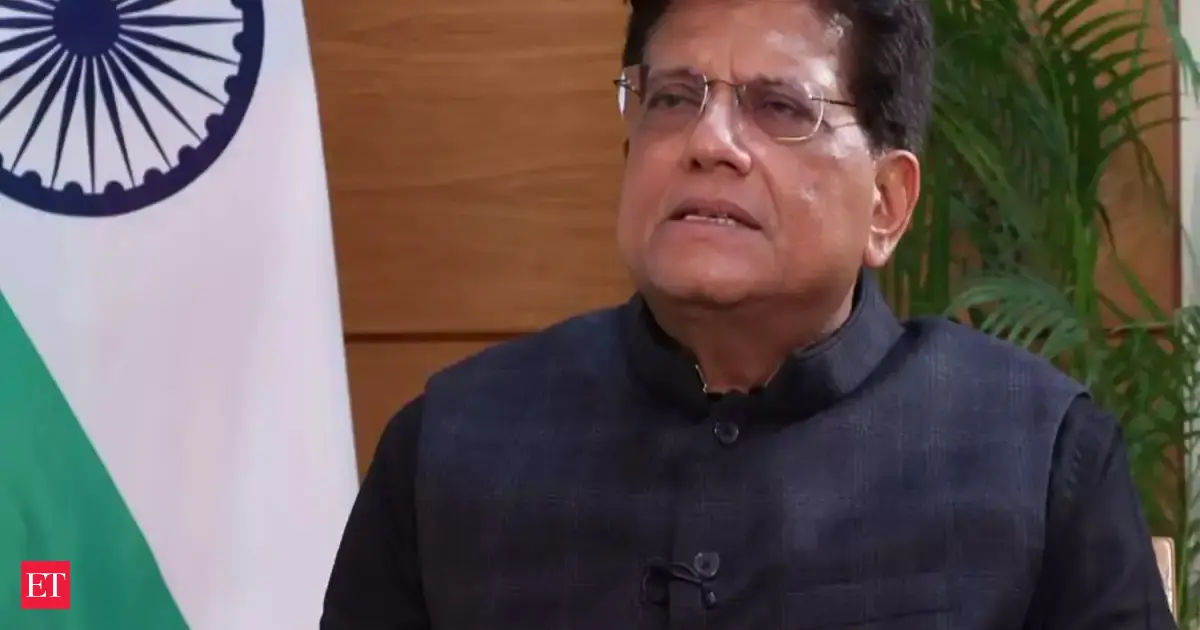
'India now at high table of international geopolitics': Union Minister Piyush Goyal hails India-EU FTA
India and the European Union have successfully concluded negotiations for a Free Trade Agreement (FTA), a landmark deal set to significantly boost India's economic growth and create new opportunities. This agreement provides crucial market access for Indian exports, particularly in the textile sector, and aims to increase investment and generate jobs. Its significance lies in positioning India as a key global trading partner, enhancing its geopolitical standing, and making it a vital topic for economy and international relations sections in competitive exams.
Revision structure
Monthly events and exam calendar context
Static GK and one-liner notes
Quiz and mock-test revision path
Key points
Exam-ready takeaways
Union Minister Piyush Goyal hailed the FTA, stating it places India at the "high table of international geopolitics".
The agreement is expected to provide significant market access for Indian exports, specifically benefiting the textile sector.
The FTA aims to boost India's economic growth, increase foreign investment, and generate new jobs.
It is designed to position India as a key global trading partner and enhance its economic ties with the EU.
Detailed analysis
Full exam-oriented breakdown
The conclusion of negotiations for a Free Trade Agreement (FTA) between India and the European Union (EU) marks a pivotal moment in India's global economic and geopolitical strategy. Union Minister Piyush Goyal's assertion that this places India at the "high table of international geopolitics" underscores the strategic significance of this deal, transcending mere economic considerations. **Background Context and Historical Journey:** India and the EU, individually two of the largest economies in the world, have a long-standing relationship rooted in shared values of democracy and multilateralism. Formal trade negotiations for a Broad-based Trade and Investment Agreement (BTIA) began way back in 2007. These talks, however, stalled in 2013 due to significant differences on crucial issues such as market access for automobiles and wines, data security status, intellectual property rights, and the movement of natural persons (Mode 4 services). For nearly eight years, the negotiations remained dormant. The geopolitical landscape, however, shifted dramatically in the late 2010s and early 2020s. Factors like Brexit (which prompted the EU to seek new trade partners), the COVID-19 pandemic (exposing vulnerabilities in global supply chains), the Russia-Ukraine conflict (necessitating diversification of economic partnerships), and the rising assertiveness of China (pushing for closer ties with democratic partners) provided a fresh impetus. Both sides recognized the strategic imperative to deepen their economic engagement. Consequently, negotiations were revived in June 2022, with a renewed commitment to conclude the agreement swiftly. **What Happened and Key Stakeholders:** The recent announcement signifies that India and the EU have successfully concluded the intricate negotiation process for the FTA. This involves comprehensive agreements across various domains: trade in goods, trade in services, investment protection, intellectual property rights (IPR), geographical indications (GIs), government procurement, sustainable development, and dispute settlement mechanisms. The formal signing and ratification process will follow, leading to its eventual implementation. Key stakeholders involved in this monumental undertaking are diverse: * **For India:** The **Government of India**, primarily through the Ministry of Commerce and Industry (led by Union Minister Piyush Goyal), has been the driving force. **Indian businesses**, especially those in sectors like textiles, leather, gems and jewellery, pharmaceuticals, and IT services, stand to gain immense market access. **Farmers** and **agricultural producers** could also benefit from reduced tariffs and enhanced market reach for certain products. Ultimately, **Indian consumers** will benefit from a wider array of quality goods at potentially competitive prices. * **For the European Union:** The **European Commission**, as the executive arm, negotiates trade agreements on behalf of its 27 member states. **EU businesses**, particularly those in advanced manufacturing (machinery, automotive components), chemicals, pharmaceuticals, and luxury goods, anticipate greater access to India's vast and growing market. **EU consumers** could also see more diverse and competitively priced Indian products. **Significance for India:** This FTA holds profound significance for India across economic, political, and social dimensions: * **Economic Boost:** The EU is India's third-largest trading partner (after the US and China), with bilateral trade in goods alone exceeding €120 billion in 2022-23. The FTA is expected to significantly boost this figure by reducing tariffs on a vast array of goods, eliminating non-tariff barriers, and facilitating smoother trade. It will provide substantial market access for key Indian exports like textiles, leather goods, gems and jewellery, and pharmaceuticals. This aligns perfectly with the 'Make in India' initiative, encouraging domestic manufacturing for export. Furthermore, increased foreign direct investment (FDI) from Europe is anticipated, leading to job creation and technological transfers. * **Geopolitical Standing:** As Minister Goyal highlighted, the FTA elevates India's standing on the global stage. It strengthens India's strategic autonomy by diversifying its trade partnerships and reducing over-reliance on any single region. Partnering with a major economic and political bloc like the EU enhances India's influence in global governance and multilateral forums. It signifies a deepening of ties with like-minded democracies, crucial in an increasingly multipolar world. * **Regulatory Alignment:** The agreement will likely lead to greater convergence on standards, regulations, and intellectual property protection, fostering a more predictable and transparent business environment. **Constitutional Provisions and Broader Themes:** The power to enter into and implement international treaties and agreements in India primarily rests with the Union Government. **Article 253** of the Indian Constitution empowers Parliament to make any law for implementing any treaty, agreement, or convention with any other country or any decision made at any international conference, association, or other body. This ensures that India's domestic legal framework can be aligned to fulfill its international commitments. Furthermore, **Entry 14 of the Union List** (Schedule VII) explicitly grants the Union Parliament the exclusive power to legislate on
How to study
Turn news into exam marks
Revise monthly events by exam family instead of reading random updates.
Pair one-liners with mock tests so mistakes become the next revision list.
Keep state job pages, calendar pages and GK packs connected in one path.