

India is finalizing a Free Trade Agreement (FTA) with Chile.
GK and monthly revision
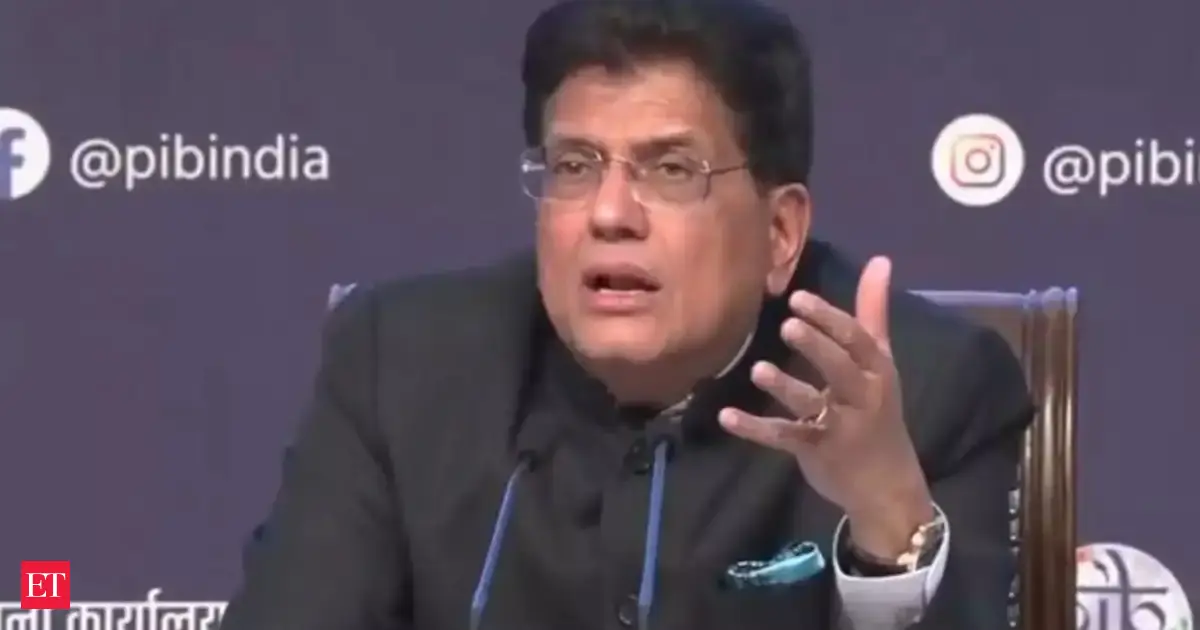
India, Chile FTA talks will be closed soon; to open up critical minerals sector: Piyush Goyal
India is set to finalize a Free Trade Agreement (FTA) with Chile, as announced by Union Minister Piyush Goyal. This agreement is strategically important as it will significantly enhance India's access to crucial critical minerals like lithium and copper, vital for domestic industries. The deal builds on an existing trade pact, highlighting India's proactive economic diplomacy and diversification of raw material sources, making it a key topic for exams on international relations and economic policy.
Revision structure
Monthly events and exam calendar context
Static GK and one-liner notes
Quiz and mock-test revision path
Key points
Exam-ready takeaways
The FTA aims to enhance India's access to critical minerals for domestic industries.
Specific critical minerals mentioned are lithium and copper.
The announcement was made by Union Minister Piyush Goyal.
The upcoming FTA will build upon an existing trade deal between India and Chile.
Detailed analysis
Full exam-oriented breakdown
India's impending finalization of a Free Trade Agreement (FTA) with Chile marks a significant stride in its economic diplomacy and strategic resource acquisition. Announced by Union Minister Piyush Goyal, this agreement is poised to substantially enhance India's access to crucial critical minerals, particularly lithium and copper, which are indispensable for its rapidly growing domestic industries. This move builds upon an existing Preferential Trade Agreement (PTA) between the two nations, signifying a deeper commitment to bilateral economic engagement. The **background context** for this intensified focus on critical minerals stems from India's ambitious industrialization goals and its commitment to a green energy transition. The global shift towards electric vehicles (EVs), renewable energy infrastructure, and advanced electronics has dramatically increased the demand for minerals like lithium (essential for EV batteries and mobile phones), cobalt, nickel, and rare earth elements. Copper, a traditional workhorse, remains vital for electrification, construction, and electronics. India, while having some mineral resources, is heavily import-dependent for many of these critical inputs. The existing India-Chile PTA, operational since 2007 and expanded in 2017 to cover more tariff lines, has already facilitated trade, but an FTA aims for broader tariff elimination and deeper cooperation, particularly in areas of strategic importance. **What happened** is that Minister Goyal indicated the final stages of negotiations for an FTA, emphasizing its role in securing critical minerals. This announcement underscores India's proactive approach to diversifying its supply chains, especially for minerals where global supply is often concentrated in a few regions or controlled by a limited number of players. Chile, a resource-rich nation, is the world's largest producer of copper and possesses significant reserves of lithium, making it a crucial partner for India's strategic needs. **Key stakeholders** involved include the Indian government, particularly the Ministry of Commerce and Industry and the Ministry of Mines, which are driving the policy and negotiation efforts. Indian industries, especially those in the electric vehicle, battery manufacturing, electronics, and renewable energy sectors, are major beneficiaries. On the Chilean side, the government, its state-owned mining company Codelco (for copper), and major private lithium producers like SQM are central. The broader international community also plays a role, as securing critical minerals is a global geopolitical concern, with nations vying for access to ensure their technological and economic futures. **Why this matters for India** is multifaceted. Economically, securing a stable and diversified supply of critical minerals is vital for the 'Make in India' and 'Atmanirbhar Bharat' initiatives. Reduced reliance on single-source suppliers mitigates supply chain risks and price volatility, fostering domestic manufacturing and innovation. It directly supports India's ambitious target of achieving Net Zero emissions by 2070, as these minerals are foundational to clean energy technologies. Geopolitically, strengthening ties with resource-rich Latin American nations like Chile enhances India's strategic autonomy and expands its influence beyond traditional spheres. This aligns with India's broader foreign policy of seeking diversified partnerships and strengthening South-South cooperation. The **historical context** of India-Chile relations has seen a steady, albeit gradual, increase in trade and diplomatic engagement. The signing of the PTA in 2007 was a milestone, which was further expanded in 2017, demonstrating a commitment to deepening economic ties. This progression towards an FTA signifies a maturation of this relationship, moving beyond preferential tariffs to a more comprehensive framework that addresses strategic economic imperatives. India's broader engagement with Latin America, though less prominent than with other regions, has been steadily growing, driven by a search for new markets and resource partners. Looking at **future implications**, this FTA could catalyze significant investments and joint ventures in mineral exploration and processing, not just in Chile but potentially in other Latin American countries. It could accelerate the growth of India's EV and electronics sectors, making them more competitive globally. Furthermore, this agreement could set a precedent for India to pursue similar resource-focused FTAs with other mineral-rich nations, thereby strengthening its global supply chain resilience. It also reinforces India's position as a responsible global actor committed to sustainable development and green technologies. From a **constitutional and policy perspective**, the power to enter into such international agreements is vested in the Union government. **Article 253** of the Indian Constitution grants Parliament the power to make any law for implementing any treaty, agreement, or convention with any other country or any decision made at any international conference, association, or other body. This provides the legal basis for operationalizing such an FTA. Furthermore, the **Seventh Schedule (Union List)** includes 'Foreign Affairs' (Entry 10), 'Entering into treaties and agreements with foreign countries' (Entry 14), and 'Regulation of mines and mineral development' (Entry 54), all of which are relevant. India's **Foreign Trade Policy (FTP)**, governed by the Foreign Trade (Development and Regulation) Act, 1992, provides the framework for such agreements. The government's focus on critical minerals is also reflected in policies like the **National Mineral Policy** and proposed amendments to the **Mines and Minerals (Development and Regulation) Act, 1957**, to streamline exploration and extraction, including for critical minerals. Initiatives like the Production Linked Incentive (PLI) schemes for Advanced Chemistry Cell (ACC) battery manufacturing further underscore the domestic push, which will be significantly aided by secure mineral access through such FTAs.
How to study
Turn news into exam marks
Revise monthly events by exam family instead of reading random updates.
Pair one-liners with mock tests so mistakes become the next revision list.
Keep state job pages, calendar pages and GK packs connected in one path.