

The Ministry of Home Affairs (MHA) has issued a new policy regarding IPS officers' eligibility for senior posts.
GK and monthly revision
2-year Central deputation at SP/DIG level must for IPS officers to be eligible for senior posts: MHA
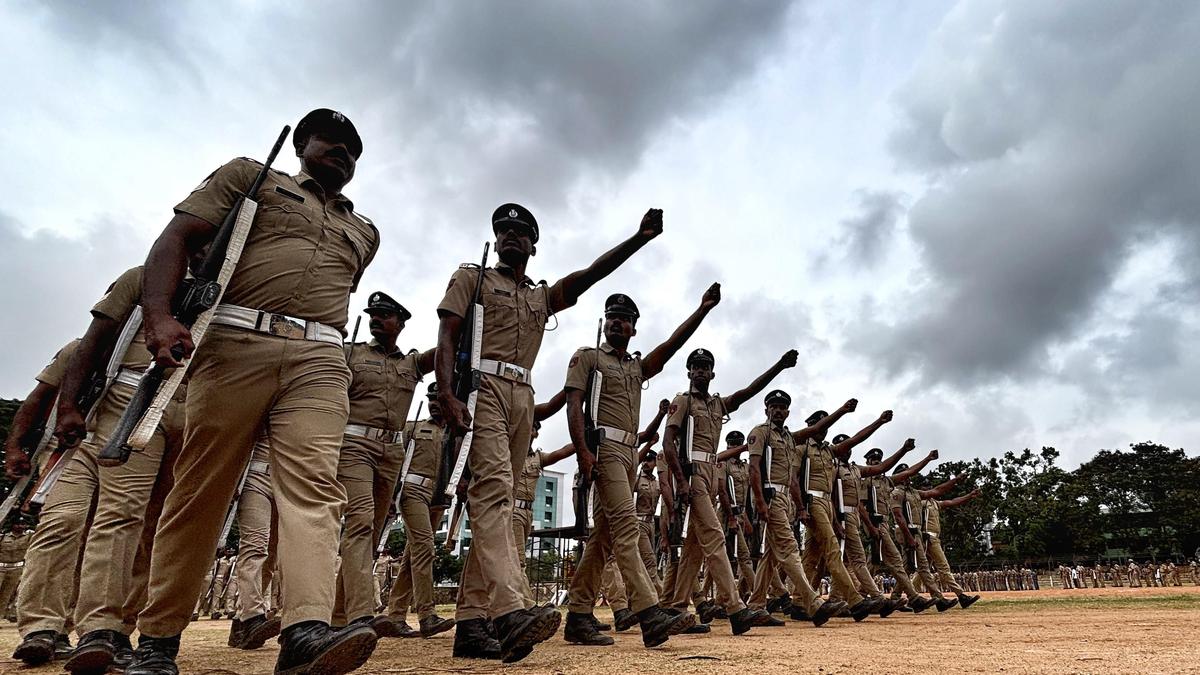
The Ministry of Home Affairs (MHA) has mandated a minimum of two years of Central deputation at the SP/DIG level for IPS officers. This experience is now compulsory for empanelment at the IG/equivalent level at the Centre, applicable from the 2011 batch onwards. This policy aims to ensure senior IPS officers possess crucial Central government experience, impacting career progression and administrative efficiency. It is significant for exams covering governance and public administration.
Revision structure
Monthly events and exam calendar context
Static GK and one-liner notes
Quiz and mock-test revision path
Key points
Exam-ready takeaways
A minimum of two years of Central deputation experience is now mandatory for IPS officers.
This mandatory deputation must be at the Superintendent of Police (SP) or Deputy Inspector General (DIG) level, or an equivalent post.
The Central deputation experience is required for empanelment at the Inspector General (IG) or equivalent level at the Centre.
This new eligibility criterion applies to IPS officers from the 2011 batch onwards.
Detailed analysis
Full exam-oriented breakdown
The Ministry of Home Affairs (MHA) has introduced a significant policy shift, mandating a minimum of two years of Central deputation at the Superintendent of Police (SP) or Deputy Inspector General (DIG) level for Indian Police Service (IPS) officers. This experience is now a prerequisite for empanelment at the Inspector General (IG) or equivalent level at the Centre, applicable to officers from the 2011 batch onwards. This move aims to imbue senior police leadership with a crucial central perspective and national outlook, addressing long-standing concerns about cadre management and the availability of experienced officers for central assignments. **Background Context and Historical Perspective:** The All India Services (AIS), comprising the Indian Administrative Service (IAS), Indian Police Service (IPS), and Indian Forest Service (IFS), are unique in India's federal structure. Officers are recruited by the Centre but allotted to state cadres, serving both the Union and State governments. This dual control is enshrined in Article 312 of the Constitution, which empowers Parliament to create AIS. A key component of this system is the deputation policy, governed by the All India Services (Cadre) Rules, 1954 (specifically Rule 6 for deputation), which allows officers to serve at the Centre. Historically, there has been a persistent challenge: states often resist releasing officers for central deputation, citing their own staffing needs. Conversely, many officers prefer to remain in their state cadres due to various reasons, including career progression paths, family considerations, or familiarity with the local environment. This has led to a shortage of officers at the Centre, impacting the functioning of various Central Police Organizations (CPOs), Central Armed Police Forces (CAPFs), and ministries, which rely heavily on deputed IPS officers for their leadership roles. The issue of cadre management, balancing state requirements with central needs, has been a recurring theme in administrative reforms, including recommendations from the Second Administrative Reforms Commission (ARC). **What Happened and Key Stakeholders:** The MHA's recent directive makes it explicit that without the stipulated two years of central deputation at the SP/DIG level, IPS officers from the 2011 batch onwards will not be eligible for promotion to IG or equivalent posts at the Centre. This is a clear signal to both officers and state governments about the Centre's commitment to strengthening its leadership pool. The primary stakeholders involved are: 1. **Ministry of Home Affairs (MHA):** As the nodal ministry for internal security and police administration, the MHA is the architect and enforcer of this policy. It aims to ensure that central police organizations have access to experienced IPS leadership. 2. **Department of Personnel and Training (DoPT):** While MHA handles IPS specifically, DoPT is the overarching nodal agency for personnel management in India and plays a crucial role in framing and implementing broader deputation policies for all AIS. 3. **State Governments:** They are directly impacted as they must release officers for central deputation. This policy might compel states to be more cooperative, though potential friction over officer availability remains. 4. **IPS Officers:** Their career progression is directly affected. This policy necessitates a shift in career planning, making central deputation a mandatory step rather than an optional one for aspiring senior central roles. 5. **Central Armed Police Forces (CAPFs) and Central Police Organizations (CPOs):** These organizations, such as CRPF, BSF, CISF, CBI, IB, depend on IPS officers for leadership. This policy is expected to ensure a steady supply of officers with central administrative experience. **Significance for India and Future Implications:** The new policy holds profound significance for India's governance and security architecture. Firstly, it aims to foster a more nationalistic outlook among senior police leadership. Officers who have served at the Centre gain exposure to national security challenges, inter-state coordination issues, and broader policy formulation, which can be invaluable when they return to state service or take on higher central roles. This ensures that leaders at the IG level, who often handle critical national security assignments, possess a comprehensive understanding of India's diverse challenges. Secondly, it addresses the persistent shortage of officers at the Centre. By making central deputation a mandatory career milestone, the MHA hopes to streamline the process and ensure a consistent pool of experienced officers. This could lead to improved coordination between central and state agencies, crucial for tackling issues like terrorism, organized crime, and cyber security, which often transcend state boundaries. From a governance perspective, this move aligns with the broader goal of administrative efficiency and accountability. Having officers with diverse experience at both state and central levels can lead to more informed decision-making and better policy implementation. However, potential challenges include the willingness of states to release officers, which could strain Centre-State relations, and the need for robust cadre management by DoPT and MHA to ensure officers are appropriately placed and utilized during their central stints. In the long run, this policy is expected to professionalize the higher echelons of police leadership at the Centre, ensuring that those who reach the rank of IG and above have a well-rounded understanding of both state-specific policing and national security imperatives. It underscores the Centre's commitment to leveraging the All India Services for national integration and effective governance, reinforcing the original spirit of Article 312.
How to study
Turn news into exam marks
Revise monthly events by exam family instead of reading random updates.
Pair one-liners with mock tests so mistakes become the next revision list.
Keep state job pages, calendar pages and GK packs connected in one path.