

The US Federal Reserve decided to hold interest rates steady.
GK and monthly revision
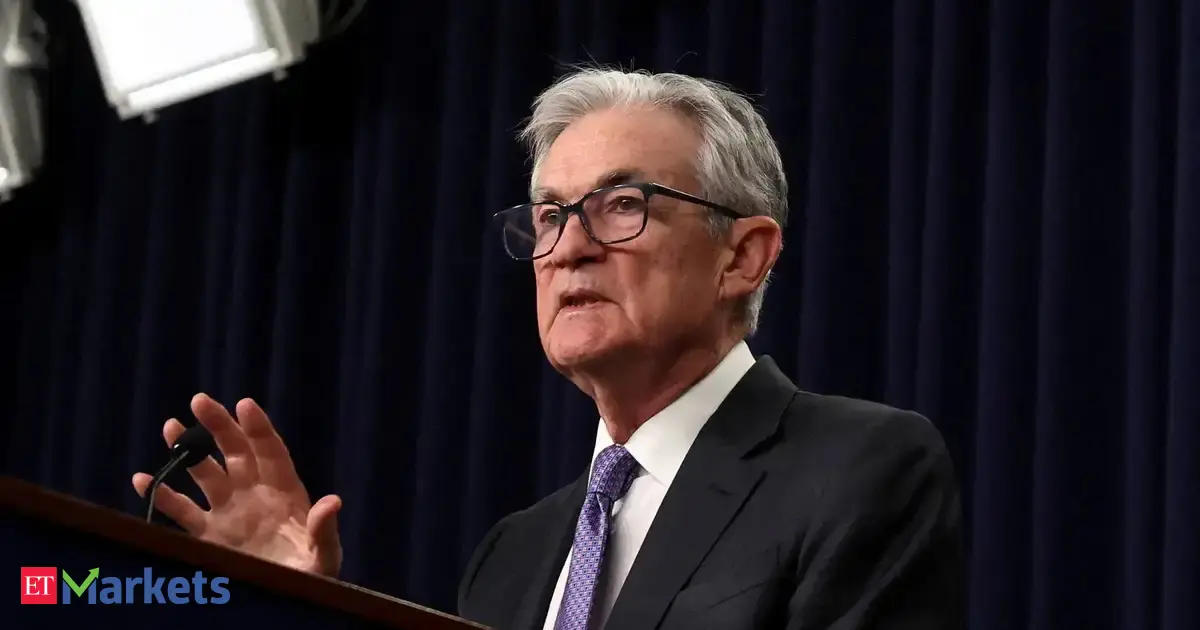
US Federal Reserve holds rates steady amid sticky inflation, resilient jobs market
The US Federal Reserve maintained interest rates due to persistent inflation and a robust job market, signaling a cautious approach to monetary policy. This decision highlights the Fed's commitment to its dual mandate despite external political pressures, making it crucial for understanding global economic trends and central bank independence for competitive exams.
Revision structure
Monthly events and exam calendar context
Static GK and one-liner notes
Quiz and mock-test revision path
Key points
Exam-ready takeaways
The primary reasons cited for the decision were a 'tight labor market'.
Another key factor was 'inflation above its target'.
The decision occurred amidst political pressure from US President Donald Trump.
Concerns were raised regarding the independence of the Federal Reserve.
Detailed analysis
Full exam-oriented breakdown
The recent decision by the US Federal Reserve to hold interest rates steady is a critical development with far-reaching implications, not just for the American economy but for global financial markets, including India. This move, rooted in the Fed's dual mandate of achieving maximum employment and price stability, underscores the persistent challenges posed by 'sticky inflation' and a 'tight labor market' in the US. **Background Context: The Fed's Tightrope Walk** The Federal Reserve, established by the Federal Reserve Act of 1913, functions as the central banking system of the United States. Its primary objective, as legislated by Congress, is to maintain stable prices, maximize employment, and ensure moderate long-term interest rates. Following a period of historically low interest rates and quantitative easing post-2008 financial crisis and during the COVID-19 pandemic, inflation surged in 2021-2022 due to supply chain disruptions, robust demand, and expansionary fiscal policies. To combat this, the Fed embarked on an aggressive rate-hiking cycle starting in March 2022, increasing the federal funds rate from near zero to over 5%. This rapid tightening was aimed at cooling the economy, thereby bringing inflation down to its target of 2%. The current 'hold' decision indicates that while inflation has come down from its peak, it remains 'above target,' and the labor market, characterized by low unemployment and strong wage growth, is still 'tight,' suggesting underlying inflationary pressures. **Key Stakeholders and Their Dynamics** The primary stakeholder is the **US Federal Reserve's Federal Open Market Committee (FOMC)**, which makes these crucial interest rate decisions. The FOMC comprises 12 members: the seven members of the Board of Governors, the president of the Federal Reserve Bank of New York, and presidents of four other Federal Reserve Banks on a rotating basis. Their decisions are based on economic data, forecasts, and their assessment of the economy's trajectory. Other key stakeholders include **US businesses and consumers**, who are directly affected by borrowing costs; **global investors**, who react to changes in the dollar's strength and yield differentials; and the **US political establishment**. The mention of political pressure from US President Donald Trump highlights a recurring tension between the executive branch and the theoretically independent central bank. Presidents often prefer lower interest rates to stimulate growth, especially during election cycles, while the Fed prioritizes its long-term mandates. **Significance for India: Navigating Global Headwinds** The Fed's monetary policy decisions have profound implications for India. Firstly, a 'hold' or further rate hikes by the Fed typically strengthens the US Dollar. This can lead to **capital outflows** from emerging markets like India, as foreign portfolio investors (FPIs) might shift investments to the safer, higher-yielding US assets. Such outflows put **depreciation pressure on the Indian Rupee (INR)** against the dollar, making imports costlier (especially crude oil), potentially fueling **imported inflation**. This, in turn, complicates the **Reserve Bank of India's (RBI) monetary policy**. The RBI, guided by its Monetary Policy Committee (MPC) established under the RBI Act, 1934, and tasked with an inflation target (currently 4% +/- 2%), often finds its hands tied. If the Fed maintains a hawkish stance, the RBI might be compelled to keep its own rates elevated or even hike them to prevent excessive rupee depreciation and manage inflation, even if domestic conditions might otherwise warrant a more accommodative stance. Furthermore, a slowdown in the US economy, potentially caused by persistent high rates, could impact India's **export growth**, especially in the IT and services sectors, which rely heavily on US demand. **Historical Context and Central Bank Independence** The principle of central bank independence is a cornerstone of sound monetary policy, insulating decisions from short-term political expediency. History is replete with instances where political interference in monetary policy has led to hyperinflation or economic instability. In the US, episodes like President Nixon's pressure on then-Fed Chair Arthur Burns in the early 1970s are often cited as contributing to the 'Great Inflation.' Donald Trump's past criticisms of then-Fed Chair Jerome Powell during his previous term similarly underscore this perennial tension. In India, while the RBI enjoys operational autonomy, its independence has also been a subject of debate, particularly concerning appointments and policy disagreements with the government. The establishment of the MPC in 2016, through an amendment to the RBI Act, 1934, was a significant step towards institutionalizing the inflation-targeting framework and enhancing transparency and accountability in monetary policy decisions. **Future Implications and Broader Themes** The Fed's current stance suggests a 'higher-for-longer' interest rate environment, which could mean slower global growth and continued volatility in financial markets. For India, this implies sustained vigilance from the RBI, careful management of external debt, and continued focus on domestic growth drivers. The broader theme of central bank independence will remain crucial, especially as major economies grapple with inflation and political cycles. Any perceived weakening of the Fed's independence could undermine global confidence in the institution and its ability to manage the world's largest economy. This situation also highlights the interconnectedness of global economies and the need for robust domestic policy frameworks to absorb external shocks. Future Fed decisions will hinge on incoming economic data, particularly inflation readings and labor market reports, and will dictate the trajectory of global capital flows and commodity prices.
How to study
Turn news into exam marks
Revise monthly events by exam family instead of reading random updates.
Pair one-liners with mock tests so mistakes become the next revision list.
Keep state job pages, calendar pages and GK packs connected in one path.