

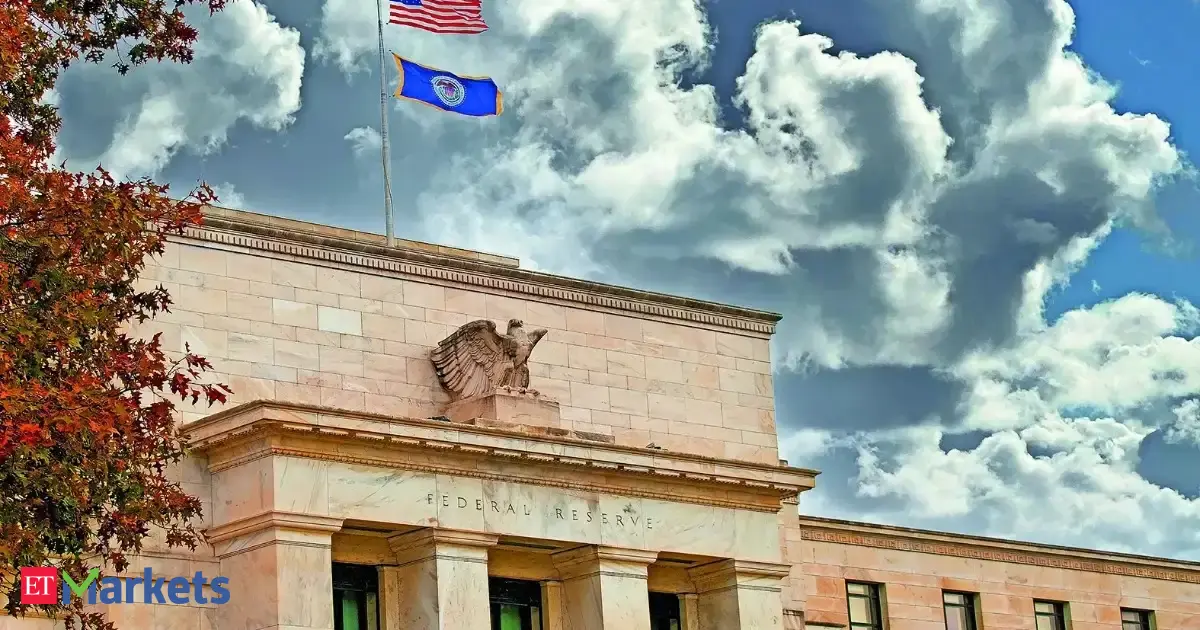
The US Federal Reserve is anticipated to maintain current interest rates.
GK and monthly revision
US Fed expected to hold rates steady as pause phase begins
The US Federal Reserve is expected to maintain current interest rates, initiating a 'pause phase' in its monetary policy. This decision, influenced by strong economic data, is anticipated to continue beyond immediate meetings, despite calls for lower rates from figures like President Trump. This development is crucial for understanding global economic trends, central bank functions, and monetary policy implications for competitive exams.
Revision structure
Monthly events and exam calendar context
Static GK and one-liner notes
Quiz and mock-test revision path
Key points
Exam-ready takeaways
This decision signals the beginning of a 'pause phase' in the Federal Reserve's monetary policy.
The 'pause phase' in interest rates is expected to continue beyond upcoming meetings.
Strong economic data is cited as a primary reason for the Federal Reserve's decision to hold rates steady.
Former President Trump had previously urged the Federal Reserve for lower interest rates.
Detailed analysis
Full exam-oriented breakdown
The recent news of the US Federal Reserve's anticipated decision to maintain current interest rates marks a significant shift in global monetary policy, signaling the beginning of a 'pause phase'. For competitive exam aspirants, understanding this development is not just about memorizing facts, but grasping its intricate web of causes, consequences, and implications, especially for India. **The Fed's Journey to a Pause: A Background Context** To truly appreciate this 'pause,' we must rewind to the post-pandemic era. Following the COVID-19 economic shock, central banks globally, including the US Federal Reserve, injected massive liquidity and kept interest rates near zero to stimulate economies. However, this, coupled with supply chain disruptions, the Russia-Ukraine conflict, and robust consumer demand, led to a surge in inflation, reaching multi-decade highs in the US. The Fed, mandated with achieving maximum employment and stable prices (inflation around 2%), began an aggressive cycle of interest rate hikes starting in March 2022. Over the past year and a half, the Federal Open Market Committee (FOMC), the Fed's primary monetary policymaking body, raised the federal funds rate eleven times, pushing it to a 22-year high range of 5.25%-5.50%. This tightening was aimed at cooling the economy and bringing inflation back to target. **Decoding the 'Pause Phase': What Happened and Why?** The current decision to hold rates steady signals that the Fed believes its restrictive monetary policy is working. Strong economic data, including a resilient job market and consumer spending, suggests that the economy can withstand current rates without immediately tipping into recession. Simultaneously, inflation, while still above target, has shown signs of moderation. A pause allows the Fed to assess the cumulative impact of past hikes, which often have a lagged effect on the economy, before deciding on future moves. The policymakers, however, hold differing views on whether further hikes might be needed or when rate cuts could commence, reflecting the 'divided outlook' mentioned in the article. **Key Stakeholders in the Global Economic Chessboard** 1. **The US Federal Reserve (FOMC):** The central bank of the United States, operating under the Federal Reserve Act of 1913, it's the primary decision-maker. Its independence from political pressure is crucial, though figures like former President Trump have historically urged for lower rates. Its dual mandate of maximum employment and price stability guides its actions. 2. **US Government & Economy:** The President and Treasury Department are keenly interested in the Fed's decisions due to their impact on economic growth, employment, and the national debt. US consumers and businesses are directly affected by borrowing costs. 3. **Global Economies:** Developing and emerging markets, including India, are highly sensitive to US monetary policy due to capital flows, exchange rates, and trade dynamics. 4. **International Financial Institutions:** Organizations like the IMF and World Bank monitor these developments closely due to their systemic global impact. **Why This Matters for India: Significance and Implications** India, as a significant emerging economy, is deeply impacted by the Fed's actions. A prolonged 'pause phase' or eventual rate cuts in the US could have several implications: * **Capital Flows (FII/FPI):** When US interest rates are high, global investors often withdraw funds from emerging markets like India to invest in safer, higher-yielding US assets (a phenomenon sometimes linked to 'taper tantrum' fears). A pause or cut could reverse this trend, leading to increased Foreign Institutional Investor (FII) and Foreign Portfolio Investor (FPI) inflows into India, boosting equity markets and investment. * **Rupee-Dollar Exchange Rate:** Higher FII inflows strengthen the Indian Rupee against the US Dollar. Conversely, capital outflows weaken it. A stable or strengthening Rupee helps reduce import costs, particularly for crude oil, thereby easing imported inflation. * **RBI's Monetary Policy:** The Reserve Bank of India (RBI), guided by its Monetary Policy Committee (MPC) under Section 45ZB of the RBI Act, 1934, constantly monitors global cues. A US Fed pause provides the RBI with greater policy flexibility. If the Fed pauses, the pressure on RBI to raise rates to protect the Rupee might ease, allowing it to focus more on domestic inflation and growth targets. This also relates to broader themes like inflation targeting, which the RBI formally adopted in 2016. * **Borrowing Costs:** For Indian companies and the government, borrowing from international markets becomes cheaper if US rates stabilize or fall. This is crucial for financing infrastructure projects and managing the national debt, which is governed by provisions like Article 292 (borrowing by the Government of India) and Article 282 (expenditure). * **Global Growth & Trade:** A stable US economy, supported by the Fed's calibrated approach, generally bodes well for global growth, which in turn benefits India's exports. Conversely, a sharp slowdown in the US could hurt Indian exports. **Future Implications** The 'pause phase' is not an end but a continuation of the Fed's dynamic response to economic data. Future scenarios could include: a sustained pause, if inflation continues its downward trend while growth remains robust; a resumption of hikes, if inflation proves stickier or re-emerges; or rate cuts, if the economy shows signs of significant slowdown or recession. The Fed's decisions will continue to be data-dependent, creating an environment of cautious optimism and constant monitoring for central banks worldwide, including the RBI. **Connecting to Broader Themes** This topic links directly to central banking, monetary policy, international finance, and global economic interdependence. It highlights how domestic policy decisions of a major economy can have profound ripple effects across the globe, influencing everything from stock markets to a nation's ability to manage its currency and inflation. Understanding the Federal Reserve Act of 1913 in the US and the RBI Act, 1934, in India provides the institutional context for these powerful economic actors.
How to study
Turn news into exam marks
Revise monthly events by exam family instead of reading random updates.
Pair one-liners with mock tests so mistakes become the next revision list.
Keep state job pages, calendar pages and GK packs connected in one path.