

Turkish products will be excluded from the benefits of India's Free Trade Agreement (FTA) with the European Union (EU).
GK and monthly revision
Turkish products excluded from India, EU FTA benefits
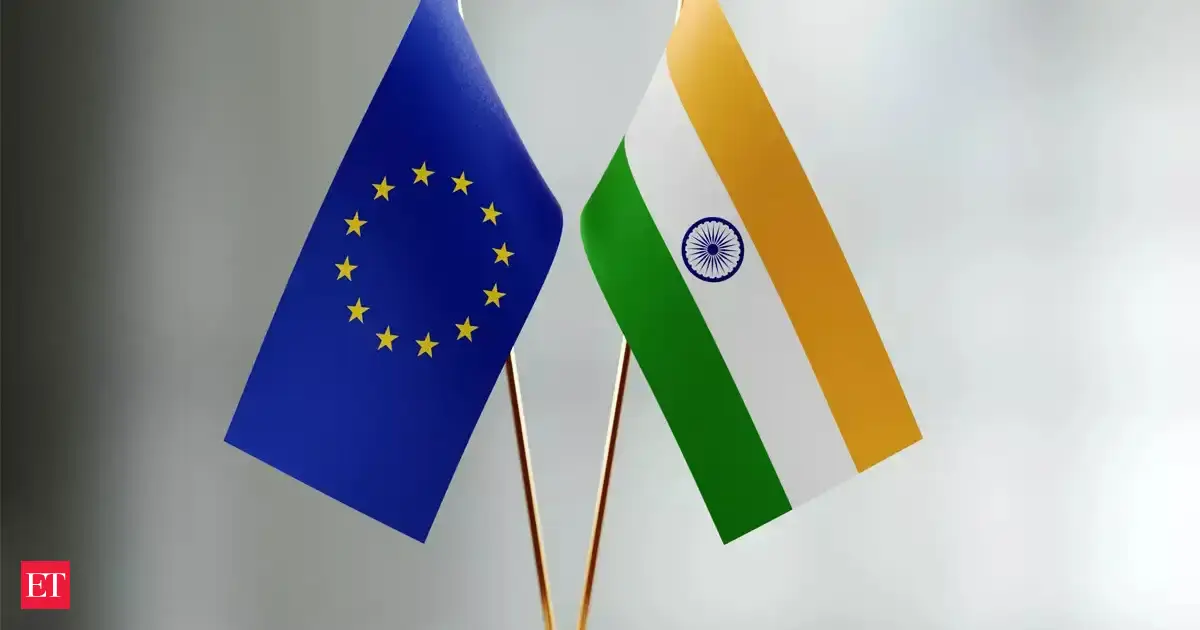
Turkish products are excluded from the benefits of India's upcoming Free Trade Agreement (FTA) with the European Union. This significant development arises from the existing EU-Turkey Customs Union, which mandates Turkey to align its tariffs with the EU's common external tariff. Consequently, India's FTA benefits with the EU will not automatically extend to Turkey, impacting trade dynamics and the scope of the agreement.
Revision structure
Monthly events and exam calendar context
Static GK and one-liner notes
Quiz and mock-test revision path
Key points
Exam-ready takeaways
This exclusion is a direct consequence of the existing EU-Turkey Customs Union.
Under the EU-Turkey Customs Union, Turkiye is required to match the EU's common external tariff.
Normally, Turkiye extends EU's FTA benefits to its partners, but this specific exclusion applies to the India-EU FTA.
The decision implies that Indian products gaining tariff concessions in the EU via the FTA will not automatically receive similar benefits in Turkiye.
Detailed analysis
Full exam-oriented breakdown
The exclusion of Turkish products from the benefits of India's upcoming Free Trade Agreement (FTA) with the European Union (EU) is a significant development with multifaceted implications for India's trade policy, economic strategy, and international relations. To truly understand this, we must delve into the background, the mechanics of customs unions, and the strategic interests of all parties involved. **Background Context: The EU-Turkey Customs Union** At the heart of this issue lies the EU-Turkey Customs Union, which came into effect on December 31, 1995. This agreement is a deep form of economic integration, going beyond a simple Free Trade Area. Under the Customs Union, Turkey eliminated tariffs and quantitative restrictions on industrial goods traded with the EU and, crucially, adopted the EU's Common External Tariff (CET) for imports from third countries. This means that Turkey applies the same tariffs on goods entering from outside the EU as the EU itself does. A key consequence of this arrangement is that when the EU enters into an FTA with a third country, Turkey is generally obligated to extend similar tariff concessions to that country, even if Turkey itself hasn't signed a direct FTA with them. This mechanism aims to prevent trade deflection, where goods might enter the Customs Union via the member with the lowest external tariff. **What Happened: The Specific Exclusion** In the context of the ongoing negotiations for the India-EU FTA (formally known as the India-EU Broad-based Trade and Investment Agreement or BTIA, which resumed in 2022 after a hiatus since 2013), a specific decision has been made to exclude Turkish products from the benefits that India will gain in the EU market. Normally, if India secures tariff reductions on certain products entering the EU, under the Customs Union, Turkey would also have to offer the same reduced tariffs to Indian products. Conversely, Turkish products would typically enjoy the same preferential access to the Indian market as EU products would under the FTA. However, this exclusion means that while Indian goods will receive tariff concessions in the EU, Turkish goods will not automatically receive similar benefits in India, nor will Indian goods automatically receive similar benefits in Turkey based on the India-EU FTA. This is an unusual deviation from the typical functioning of the EU-Turkey Customs Union, indicating specific negotiations and carve-outs related to the India-EU FTA. **Key Stakeholders Involved** 1. **India**: As one of the world's fastest-growing major economies, India is actively pursuing FTAs to boost exports, attract investment, and integrate into global supply chains. The EU is a critical trading partner, and an FTA is expected to significantly enhance market access for Indian goods and services. India's objective is to secure the best possible terms for its exports. 2. **European Union (EU)**: The EU is India's third-largest trading partner, and an FTA with India is vital for diversifying its supply chains, accessing a large and growing market, and strengthening its geopolitical influence. The EU's trade policy is complex, balancing the interests of its 27 member states and its existing agreements like the Customs Union with Turkey. 3. **Turkey**: A crucial player due to its unique relationship with the EU. Turkey has been a long-standing candidate for EU membership and its economy is deeply intertwined with the EU's. Turkey's interest lies in protecting its domestic industries while navigating its obligations under the Customs Union and pursuing its own independent trade agenda. **Why This Matters for India** This exclusion holds significant implications for India. Economically, it means that the potential market access gains from the EU FTA will not automatically extend to Turkey, which is a considerable market in itself. Indian exporters will need a separate trade agreement with Turkey to gain preferential access there. Conversely, it also means that Turkish products will not gain automatic preferential access to the Indian market via the India-EU FTA, potentially reducing competition for certain Indian industries. From a strategic perspective, it highlights the complexities of negotiating FTAs with large blocs that have intricate existing arrangements. It underscores India's focus on reciprocal benefits and the need for clarity in multilateral and plurilateral trade frameworks. **Historical Context and Broader Themes** India's journey towards economic liberalization post-1991 has seen a gradual shift towards greater integration with the global economy, including a proactive approach to FTAs. The India-EU BTIA negotiations, initiated in 2007, reflect India's long-standing ambition to deepen ties with a major economic power. The current development also connects to broader themes of geo-economics and international trade governance. India's Foreign Trade Policy (FTP), periodically updated by the Directorate General of Foreign Trade (DGFT) under the Ministry of Commerce and Industry, outlines the country's strategy for enhancing exports and managing imports. The present situation reflects the intricate dance between multilateral trade rules (like those of the WTO) and bilateral/regional agreements. **Constitutional and Policy References** In India, the power to enter into international treaties and agreements rests with the Executive, but **Article 253** of the Indian Constitution grants Parliament the exclusive power to make any law for implementing any treaty, agreement, or convention with any other country or any decision made at any international conference, association, or other body. This constitutional provision forms the bedrock for the legal implementation of any FTA India signs. The Foreign Trade (Development and Regulation) Act, 1992, and the various Foreign Trade Policies (FTPs) issued thereunder, provide the statutory framework for governing India's foreign trade. **Future Implications** This exclusion could potentially pave the way for a separate, dedicated Free Trade Agreement between India and Turkey. Both countries have significant economic potential, and a direct FTA could unlock new opportunities. It also means that Indian businesses aiming to leverage the EU FTA for broader European market access will need to understand the precise geographical scope. Furthermore, it sets a precedent for how India might approach FTAs with other blocs that have similar customs unions or complex trade arrangements, ensuring that India's interests are clearly defined and protected. The move also signals India's increasing assertiveness in its trade negotiations, prioritizing clear, reciprocal benefits rather than unintended spillover effects from third-party agreements.
How to study
Turn news into exam marks
Revise monthly events by exam family instead of reading random updates.
Pair one-liners with mock tests so mistakes become the next revision list.
Keep state job pages, calendar pages and GK packs connected in one path.