

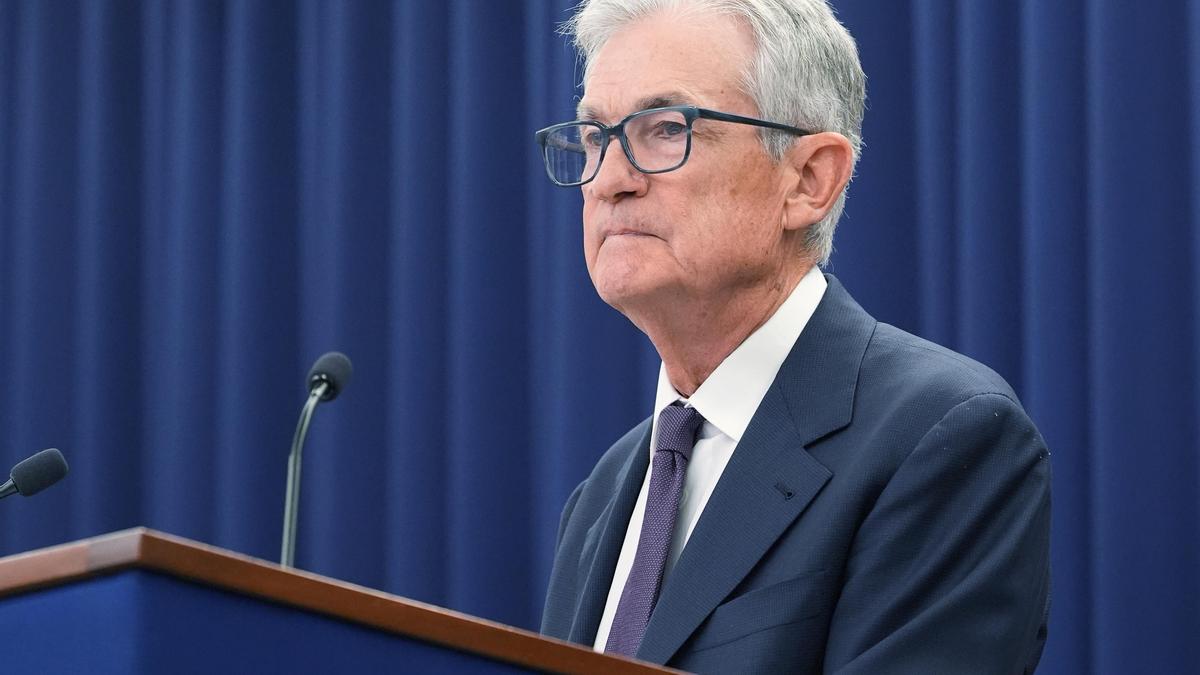
The US Federal Reserve's rate-setting committee maintained its interest rates at their existing level.
GK and monthly revision
Federal Reserve keeps interest rates unchanged even as Trump continues to insist they be lowered
The US Federal Reserve's rate-setting committee decided to keep interest rates unchanged, despite former President Trump's insistence on lowering them. This decision highlights a significant internal division within the Fed, with some officials prioritizing inflation control and opposing further cuts until inflation subsides, while others advocate for lower rates to boost employment. Understanding central bank monetary policy, its tools like interest rates, and the factors influencing such decisions (inflation, employment) is crucial for competitive exams, particularly in economics sections.
Revision structure
Monthly events and exam calendar context
Static GK and one-liner notes
Quiz and mock-test revision path
Key points
Exam-ready takeaways
The decision was made despite former President Trump's continuous insistence for lower interest rates.
There is a clear division within the Fed committee regarding the future trajectory of interest rates.
One faction of officials opposes further rate cuts, advocating to keep rates on hold until inflation comes down.
Another faction within the committee supports lowering rates to provide further support for employment and hiring.
Detailed analysis
Full exam-oriented breakdown
The decision by the US Federal Reserve's rate-setting committee to maintain interest rates, despite former President Trump's strong calls for them to be lowered, offers a fascinating insight into the delicate balance between central bank independence and political pressure, while also highlighting the complexities of monetary policy. For competitive exam aspirants, understanding this event requires delving into the mechanics of central banking, its global ramifications, and its specific implications for India. **Background Context: The Fed's Mandate and Recent Economic Climate** To grasp the significance of this decision, one must first understand the Federal Reserve's role. Established by the Federal Reserve Act of 1913, the Fed serves as the central bank of the United States. Its primary objectives, often referred to as its 'dual mandate,' are to achieve maximum employment and stable prices (low and stable inflation). The Federal Open Market Committee (FOMC) is the Fed's principal monetary policy-making body. Leading up to the period described in the article, the global economy, including the US, had experienced significant inflationary pressures, partly due to supply chain disruptions, robust consumer demand, and geopolitical events. To combat this, the Fed had aggressively raised interest rates from near-zero levels starting in early 2022, marking one of the fastest tightening cycles in decades. These rate hikes were designed to cool down the economy, reduce demand, and bring inflation back to the Fed's target of 2%. By the time of the article, inflation showed signs of moderating, but remained a concern for some officials, while others worried about the potential for excessive tightening to stifle job growth. **What Happened: A Divided House Holds Steady** The core of the article reveals that the FOMC decided to keep its benchmark interest rate, the federal funds rate, unchanged. This was not a unanimous decision, as the article points out an internal division. One faction within the committee prioritizes inflation control, arguing against further rate cuts until inflation definitively comes down to target levels. Their concern is that premature cuts could reignite inflationary pressures, undoing the progress made. The other faction, however, advocated for lowering rates to further support employment and hiring, believing that the economy could benefit from more accommodative monetary policy without necessarily triggering a resurgence of inflation. This split reflects the inherent challenge in balancing the Fed's dual mandate, particularly when economic indicators present a mixed picture. The decision to hold rates indicated a cautious approach, leaning towards ensuring inflation is sufficiently tamed before considering easing monetary policy. **Key Stakeholders Involved** 1. **The US Federal Reserve (FOMC):** As the primary decision-maker, its independence is paramount. Its members, appointed for staggered terms, are expected to make decisions based on economic data and its mandate, not political expediency. 2. **The US Government/President (Former President Trump):** Political leaders often prefer lower interest rates as they can stimulate economic growth, make borrowing cheaper for businesses and consumers, and potentially boost their approval ratings ahead of elections. Trump's insistence highlights the constant tension between executive desires and central bank autonomy. 3. **Businesses and Consumers:** Interest rates directly impact borrowing costs for mortgages, car loans, and business investments. Higher rates can slow economic activity, while lower rates can stimulate it. Their financial health is directly tied to the Fed's decisions. 4. **Global Financial Markets:** The Fed's actions have ripple effects worldwide, influencing currency exchange rates, capital flows, and investor sentiment across borders. **Why This Matters for India: The Global Domino Effect** The US Federal Reserve's monetary policy decisions have profound implications for India, primarily due to the interconnectedness of global financial markets: 1. **Capital Flows and Rupee Volatility:** When the Fed raises interest rates, US assets become more attractive to global investors, potentially leading to capital outflows from emerging markets like India. This can weaken the Indian Rupee (depreciation against the USD) as foreign institutional investors (FIIs) pull funds out of Indian equities and debt markets. Conversely, a prolonged hold or eventual cut in US rates can encourage FII inflows into India. 2. **RBI's Monetary Policy:** The Reserve Bank of India (RBI), which operates under the RBI Act, 1934 (amended in 2016 to establish the Monetary Policy Committee (MPC) with a primary objective of maintaining price stability while keeping in mind the objective of growth), closely monitors Fed actions. If the Fed maintains high rates, the RBI might face pressure to keep its own rates elevated to prevent excessive capital outflows and rupee depreciation, even if domestic conditions might otherwise warrant a cut. This can lead to imported inflation and constrain the RBI's policy space. 3. **Trade and External Debt:** A stronger US Dollar (due to higher US rates) makes Indian exports cheaper for US buyers but imports more expensive for India. For Indian companies with foreign currency debt, a depreciating Rupee increases their repayment burden. India's constitutional framework, particularly Article 292 (borrowing by the Government of India) and Article 293 (borrowing by states), governs public debt, but the cost and availability of foreign debt are heavily influenced by global interest rate environments set by major central banks like the Fed. **Historical Context and Future Implications** The struggle for central bank independence is a recurring theme in economic history. The 'Volcker Shock' of the late 1970s and early 1980s, where then-Fed Chair Paul Volcker aggressively raised interest rates to tame runaway inflation despite significant political and public outcry, stands as a testament to the importance of central bank autonomy. Such independence is crucial for long-term economic stability, as it allows central banks to make tough, unpopular decisions necessary to control inflation without succumbing to short-term political pressures. The future implications of the Fed's current stance are significant: continued high rates could further cool the US economy, potentially leading to a 'soft landing' (inflation controlled without a recession) or a 'hard landing' (recession). For India, the trajectory of Fed rates will continue to dictate capital flows, influence the Rupee's value, and shape the RBI's monetary policy decisions, impacting everything from inflation to investment and job creation. The ongoing debate within the Fed underscores the delicate balancing act required to navigate complex economic landscapes in a globally integrated world. **Related Constitutional Articles, Acts, or Policies (Indian Context):** * **Reserve Bank of India Act, 1934:** This act established the RBI and outlines its functions, powers, and governance. It's the statutory basis for India's central bank. * **Monetary Policy Committee (MPC):** Established under an amendment to the RBI Act in 2016, the MPC is responsible for fixing the benchmark interest rate (repo rate) to achieve the inflation target set by the Government of India (currently 4% with a band of +/- 2%). This structure aims to bring greater transparency and accountability to monetary policy decisions, similar to the FOMC's role. * **Article 282 (Expenditure defrayable by the Union or a State out of its revenues):** While not directly about monetary policy, it broadly covers financial allocations. More relevant are the provisions related to government borrowing. * **Article 292 (Borrowing by the Government of India) and Article 293 (Borrowing by States):** These articles deal with the power of the Union and State governments to borrow, which is indirectly affected by global interest rates and the RBI's policy stance.
How to study
Turn news into exam marks
Revise monthly events by exam family instead of reading random updates.
Pair one-liners with mock tests so mistakes become the next revision list.
Keep state job pages, calendar pages and GK packs connected in one path.