

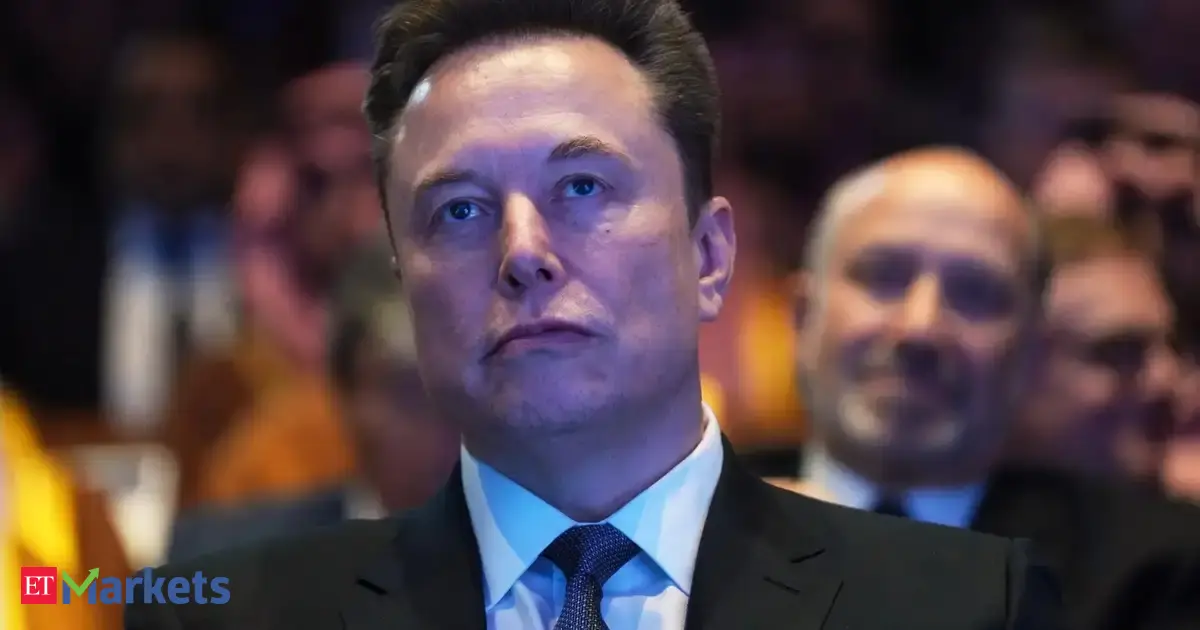
SpaceX, founded by Elon Musk, is reportedly planning a record-breaking IPO.
GK and monthly revision
Elon Musk planning world's largest IPO: What investors need to know about the once-in-a-generation SpaceX listing
Elon Musk's SpaceX is reportedly planning the world's largest IPO, potentially raising $50 billion. This landmark listing, driven by its reusable rocket technology and Starlink's recurring revenue, could significantly impact global financial markets and investor appetite for future space technologies. It is crucial for competitive exams due to its economic scale and technological implications in the space sector.
Revision structure
Monthly events and exam calendar context
Static GK and one-liner notes
Quiz and mock-test revision path
Key points
Exam-ready takeaways
The potential IPO aims to raise an estimated $50 billion, making it possibly the world's largest.
Key business segments highlighted include reusable rockets and the Starlink satellite internet service.
The listing is expected to test investor appetite for future space and technology ventures.
SpaceX is a prominent American aerospace manufacturer and space transportation services company.
Detailed analysis
Full exam-oriented breakdown
Elon Musk's SpaceX, a pioneer in private aerospace, is reportedly gearing up for an Initial Public Offering (IPO) that could potentially be the largest in history, aiming to raise an astonishing $50 billion. This potential listing marks a significant turning point, not just for the company, but for the global space industry, capital markets, and countries like India which are rapidly expanding their footprint in space. SpaceX was founded by Elon Musk in 2002 with the audacious goal of revolutionizing space technology, making space travel more affordable, and ultimately enabling the colonization of Mars. For decades, space exploration was primarily the domain of government agencies like NASA, Roscosmos, and ISRO. SpaceX challenged this paradigm by developing reusable rocket technology (Falcon 9, Falcon Heavy) that drastically cut launch costs. Its Dragon spacecraft has been instrumental in resupplying the International Space Station (ISS), and its Starlink constellation of satellites aims to provide global broadband internet. These technological breakthroughs and ambitious projects have propelled SpaceX to a valuation that makes a $50 billion IPO a realistic prospect. An IPO of this magnitude will involve several key stakeholders. At the forefront is **SpaceX itself and its founder, Elon Musk**, who seeks to raise substantial capital to fund future projects like the Starship program, designed for lunar and Martian missions, and the further expansion of Starlink. **Global investors**, both institutional and retail, will be the primary participants, looking for high returns from a company at the cutting edge of technology. Their appetite will determine the success of the listing and set a precedent for future investments in 'new space' ventures. **Competitors** in the aerospace industry, including traditional players like United Launch Alliance (ULA) and Arianespace, as well as emerging private companies like Blue Origin, will closely watch the IPO's performance as it could reshape market dynamics and investment trends. Finally, **governments worldwide**, including the US government which regulates its space activities, and other nations with burgeoning space programs, will be keen observers due to the geopolitical and strategic implications of such a powerful private entity. For India, the potential SpaceX IPO holds immense significance. Economically, it highlights the vast capital available for private space ventures globally. While India has its own promising space startups like Skyroot Aerospace and Agnikul Cosmos, they operate on a much smaller scale. The SpaceX IPO could inspire greater private investment in India's space sector, pushing Indian startups to innovate faster and attract more funding. Strategically, SpaceX's dominance, particularly with Starlink, poses both a challenge and an opportunity. Starlink's global internet service could compete with India's own satellite communication efforts, but it also demonstrates the potential for private players to achieve widespread connectivity. India's own **Space Policy 2023** and the establishment of **IN-SPACe** (Indian National Space Promotion and Authorisation Centre) are crucial steps towards fostering private sector participation and innovation within the country, aiming to create an ecosystem that can compete and collaborate on a global scale. The policy aims to enable private entities to undertake end-to-end activities in the space domain, from manufacturing to launch and data services, mirroring the private-led growth seen globally. This aligns with India's broader economic goals of becoming a $5 trillion economy and a global manufacturing hub, necessitating advanced technological capabilities. While no direct constitutional article specifically addresses private space IPOs, the broader Directive Principles of State Policy (DPSP), particularly **Article 38** (securing a social order for the promotion of welfare of the people) and **Article 39** (certain principles of policy to be followed by the State), implicitly support economic growth and technological advancement that can benefit society. Furthermore, **Article 51A(h)**, a Fundamental Duty, encourages developing scientific temper, humanism, and the spirit of inquiry and reform. Historically, the space industry has transitioned from an exclusive government domain during the Cold War-era space race to a more commercialized and privatized sector. SpaceX has been a key driver of this shift, demonstrating that private enterprise can achieve feats previously only possible for national agencies. This shift has profound future implications. It signals a new era of space commercialization, potentially leading to more frequent and affordable space travel, widespread satellite internet, and even space tourism. It could accelerate humanity's push towards lunar bases and Martian colonization. However, it also raises concerns about space debris, the equitable distribution of space resources, and the need for robust international regulations to govern private activities in outer space. The success of this IPO will undoubtedly shape how future capital flows into space ventures and influence the regulatory frameworks that govern the final frontier, making it a pivotal moment in the history of both finance and space exploration.
How to study
Turn news into exam marks
Revise monthly events by exam family instead of reading random updates.
Pair one-liners with mock tests so mistakes become the next revision list.
Keep state job pages, calendar pages and GK packs connected in one path.