

Jerome Powell is the current Chair of the Federal Reserve.
GK and monthly revision
Committed to maintaining Fed independence, asserts Jerome Powell
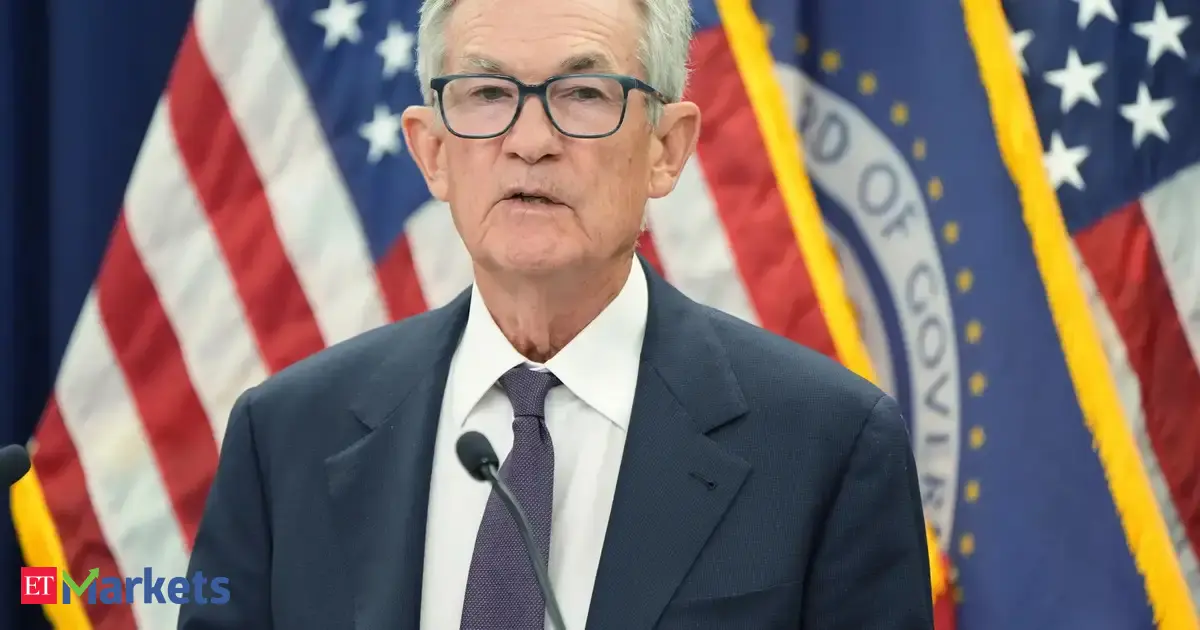
Jerome Powell, the Federal Reserve Chair, strongly affirmed the central bank's independence, warning against political interference. He indicated that an interest rate hike is not imminent, even as inflation remains above target, primarily driven by goods prices. This news is crucial for understanding global monetary policy, central bank autonomy, and inflation dynamics, which are key topics for competitive exams.
Revision structure
Monthly events and exam calendar context
Static GK and one-liner notes
Quiz and mock-test revision path
Key points
Exam-ready takeaways
Powell emphasized the Federal Reserve's commitment to maintaining its independence from political interference.
He indicated that an interest rate hike is not expected in the immediate future.
Inflation currently remains above the Federal Reserve's target.
The ongoing inflation is primarily driven by goods prices, while the services sector continues to experience disinflation.
Detailed analysis
Full exam-oriented breakdown
The statement by Jerome Powell, the Federal Reserve Chair, emphatically defending the central bank's independence and indicating no immediate interest rate hike, offers a crucial window into global monetary policy and the delicate balance between economic management and political influence. Understanding this requires delving into the nature of central banking, its historical context, and its profound implications for economies worldwide, including India. **Background Context: The Essence of Central Bank Independence** The Federal Reserve, often simply called 'the Fed,' is the central banking system of the United States. Established by the Federal Reserve Act in 1913, its primary mandate is to foster maximum employment and price stability (low and stable inflation). For a central bank to effectively achieve these goals, particularly price stability, it is widely believed that it must operate with a significant degree of independence from political pressure. Political interference can lead to short-sighted policies, such as keeping interest rates artificially low to stimulate growth before elections, which can ultimately lead to runaway inflation or asset bubbles. This belief is rooted in the understanding that monetary policy decisions, while having immediate economic effects, often have their full impact over longer horizons, requiring a non-political, technocratic approach. **What Happened: Powell's Stance and Economic Outlook** Jerome Powell's recent remarks underscore the Fed's commitment to this independence. He warned that political interference could severely damage the institution's credibility, which is paramount for market confidence and effective policy transmission. On the monetary policy front, Powell indicated that an interest rate hike is not expected soon. This stance comes despite inflation remaining above the Fed's target, primarily driven by goods prices, while the services sector continues to experience disinflation. This nuanced view suggests that the Fed sees the current inflationary pressures as potentially transient or specific to certain sectors, rather than broad-based demand-driven inflation that would necessitate immediate tightening. **Key Stakeholders Involved** 1. **The Federal Reserve (FOMC):** The primary decision-making body, the Federal Open Market Committee (FOMC), comprising the Board of Governors and presidents of some Federal Reserve Banks, sets the federal funds rate. Their independence allows them to make tough decisions, sometimes unpopular, for long-term economic stability. 2. **The U.S. Government/Executive Branch:** Presidents and Congress often have different political and economic priorities. While they appoint Fed governors, direct interference in monetary policy decisions is generally frowned upon, though occasional tensions and public disagreements are not uncommon, especially during election cycles. 3. **U.S. Businesses and Consumers:** Monetary policy directly impacts borrowing costs, investment decisions, and purchasing power. An independent Fed aims to create a stable economic environment beneficial for long-term growth and employment. 4. **Global Economies and Central Banks:** Given the dollar's role as the world's reserve currency, the Fed's actions have profound spillover effects globally. Other central banks, including the Reserve Bank of India (RBI), closely monitor Fed policy when formulating their own. **Why This Matters for India: Economic and Policy Implications** Powell's statement has significant implications for India. A 'no immediate rate hike' signal from the Fed typically means that global liquidity conditions might remain relatively stable, and the appeal of higher-yielding assets in the U.S. might not increase significantly. This can influence: * **Capital Flows:** If U.S. interest rates remain stable, it reduces the incentive for Foreign Institutional Investors (FIIs) and Foreign Portfolio Investors (FPIs) to withdraw capital from emerging markets like India in search of better returns in the U.S. This helps stabilize India's equity and debt markets. * **Rupee Stability:** Reduced capital outflow pressure helps prevent sharp depreciation of the Indian Rupee against the U.S. dollar. A stable rupee is crucial for managing imported inflation (making imports cheaper) and maintaining export competitiveness. * **RBI's Monetary Policy:** The Reserve Bank of India (RBI) often considers global monetary conditions, especially U.S. Fed actions, when formulating its own policy. While the RBI's primary focus is domestic inflation and growth, an accommodative Fed stance provides more policy space for the RBI, potentially allowing it to focus more on domestic growth objectives without immediate concerns of capital flight. * **Trade and Debt:** Stable global interest rates can also impact India's external commercial borrowings and trade dynamics, though these are secondary effects. **Historical Context and Future Implications** Historically, central bank independence has been a hard-won battle. In many countries, central banks were once directly controlled by governments, often leading to inflationary episodes as governments resorted to printing money to finance deficits. The move towards greater independence, exemplified by institutions like the Fed and the European Central Bank, arose from these lessons. In India, the RBI's independence, while generally strong, has also seen debates, notably around **Section 7 of the RBI Act, 1934**, which allows the government to issue directions to the RBI Governor 'after consultation with the Governor.' While rarely invoked, its existence highlights the ongoing tension. The **Monetary Policy Framework Agreement (2016)**, which established an inflation targeting mandate for the RBI, has further strengthened its operational independence by providing a clear, measurable objective. Looking ahead, the Fed's commitment to independence, especially in an election year, signals a robust institutional framework. The ongoing inflation dynamics—goods prices driving inflation while services disinflate—suggest a complex economic environment. Future implications include continued global scrutiny of the Fed's data-dependent approach. If goods inflation persists or broadens, the 'no immediate hike' stance might change. For India, continued global stability, influenced by Fed actions, will be crucial for sustaining its economic growth trajectory and managing inflationary pressures. **Related Constitutional Articles, Acts, or Policies (Indian Context for comparison):** * **Reserve Bank of India Act, 1934:** The foundational law establishing the RBI and outlining its powers and functions. Debates around Section 7 are particularly relevant to central bank autonomy. * **Monetary Policy Framework Agreement (2016):** Formalized the inflation targeting regime, setting a target of 4% consumer price index (CPI) inflation with a band of +/- 2%. This provides a clear mandate and operational independence to the RBI for achieving price stability. * **Article 292 (Borrowing by Government of India):** Pertains to the government's power to borrow, which often involves the central bank as a manager of public debt. This highlights the interface between fiscal and monetary policy. * **Financial Sector Legislative Reforms Commission (FSLRC) (2013):** Recommended strengthening the independence of financial regulators, including the RBI, to ensure effective governance and policy-making.
How to study
Turn news into exam marks
Revise monthly events by exam family instead of reading random updates.
Pair one-liners with mock tests so mistakes become the next revision list.
Keep state job pages, calendar pages and GK packs connected in one path.