

The Indian rupee ended higher on Tuesday.
GK and monthly revision
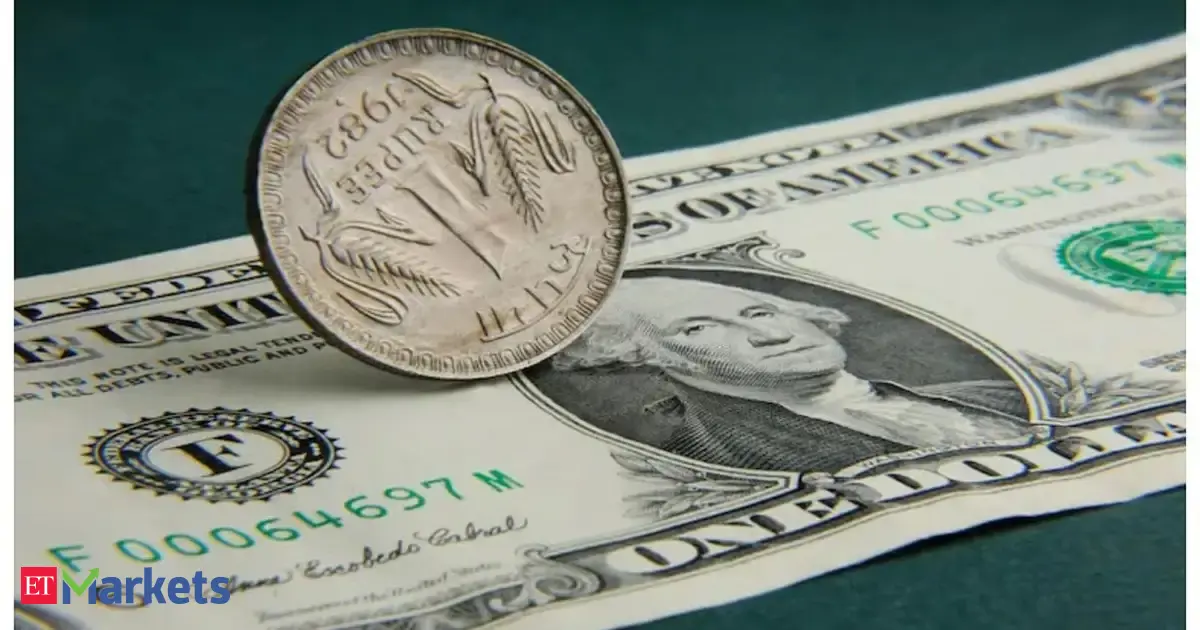
Rupee ends higher as softer dollar, EU trade pact offer breathing room
The Indian rupee firmed on Tuesday, primarily due to a weaker US dollar. A significant boost also came from a landmark trade agreement between India and the European Union (EU), which is poised to reduce tariffs on nearly all Indian exports. This development is crucial for understanding India's external sector, trade policy, and currency dynamics, making it relevant for economic sections in competitive exams.
Revision structure
Monthly events and exam calendar context
Static GK and one-liner notes
Quiz and mock-test revision path
Key points
Exam-ready takeaways
A primary factor for the rupee's strengthening was a broadly weaker US dollar.
The rupee also received a boost from a landmark trade agreement between India and the European Union (EU).
This India-EU trade pact is expected to cut tariffs.
The tariff reductions under the agreement will apply to nearly all Indian exports.
Detailed analysis
Full exam-oriented breakdown
The recent strengthening of the Indian Rupee, primarily driven by a weaker US dollar and the promising India-European Union (EU) trade pact, offers a crucial insight into India's economic resilience and its strategic global engagement. For competitive exam aspirants, understanding these dynamics is paramount, as they touch upon currency management, international trade, and geopolitical relations. **Background Context: Understanding Currency Dynamics and India-EU Trade** Currency fluctuations are a constant feature of the global economy, with the value of a currency like the Indian Rupee (INR) against major global currencies such as the US Dollar (USD) being determined by a complex interplay of demand and supply. A 'weaker dollar' implies that the USD has depreciated against a basket of currencies, including the INR. This can occur due to various factors, such as changes in US interest rates (e.g., a dovish stance by the US Federal Reserve), weaker-than-expected US economic data, or a shift in global risk sentiment towards emerging markets. When the dollar weakens, it generally makes Indian exports more competitive as they become cheaper for buyers using dollars, and it makes imports into India more expensive in rupee terms. Conversely, it can also attract foreign capital inflows as investors seek higher returns in non-dollar assets. Simultaneously, India's trade relationship with the European Union is historically significant. The EU, as a bloc of 27 nations, represents one of the world's largest economies and is a critical trading partner for India. Negotiations for a Free Trade Agreement (FTA) or a Comprehensive Economic Partnership Agreement (CEPA) between India and the EU have a long history, initially launched in 2007 but stalled in 2013 due to differences on key issues like market access for automobiles, wines, spirits, and data security. The resumption of talks in 2021 underscored a renewed commitment from both sides to deepen economic ties, especially in a post-Brexit world and amidst global supply chain realignments. **What Happened: Rupee Firms Up and the Trade Pact's Promise** On the specific day, the Indian Rupee firmed up, indicating its appreciation against the dollar. This appreciation was attributed to the dual forces mentioned: a broadly weaker US dollar and the positive sentiment generated by the landmark trade agreement with the EU. The core of this agreement is the expected reduction of tariffs on 'nearly all Indian exports' to the EU. Tariff reduction directly lowers the cost of Indian goods entering the European market, making them more attractive to European consumers and businesses. This is a significant development, as tariffs have historically been a barrier to increasing trade volumes. **Key Stakeholders Involved** Several key players are central to these developments. The **Reserve Bank of India (RBI)**, as the nation's central bank, plays a crucial role in managing the rupee's volatility through its monetary policy and foreign exchange operations, acting under the **Foreign Exchange Management Act (FEMA), 1999**. The **Ministry of Finance** and the **Ministry of Commerce and Industry** are instrumental in shaping India's trade policy and negotiating international agreements. **Indian exporters**, particularly those in sectors like textiles, pharmaceuticals, engineering goods, and IT services, stand to gain immensely from reduced tariffs. On the other side, the **European Commission** (the executive arm of the EU) and the **EU member states** are the primary negotiators and beneficiaries, representing European businesses and consumers. The **US Federal Reserve**'s monetary policy decisions are also a critical external stakeholder, influencing global dollar liquidity and strength. **Why This Matters for India: Economic and Strategic Significance** The strengthening rupee, while making imports cheaper, can pose challenges for exporters if the appreciation is too rapid or sustained. However, a stable and moderately strong rupee reflects confidence in the Indian economy. More importantly, the India-EU trade pact carries profound significance for India. The EU is India's third-largest trading partner, after the US and China, with bilateral trade in goods alone exceeding $100 billion annually. This agreement promises to: 1. **Boost Exports and Manufacturing**: By reducing tariffs, Indian goods become more competitive, leading to increased exports, higher production, and job creation in various sectors. This aligns with the 'Make in India' initiative. 2. **Diversify Markets**: It helps India diversify its export base and reduce reliance on a few markets, enhancing economic stability. 3. **Attract FDI**: A stable trade environment and improved market access can attract more Foreign Direct Investment (FDI) from EU countries into India, contributing to economic growth and technological transfer. 4. **Enhance Global Standing**: Successfully concluding a major trade deal with a powerful economic bloc like the EU elevates India's stature in global trade negotiations and strengthens its geopolitical influence. 5. **Address Current Account Deficit (CAD)**: Increased exports can help narrow India's CAD, which arises when the value of imports of goods and services exceeds the value of exports. **Historical Context and Constitutional Provisions** India's journey towards liberalized trade began in earnest with the economic reforms of 1991. Since then, India has actively pursued bilateral and multilateral trade agreements. The constitutional framework for such agreements is primarily found in **Article 246** of the Indian Constitution, which places 'Trade and Commerce with foreign countries' under the Union List (Entry 41 of the Seventh Schedule), granting the Parliament exclusive power to legislate on it. Furthermore, **Article 253** empowers Parliament to make any law for implementing any treaty, agreement, or convention with any other country or any decision made at any international conference, association, or other body. The **Foreign Trade (Development and Regulation) Act, 1992**, provides the statutory framework for foreign trade policy. India's current Foreign Trade Policy (FTP) focuses on making India a global trading hub and integrating it further into global value chains. **Future Implications and Broader Themes** The successful implementation of the India-EU trade pact could serve as a template for future negotiations with other major economies, such as the UK and Canada, with whom India is also pursuing FTAs. It signifies India's commitment to open trade and its strategic pivot towards strengthening economic partnerships with like-minded nations. However, challenges remain, including addressing non-tariff barriers, ensuring compliance with EU's stringent quality and environmental standards, and navigating potential domestic industry concerns. The agreement also plays into the broader theme of 'de-risking' global supply chains, where countries are seeking to diversify their economic dependencies away from single dominant partners. For India, this pact is not just about trade in goods; it also aims to cover services, investment, intellectual property rights, and sustainable development, shaping its long-term economic trajectory and global integration. It underscores India's proactive diplomacy in the realm of international economics, moving beyond traditional geopolitical alignments to secure concrete economic advantages for its citizens and businesses.
How to study
Turn news into exam marks
Revise monthly events by exam family instead of reading random updates.
Pair one-liners with mock tests so mistakes become the next revision list.
Keep state job pages, calendar pages and GK packs connected in one path.