

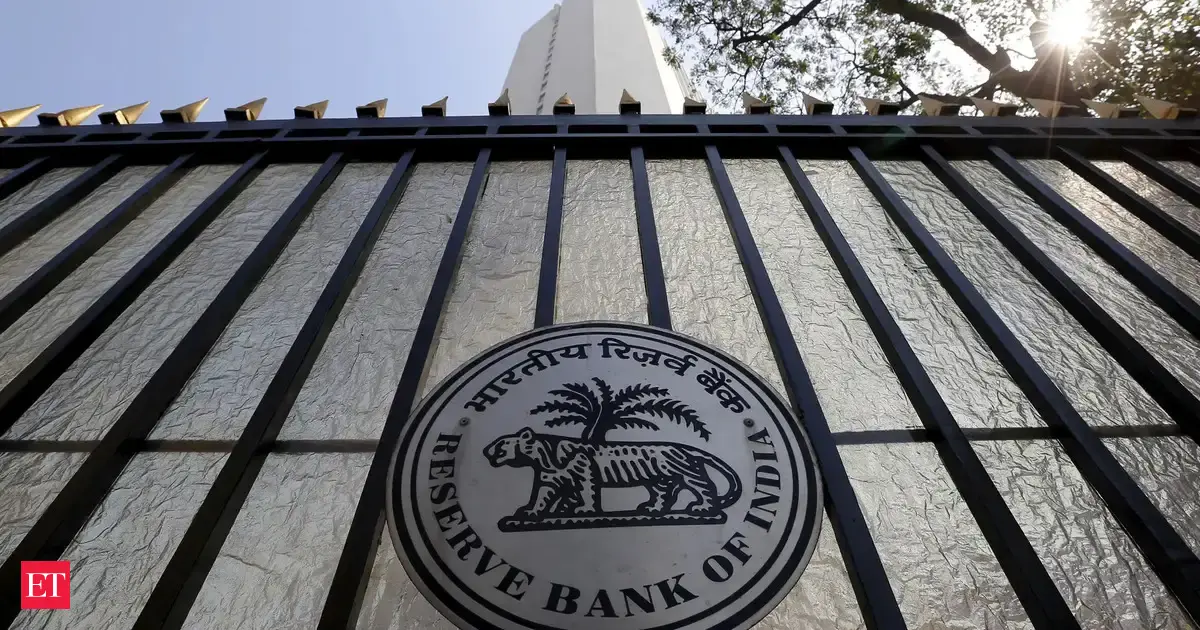
The Reserve Bank of India (RBI) is anticipated to cut the repo rate.
GK and monthly revision
RBI to slash rates by 0.25 pc next week in this cycle's last cut: Report
A foreign brokerage anticipates the Reserve Bank of India (RBI) will implement a 0.25% repo rate cut on February 6, marking the final reduction in the current easing cycle. This move, aimed at supporting growth amidst uncertainties and benign inflation, is crucial for understanding India's monetary policy stance and its implications for liquidity management and economic stability, making it highly relevant for competitive exams.
Revision structure
Monthly events and exam calendar context
Static GK and one-liner notes
Quiz and mock-test revision path
Key points
Exam-ready takeaways
The expected repo rate reduction is by 0.25%.
The rate cut is predicted to take place on February 6.
This expected cut is considered the final reduction in the current easing cycle.
The rate cut is expected to be accompanied by substantial liquidity injections.
Detailed analysis
Full exam-oriented breakdown
The Reserve Bank of India's (RBI) anticipated decision to cut the repo rate by 0.25% on February 6, marking the final reduction in the current easing cycle, is a pivotal development in India's economic landscape. This move, as predicted by a foreign brokerage, is not merely a technical adjustment but a strategic maneuver by the central bank to navigate a complex economic environment characterized by growth uncertainties and benign inflation. Understanding this decision requires delving into the mechanics of monetary policy, the roles of key institutions, and its profound implications for the Indian economy. At its core, the repo rate is the interest rate at which the RBI lends money to commercial banks, primarily to meet their short-term liquidity needs. It is a crucial tool in the RBI's arsenal to control money supply and inflation. An 'easing cycle' refers to a period where the central bank systematically reduces interest rates to stimulate economic activity. Conversely, a 'tightening cycle' involves raising rates to curb inflation. The current prediction suggests that with inflation largely under control ('benign inflation'), the RBI is prioritizing growth, aiming to make borrowing cheaper for banks, which should ideally translate into lower lending rates for businesses and consumers, thereby boosting investment and consumption. What happened, specifically, is the anticipation of a 0.25% reduction in the repo rate. This seemingly small percentage has a cascading effect throughout the financial system. The accompanying 'substantial liquidity injections' are equally significant. Even if the repo rate is cut, commercial banks might not pass on the benefits to borrowers if they face a liquidity crunch. By injecting liquidity, the RBI ensures that banks have ample funds, making it easier for them to reduce their lending rates and facilitate the 'transmission' of the rate cut to the real economy. This proactive approach aims to ensure that the monetary policy signals effectively reach the ground level. Key stakeholders in this scenario include the **Reserve Bank of India (RBI)**, particularly its **Monetary Policy Committee (MPC)**, which is responsible for setting the benchmark interest rate. The MPC, established under Section 45ZB of the Reserve Bank of India Act, 1934 (as amended in 2016), comprises six members – three from the RBI and three external members appointed by the government. Its primary mandate is to maintain price stability while keeping in mind the objective of growth. The **Government of India** is another crucial stakeholder, as monetary policy decisions directly impact its fiscal policy objectives, borrowing costs, and overall economic performance. **Commercial Banks** are directly affected by repo rate changes, as it influences their cost of funds and, consequently, their lending and deposit rates. Finally, **Businesses** and **Consumers** are the ultimate beneficiaries (or sufferers) of these policies, as investment decisions, borrowing costs for homes and cars, and overall economic sentiment are heavily influenced by interest rates. Foreign brokerages, like the one in the report, act as market analysts, providing forecasts that influence investor sentiment and market expectations. This matters immensely for India. A rate cut aims to lower the cost of capital, making it cheaper for businesses to borrow for expansion and investment, which can lead to job creation and economic growth. For consumers, it means lower EMIs on loans, potentially encouraging spending. However, the effectiveness of this 'transmission' is often a challenge, as banks do not always immediately or fully pass on rate cuts. Historically, India's monetary policy has evolved significantly. From a more discretionary approach, it transitioned to a formal inflation-targeting framework in 2016, based on the recommendations of the Urjit Patel Committee. This framework mandates the RBI to target Consumer Price Index (CPI) inflation at 4%, with a tolerance band of +/- 2%. The decision to cut rates amidst 'benign inflation' indicates that inflation is likely within this comfort zone, allowing the MPC to lean towards supporting growth. Looking ahead, if this is indeed the 'final cut' in the current easing cycle, the focus will shift from rate reductions to monitoring economic data and assessing the impact of previous cuts. The RBI will carefully observe inflation trends, global economic developments (such as actions by the US Federal Reserve), crude oil prices, and the transmission of its policies. Future decisions will depend on whether growth picks up sufficiently and if inflationary pressures remain subdued. The challenge will be to maintain a delicate balance between supporting growth and ensuring price stability, a task central to the RBI's mandate under the Reserve Bank of India Act, 1934. In conclusion, the anticipated repo rate cut is a significant event reflecting the RBI's commitment to supporting economic growth in India, leveraging its monetary policy tools within the established inflation-targeting framework. It underscores the intricate interplay of economic indicators, institutional mandates, and global factors that shape India's financial future.
How to study
Turn news into exam marks
Revise monthly events by exam family instead of reading random updates.
Pair one-liners with mock tests so mistakes become the next revision list.
Keep state job pages, calendar pages and GK packs connected in one path.