

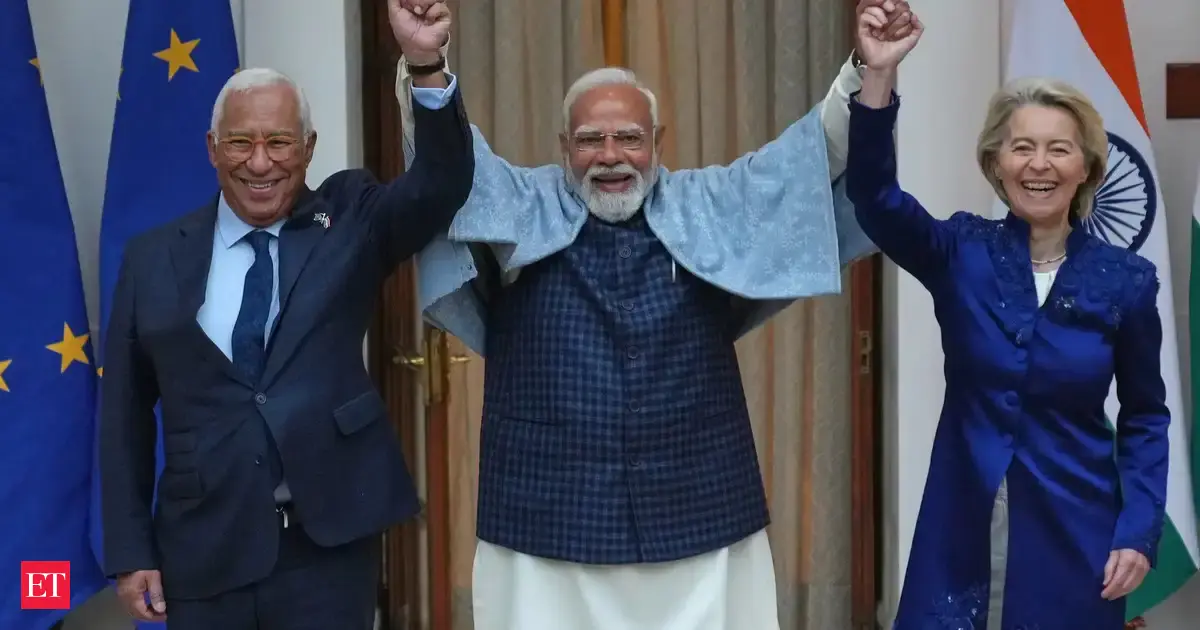
A significant trade agreement has been signed between India and the European Union.
GK and monthly revision
Mother-of-all deals, but these three things were off the table in the India–EU trade pact
India and the European Union have signed a significant trade agreement aimed at substantially reducing tariffs and opening markets for both sides. This pact grants Indian exporters near-zero duty access to the EU for most goods over seven years, providing long-term certainty and access to a vast consumer market. For competitive exams, this deal is crucial as it represents a major economic policy decision and impacts international trade relations, making it relevant for questions on economy and global affairs.
Revision structure
Monthly events and exam calendar context
Static GK and one-liner notes
Quiz and mock-test revision path
Key points
Exam-ready takeaways
The primary objective of the pact is to substantially reduce tariffs and open markets for both India and the EU.
Indian exporters will gain near-zero duty access to the European Union market.
This near-zero duty access is applicable for most goods exported by India.
The duration for which Indian exporters will receive near-zero duty access is over seven years.
Detailed analysis
Full exam-oriented breakdown
The recent trade agreement between India and the European Union marks a pivotal moment in India's economic diplomacy and global trade strategy. This pact, aimed at substantially reducing tariffs and opening markets, is not merely a transactional deal but a strategic alignment with one of the world's largest economic blocs, promising profound implications for India's economic trajectory. **Background Context and Historical Perspective:** India and the EU have a long-standing relationship, elevated to a 'Strategic Partnership' in 2004. Trade and investment have always been central to this partnership. Negotiations for a comprehensive Broad-based Trade and Investment Agreement (BTIA) were initially launched in 2007 but stalled in 2013 due to significant differences on key issues, including data security status for Indian IT firms, market access for EU automobiles and wines, and India's demands for greater mobility for its professionals. The geopolitical landscape, particularly post-pandemic supply chain disruptions and the need for diversification away from over-reliance on single markets, provided fresh impetus. Both sides recognized the strategic imperative to deepen economic ties, leading to the resumption of negotiations in 2021, culminating in this significant agreement. **What Happened:** While the prompt refers to the deal as 'signed,' it's important to note that India and the EU have been actively negotiating and have reached a consensus on several critical aspects, laying the groundwork for a comprehensive Free Trade Agreement (FTA), an Investment Protection Agreement (IPA), and an Agreement on Geographical Indications (GIs). The core of this agreement is the commitment to grant Indian exporters near-zero duty access to the EU market for 'most goods' over a period of seven years. This phased reduction in tariffs is designed to allow domestic industries time to adjust while gradually integrating into global supply chains. The 'three things off the table' mentioned in the title likely refer to sensitive sectors or specific demands that either side chose to exclude from the immediate scope of the agreement to ensure its timely conclusion, potentially to be addressed in future negotiations or through separate agreements. Such exclusions are common in large trade deals to prevent stalemates. **Key Stakeholders Involved:** On the Indian side, the **Ministry of Commerce and Industry** has been the primary negotiator, representing the interests of various sectors. **Indian businesses**, particularly exporters in textiles, pharmaceuticals, automotive components, and marine products, stand to benefit immensely. The 'Make in India' initiative also gains traction as enhanced market access incentivizes domestic production. **Farmers** could see benefits through increased exports of agricultural products, though some sectors might face increased competition. **Consumers** could benefit from a wider array of goods and potentially lower prices due to reduced import duties. For the **European Union**, the **European Commission** negotiates on behalf of its 27 member states. EU businesses, especially those in machinery, chemicals, and digital services, are looking for greater market access in India. EU consumers also stand to gain from diverse Indian products. **Significance for India:** This trade pact holds immense significance for India. Economically, the EU is India's third-largest trading partner, and securing near-zero duty access will provide a massive boost to India's exports, helping it achieve its ambitious export targets. It will foster economic growth, create jobs, and attract foreign direct investment (FDI) as companies look to leverage India's manufacturing capabilities and access to the EU market. Politically, the agreement strengthens India's strategic partnership with the EU, a democratic bloc sharing common values, providing a counterweight to other geopolitical influences and enhancing India's standing as a reliable global partner. This also aligns with India's broader strategy of diversifying its trade relationships and building resilient supply chains. **Constitutional Provisions and Broader Themes:** The implementation of such international agreements in India is underpinned by constitutional provisions. **Article 253** of the Indian Constitution grants Parliament the power to make any law for implementing any treaty, agreement, or convention with any other country or any decision made at any international conference, association, or other body. This empowers the Indian government to enact legislation necessary to give effect to the trade pact. Furthermore, **Entry 14 of the Union List** under **Article 246** places 'entering into treaties and agreements with foreign countries and implementing of treaties, agreements and conventions with foreign countries' within the exclusive legislative domain of the Parliament. The **Foreign Trade (Development and Regulation) Act, 1992**, provides the legal framework for governing India's foreign trade, and any changes necessitated by the FTA would be incorporated through amendments or new regulations under this Act. This agreement is a crucial component of India's **National Foreign Trade Policy**, aiming to make India a major participant in global trade. **Future Implications:** The seven-year phase-in period for tariff reduction suggests a gradual integration, allowing industries to adapt. This deal could pave the way for deeper cooperation in areas such as digital trade, intellectual property rights, and sustainable development. It strengthens India's negotiating position in other ongoing FTA talks (e.g., with the UK and Canada) and signals India's commitment to liberalizing its economy. The success of this agreement will be a blueprint for India's future trade engagements, potentially leading to greater integration into global value chains and enhancing India's role in shaping multilateral trade rules.
How to study
Turn news into exam marks
Revise monthly events by exam family instead of reading random updates.
Pair one-liners with mock tests so mistakes become the next revision list.
Keep state job pages, calendar pages and GK packs connected in one path.