

The Maharashtra government temporarily suspended the eviction of tribals.
GK and monthly revision
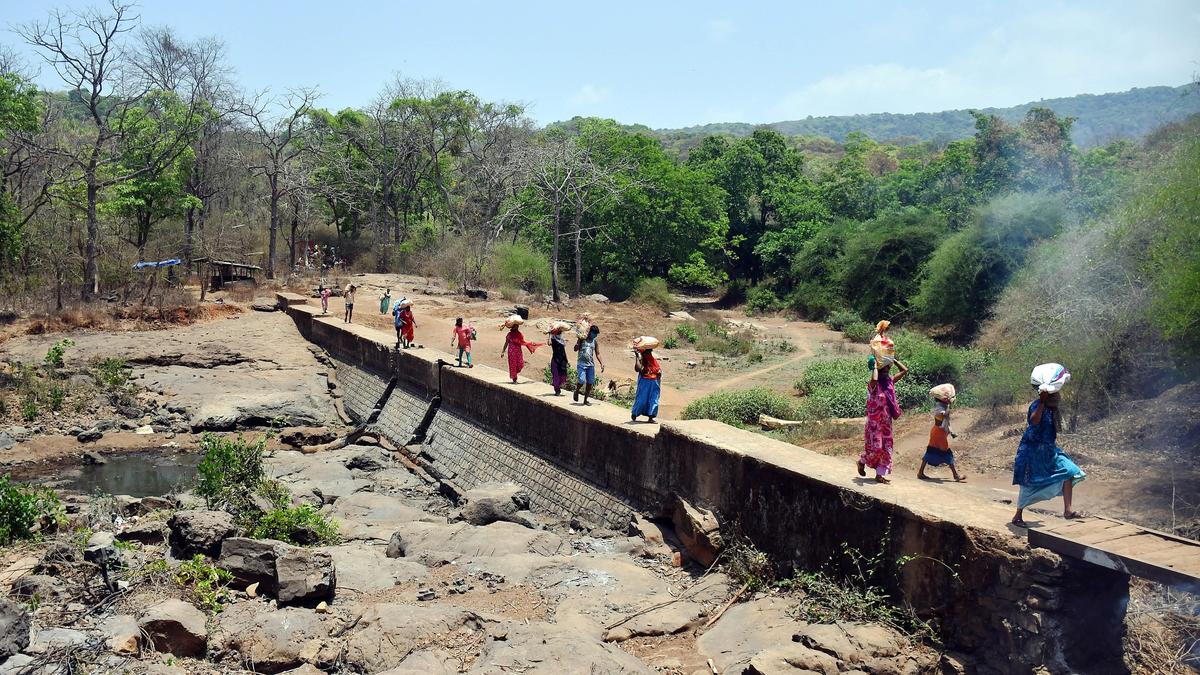
Maharashtra government temporarily suspends eviction of tribals from Sanjay Gandhi National Park
The Maharashtra government has temporarily halted the eviction of tribals from Sanjay Gandhi National Park, a move previously mandated by the Bombay High Court and its High Power Committee. This decision highlights the complex interplay between judicial directives, state policy, tribal rights, and environmental conservation. It's crucial for understanding topics like forest rights, national park governance, and the judiciary's role in socio-environmental issues for competitive exams.
Revision structure
Monthly events and exam calendar context
Static GK and one-liner notes
Quiz and mock-test revision path
Key points
Exam-ready takeaways
The eviction was from the Sanjay Gandhi National Park, located in Maharashtra.
The initial eviction drive was carried out in compliance with orders from the Bombay High Court.
A High Power Committee, appointed by the Bombay High Court, was also involved in issuing the eviction orders.
The issue highlights the conflict between tribal rights and environmental conservation within protected areas.
Detailed analysis
Full exam-oriented breakdown
The Maharashtra government's temporary suspension of tribal evictions from Sanjay Gandhi National Park (SGNP) in Mumbai brings to the forefront a persistent and complex conflict: the delicate balance between environmental conservation and the rights of indigenous communities. This incident is not isolated but reflects a broader national and global challenge in managing protected areas, often inhabited by communities with historical ties to the land. **Background Context and What Happened:** Sanjay Gandhi National Park, formerly known as Borivali National Park, is a unique ecological hotspot nestled within the bustling metropolis of Mumbai. Established in 1969, it is one of the few national parks in the world located within city limits, serving as a crucial green lung. Over decades, various tribal communities, primarily Adivasis, have resided within and around the park's boundaries, relying on its forests for their livelihood, culture, and sustenance. Their presence often predates the formal declaration of the area as a protected national park under the Wildlife Protection Act, 1972. The conflict intensified as urban expansion encroached upon the park's periphery, leading to increased pressure on its resources. Environmental conservation efforts, aimed at protecting the park's rich biodiversity, often clash with the settled tribal populations. The Bombay High Court, acting on petitions concerning encroachment and environmental degradation, had previously issued orders for the eviction of these tribal communities. A High Power Committee, appointed by the court, was tasked with overseeing these evictions to ensure compliance with judicial directives. Park officials had indeed initiated eviction drives based on these orders. However, the Maharashtra government, likely under socio-political pressure and in recognition of tribal rights, decided to temporarily halt these evictions. **Key Stakeholders Involved:** 1. **Maharashtra Government:** The state executive, responsible for balancing court orders, environmental protection, and the welfare of its citizens, especially marginalized communities. Their decision reflects a policy dilemma. 2. **Sanjay Gandhi National Park Officials (Forest Department):** Implementers of forest and wildlife laws, caught between judicial directives and state government policy shifts. 3. **Bombay High Court and its High Power Committee:** The judiciary, acting as a custodian of law and environment, issues orders for conservation, often leading to decisions affecting human settlements. 4. **Tribal Communities (Adivasis):** The primary affected party, whose traditional rights to land, livelihood, and cultural identity are at stake. They represent the human face of the conservation vs. rights debate. 5. **Environmental Activists/NGOs:** Advocate for the protection of the park's ecosystem, sometimes clashing with tribal rights claims. **Significance for India and Historical Context:** This incident is highly significant for India, particularly in the context of forest governance, tribal welfare, and judicial oversight. Historically, forest management in India, influenced by colonial policies, often alienated forest-dwelling communities from their traditional lands. Post-independence, the emphasis on wildlife conservation led to the creation of numerous protected areas, frequently overlooking the rights of indigenous people living within them. This led to widespread displacement and marginalization. To address this historical injustice, the Indian Parliament enacted the **Scheduled Tribes and Other Traditional Forest Dwellers (Recognition of Forest Rights) Act, 2006 (FRA)**. This landmark legislation aimed to recognize and vest forest rights and occupation in forest land to forest-dwelling Scheduled Tribes and other traditional forest dwellers who have been residing in such forests for generations. The Act provides for both individual forest rights (IFR) and community forest rights (CFR), including rights to access, use, and dispose of minor forest produce, and to protect and manage community forest resources. The temporary suspension of evictions by the Maharashtra government could be seen as an acknowledgment of the spirit, if not the direct application, of the FRA, which often requires a thorough process of claims settlement before any evictions. **Related Constitutional Articles, Acts, and Policies:** * **Forest Rights Act (FRA), 2006:** Directly relevant, as it empowers tribals with rights over forest land and requires Gram Sabhas to play a crucial role in recognizing these rights. * **Wildlife Protection Act, 1972:** Governs the establishment and management of protected areas like national parks, often creating a legal framework for conservation that can conflict with human habitation. * **Article 21 (Right to Life and Personal Liberty):** Interpreted by the Supreme Court to include the right to livelihood and a dignified existence, which is often threatened by forced evictions. * **Article 46 (Directive Principles of State Policy):** Mandates the State to promote with special care the educational and economic interests of the weaker sections of the people, and, in particular, of the Scheduled Castes and the Scheduled Tribes, and to protect them from social injustice and all forms of exploitation. * **Fifth Schedule of the Constitution:** Deals with the administration and control of Scheduled Areas and Scheduled Tribes, providing for special provisions to protect their interests. * **Panchayats (Extension to Scheduled Areas) Act (PESA), 1996:** Extends provisions of Part IX of the Constitution relating to Panchayats to Scheduled Areas, giving significant powers to Gram Sabhas, including ownership of minor forest produce. **Future Implications:** This temporary halt sets the stage for a critical re-evaluation. The Maharashtra government will likely have to navigate between upholding judicial orders and fulfilling its constitutional obligations towards tribal welfare. Future actions could include a comprehensive survey of tribal habitations within SGNP, a robust process for recognizing forest rights under the FRA, and potentially, well-planned rehabilitation and resettlement programs that respect the dignity and livelihood of the affected communities. This situation underscores the need for integrated policies that achieve both ecological sustainability and social justice, rather than pitting them against each other. It also highlights the ongoing tension between judicial activism (court orders) and executive discretion (government's decision), a recurring theme in Indian governance. The broader theme is sustainable development: how India can protect its invaluable natural heritage while ensuring equitable development and justice for its most vulnerable populations. The resolution of such conflicts will serve as a precedent for similar situations across India's numerous protected areas, impacting millions of forest dwellers.
How to study
Turn news into exam marks
Revise monthly events by exam family instead of reading random updates.
Pair one-liners with mock tests so mistakes become the next revision list.
Keep state job pages, calendar pages and GK packs connected in one path.