

Private technical staff will assist officials in the upcoming Census for the first time in India's history.
GK and monthly revision
In a first, private technical staff to assist officials in Census
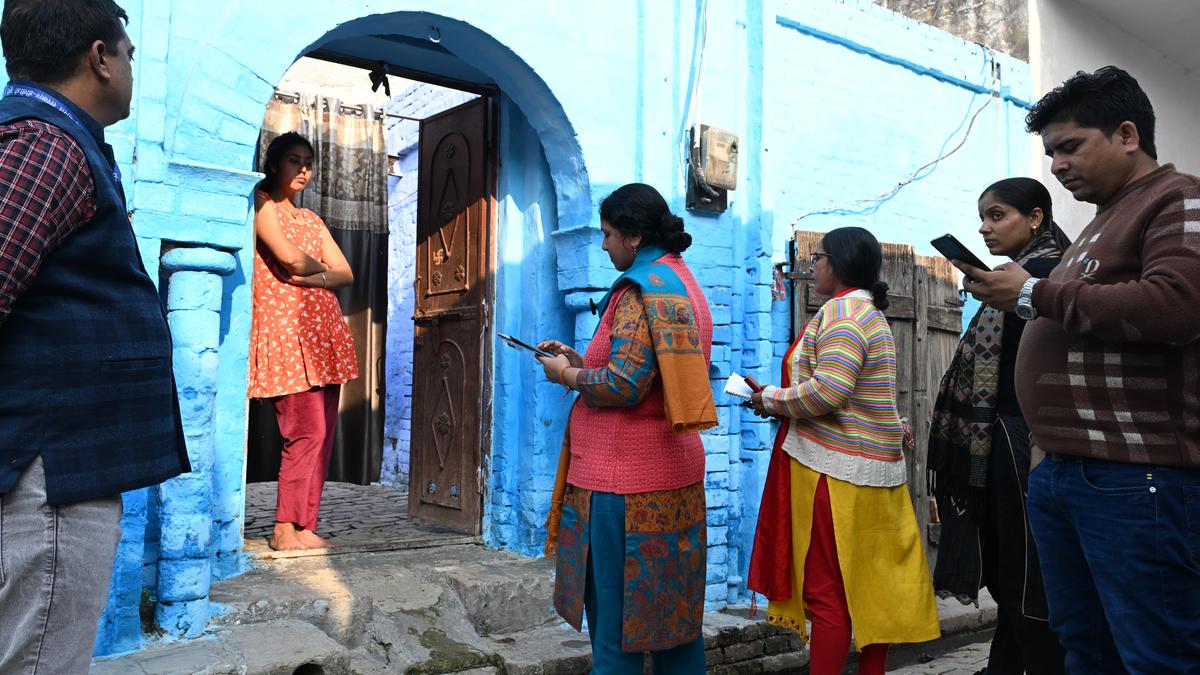
In a significant administrative change, the Registrar General and Census Commissioner of India, Mritunjay Kumar Narayan, announced that private technical staff will assist officials in the upcoming Census for the first time. This move aims to digitize data directly from the field, enhancing efficiency and accuracy. Manpower will be hired on contract via outsourcing agencies, marking a modernization of India's crucial demographic exercise and relevant for questions on governance and public administration.
Revision structure
Monthly events and exam calendar context
Static GK and one-liner notes
Quiz and mock-test revision path
Key points
Exam-ready takeaways
The announcement was made by Mritunjay Kumar Narayan, the Registrar General and Census Commissioner of India.
The primary target is to 'get the digitised data from the field itself', modernizing the Census process.
Manpower for this assistance will be hired on contract through outsourcing agencies.
This initiative signifies a major administrative reform in the execution of India's decennial Census.
Detailed analysis
Full exam-oriented breakdown
The announcement by the Registrar General and Census Commissioner of India, Mritunjay Kumar Narayan, to engage private technical staff for assisting officials in the upcoming Census marks a pivotal shift in how India, the world's most populous nation, conducts its decennial demographic exercise. For the first time, this crucial national undertaking will integrate private expertise, primarily to facilitate the digitization of data directly from the field. This move reflects a broader trend towards modernizing government operations and leveraging technology for enhanced efficiency and accuracy. The Indian Census, a monumental task, has a rich history dating back to 1872, though the first synchronous census was conducted in 1881. Post-independence, the Census of India has been conducted every ten years under the provisions of the Census Act, 1948. This Act provides the legal framework for the collection, compilation, and dissemination of demographic data. Constitutionally, the power to conduct the Census is vested with the Union Government, as specified in Entry 69 of the Union List under the Seventh Schedule of Article 246 of the Indian Constitution. Traditionally, the Census has relied heavily on government employees, primarily teachers and other state government staff, who undertake extensive fieldwork, often involving manual data collection and subsequent transcription. This manual process, while robust, has historically been time-consuming, resource-intensive, and prone to human errors, leading to delays in data processing and dissemination. The current initiative aims to overcome these challenges by adopting a 'digitized data from the field itself' approach. This implies the use of digital tools, likely tablets or smartphones, for direct data entry by enumerators. The introduction of private technical staff, hired on contract through outsourcing agencies, is designed to provide the necessary technological support and expertise to government officials, ensuring smooth operation of these digital tools. This is a significant administrative reform, moving away from purely government-led execution to a hybrid model that incorporates private sector capabilities. Key stakeholders in this reform include the Registrar General and Census Commissioner of India (RGI), which falls under the Ministry of Home Affairs and is the nodal agency for conducting the Census. State and Union Territory governments play a crucial role in providing the enumerators and supervisors. Outsourcing agencies will be responsible for recruiting, training, and deploying the private technical staff. Ultimately, every citizen is a stakeholder, both as a data provider and as a beneficiary of the policies formulated based on Census data. The significance of this modernization for India is manifold. Firstly, it promises enhanced data accuracy and reduced processing time. Digitized data minimizes transcription errors and allows for faster compilation and analysis, which is critical for timely policy formulation. Secondly, it contributes to better governance by providing more reliable and up-to-date demographic, social, and economic indicators. This data is indispensable for planning developmental schemes, allocating resources (such as financial grants to states based on population), delimiting electoral constituencies, and designing social welfare programs like the Public Distribution System (PDS) or housing schemes. Thirdly, it aligns with the broader 'Digital India' mission, promoting e-governance and technological adoption in public services. However, it also brings challenges, particularly concerning data privacy and security. The vast amount of personal data collected during the Census necessitates stringent adherence to data protection principles, especially in light of the Digital Personal Data Protection Act, 2023, and the fundamental Right to Privacy as established by the Supreme Court in the Puttaswamy judgment. The historical context shows India's consistent effort to improve its Census methodology. While previous Censuses have introduced innovations like OMR forms and geospatial mapping, this is the first time private personnel will be directly involved in data collection support. The future implications suggest a potential paradigm shift in how large-scale government operations are conducted, possibly paving the way for more public-private partnerships in areas requiring specialized technical expertise. It could lead to a more dynamic and responsive public administration, but also raises questions about accountability, training standards, and the ethical implications of outsourcing sensitive government functions. Ensuring the integrity and neutrality of the Census process, regardless of the personnel involved, remains paramount for its credibility and utility for India's democratic and developmental aspirations. In essence, this move represents a calculated risk and a strategic step towards a more efficient, accurate, and technologically advanced Census. Its success will depend on robust implementation, effective training, stringent data security protocols, and clear accountability mechanisms for all involved stakeholders.
How to study
Turn news into exam marks
Revise monthly events by exam family instead of reading random updates.
Pair one-liners with mock tests so mistakes become the next revision list.
Keep state job pages, calendar pages and GK packs connected in one path.