

Uproar has intensified against the new UGC equity regulations.
GK and monthly revision
Uproar intensifies against new UGC equity regulations
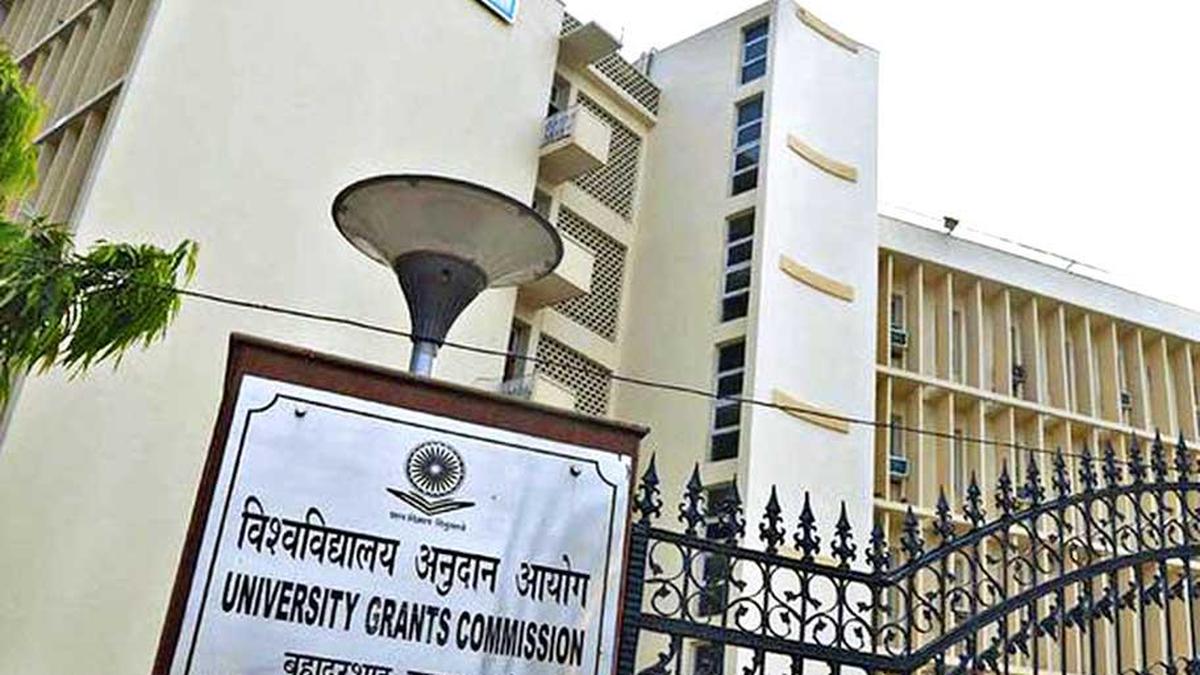
Uproar has intensified against the new 2026 UGC equity regulations, leading to a writ petition being filed in the Supreme Court. Concurrently, the students’ union of Kumaun University has submitted a letter expressing its opposition. This development is crucial for competitive exams as it involves significant higher education policy, the role of a statutory body like UGC, and judicial review, underscoring governance and social equity issues in the education sector.
Revision structure
Monthly events and exam calendar context
Static GK and one-liner notes
Quiz and mock-test revision path
Key points
Exam-ready takeaways
A writ petition has been filed in the Supreme Court challenging these regulations.
The specific regulations being challenged are the 2026 UGC equity regulations.
The students’ union in Kumaun University has submitted a letter opposing the regulations.
The issue involves a major higher education regulatory body, the University Grants Commission (UGC).
Detailed analysis
Full exam-oriented breakdown
The recent intensification of uproar against the new 2026 University Grants Commission (UGC) equity regulations, marked by a writ petition in the Supreme Court and opposition from student unions, brings to the forefront critical debates surrounding higher education, social justice, and governance in India. This development is not merely an administrative challenge but reflects deeper societal aspirations and constitutional mandates. **Background Context and What Happened:** The University Grants Commission (UGC), established in 1956 through the UGC Act, is a statutory body responsible for the coordination, determination, and maintenance of standards of university education in India. Over the decades, UGC has played a pivotal role in shaping higher education policy, often grappling with the dual objectives of promoting academic excellence and ensuring equitable access. India's journey post-independence has seen a consistent effort to address historical inequities, particularly through affirmative action policies like reservations in education and employment. The National Education Policy (NEP) 2020 also lays significant emphasis on equitable and inclusive education, aiming to bridge social and economic disparities. The '2026 UGC equity regulations' are designed to further these goals, likely focusing on measures to ensure fair representation and access for various social groups within higher education institutions, possibly pertaining to admissions, faculty recruitment, or resource allocation. However, the precise details of these regulations that have caused such contention are not publicly specified in the provided context, but the very term 'equity regulations' suggests they aim to rebalance existing structures. The current uproar indicates that certain provisions within these regulations are perceived as problematic by significant stakeholders. The filing of a writ petition in the Supreme Court is a direct challenge to the legality or constitutionality of these regulations, seeking judicial intervention to review their validity. Simultaneously, the submission of a letter of opposition by the students’ union of Kumaun University highlights grassroots-level concern and mobilized student activism against the proposed changes. **Key Stakeholders Involved:** Several crucial stakeholders are involved in this unfolding situation. The **University Grants Commission (UGC)** is at the heart of the matter, being the promulgator of these regulations. Its role as a regulator and standard-setter is being scrutinized. The **Supreme Court of India** emerges as the ultimate arbiter, tasked with examining the constitutional validity and legal soundness of the regulations through the writ petition. **Students and Students' Unions**, such as the one in Kumaun University, are direct beneficiaries or affected parties, and their active opposition underscores the ground-level impact and perception of these regulations. **Universities and Higher Education Institutions** are the implementing bodies, and their operational autonomy and capacity to implement such regulations are often a point of discussion. Finally, the **Ministry of Education** and the broader **Government** are implicit stakeholders, as UGC functions under its aegis, and education policy is a significant government agenda. **Why This Matters for India:** This issue holds immense significance for India across social, political, and governance dimensions. Socially, it reignites the perennial debate on social equity versus merit in education. While the constitutional mandate is to promote educational interests of weaker sections (Article 46), concerns often arise regarding potential impacts on academic standards or access for other groups. Politically, student activism and legal challenges can shape public discourse and influence future policy decisions, especially in a sector as sensitive as education. From a governance perspective, it tests the balance between the autonomy of statutory bodies like UGC, governmental policy directives, and the judiciary's role in upholding constitutional principles. The outcome will also dictate the direction of higher education reform envisioned by policies like NEP 2020, particularly concerning inclusivity. **Historical Context and Constitutional Provisions:** India has a long history of debates around affirmative action, dating back to the implementation of reservation policies following the Mandal Commission recommendations in the early 1990s. Landmark judgments like the Indra Sawhney case (1992) have shaped the contours of reservation, including the 'creamy layer' concept and the 50% reservation ceiling, though exceptions and new categories like Economically Weaker Sections (EWS) have since emerged. These historical precedents form the backdrop against which new equity regulations are viewed and challenged. Constitutionally, several articles are highly relevant. **Article 14 (Equality before law)**, **Article 15 (Prohibition of discrimination)**, and **Article 16 (Equality of opportunity in matters of public employment)** are fundamental rights often invoked in cases related to equity and affirmative action. While Article 15(4) and 16(4) allow the state to make special provisions for the advancement of socially and educationally backward classes, and for Scheduled Castes and Scheduled Tribes, the extent and method of such provisions are constantly debated. **Article 46**, a Directive Principle of State Policy, explicitly mandates the state to promote the educational and economic interests of the weaker sections of the people, particularly SCs and STs. The writ petition itself is likely filed under **Article 32**, which guarantees the right to constitutional remedies, allowing individuals to move the Supreme Court for the enforcement of fundamental rights. Education falls under the **Concurrent List (Entry 25, Seventh Schedule)**, meaning both the Union and State governments can legislate on it, adding another layer of complexity to pan-India regulations. **Future Implications:** The Supreme Court's decision on the writ petition will have far-reaching implications. It could either uphold the regulations, strike them down, or direct modifications, thereby setting a significant precedent for future education policy. A ruling against the UGC might force a reconsideration of its regulatory approach and potentially influence the government's stance on equity measures in higher education. Conversely, an affirmation could strengthen the UGC's hand in implementing its vision for inclusive education. The ongoing student protests also indicate a potential for sustained activism, which could exert pressure on policy-makers. Ultimately, this episode will contribute to defining the delicate balance between ensuring equitable access, maintaining academic standards, and upholding constitutional principles in India's dynamic higher education landscape.
How to study
Turn news into exam marks
Revise monthly events by exam family instead of reading random updates.
Pair one-liners with mock tests so mistakes become the next revision list.
Keep state job pages, calendar pages and GK packs connected in one path.