

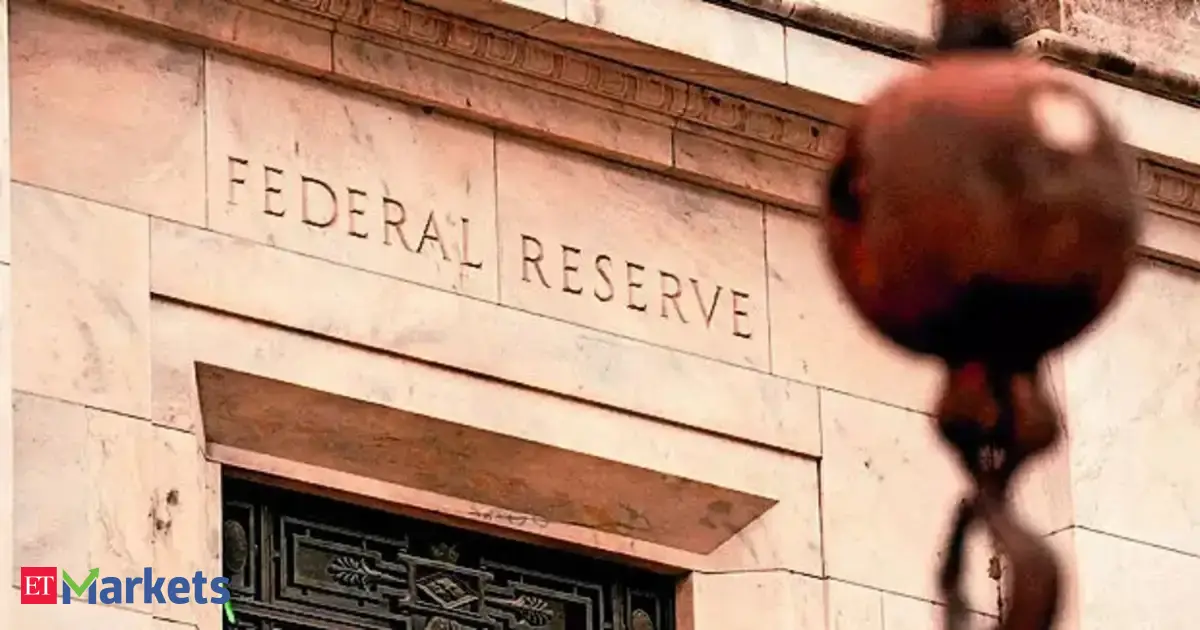
The Federal Reserve is expected to hold interest rates steady.
GK and monthly revision
Tense Fed is set to lead global peers with interest-rate hold
The US Federal Reserve and other global central banks are expected to maintain current interest rates, resisting political pressure, notably from President Trump, for rate cuts. This decision underscores the critical principle of central bank independence amidst global economic uncertainty. For competitive exams, this highlights the importance of monetary policy autonomy and its role in macroeconomic stability and global economic trends.
Revision structure
Monthly events and exam calendar context
Static GK and one-liner notes
Quiz and mock-test revision path
Key points
Exam-ready takeaways
This decision is being made amid heightened political pressure and global economic uncertainty.
Specific political pressure includes calls from President Trump for lower interest rates.
Central banks are prioritizing the principle of policy independence from political interference.
Central banks in Brazil, Canada, and Sweden may also maintain current interest rate settings.
Detailed analysis
Full exam-oriented breakdown
The recent decision by the US Federal Reserve (Fed) and other global central banks to hold interest rates steady, despite significant political pressure, particularly from former President Donald Trump, underscores a critical principle in modern economics: central bank independence. This stance is not merely a technical monetary policy choice but a profound statement on governance, economic stability, and the role of institutions in a democracy. **Background Context and What Happened:** At its core, a central bank's primary mandate is to maintain price stability and foster sustainable economic growth. The Federal Reserve, established in 1913, operates through its Federal Open Market Committee (FOMC) to set the federal funds rate, which influences borrowing costs throughout the US economy and globally. The decision to raise, lower, or hold interest rates is typically based on economic data, including inflation, employment figures, and GDP growth. In recent times, the global economy has navigated a complex landscape of post-pandemic recovery, supply chain disruptions, and geopolitical tensions, all contributing to uncertainty. President Trump, during his term and even after, frequently and publicly advocated for lower interest rates, believing they would stimulate economic growth and boost asset markets, potentially aiding his political objectives. However, the Fed, under its Chair, Jerome Powell, consistently prioritized its independence, making decisions based on its dual mandate rather than political directives. This recent article highlights a continuation of this approach, with the Fed resisting such calls, a sentiment echoed by central banks in Brazil, Canada, and Sweden, reflecting a unified global commitment to policy autonomy. **Key Stakeholders Involved:** 1. **The Federal Reserve (FOMC):** The primary decision-maker on US interest rates. Its members are appointed but are expected to act independently of political influence. Their credibility hinges on this independence. 2. **The US President (and Political Establishment):** Represents the executive branch, which often has short-term political goals that may conflict with the long-term economic stability goals of the central bank. The President can exert pressure through rhetoric or appointments. 3. **Other Global Central Banks (e.g., Brazil, Canada, Sweden):** Their similar stance reinforces the global norm of central bank independence and coordinated approaches to global economic stability. 4. **Global Markets and Investors:** These entities keenly observe central bank decisions, as interest rate changes impact capital flows, investment decisions, and currency valuations worldwide. **Why This Matters for India:** Decisions by the US Federal Reserve have significant ripple effects on emerging economies like India. When the Fed holds or raises interest rates, it makes dollar-denominated assets more attractive, potentially leading to capital outflows from emerging markets. This phenomenon, sometimes referred to as a 'taper tantrum' (though less severe in this specific 'hold' scenario), can weaken the Indian Rupee against the US Dollar. A weaker Rupee makes imports, especially crucial commodities like crude oil, more expensive, thereby fueling domestic inflation. For India, which is a net importer of oil, this has direct implications for its current account deficit and overall economic stability. Furthermore, this situation highlights the importance of the Reserve Bank of India's (RBI) own independence. The RBI, established under the **Reserve Bank of India Act, 1934**, is mandated to maintain monetary stability and operate India's currency and credit system. India adopted a formal inflation targeting framework in 2016, with the **Monetary Policy Committee (MPC)**, constituted under **Section 45ZB of the RBI Act**, tasked with keeping Consumer Price Index (CPI) inflation within a target range (currently 4% +/- 2%). Just as the Fed resists political pressure, the RBI's ability to make independent decisions, free from government interference, is crucial for its credibility and for effectively managing inflation and financial stability in India. Debates around government interference, such as the invocation of Section 7 of the RBI Act in the past, underscore the perennial tension between the government's fiscal policy objectives and the RBI's monetary policy autonomy. **Historical Context and Future Implications:** The concept of central bank independence gained prominence after periods where political interference led to high inflation and economic instability, particularly in the 1970s. The consensus emerged that an independent central bank, insulated from short-term political cycles, is better positioned to pursue long-term price stability and sound economic policy. If central bank independence were to erode, it could lead to 'political business cycles' where monetary policy is manipulated for electoral gains, resulting in higher inflation, loss of investor confidence, and ultimately, economic instability. The current stance by the Fed and other central banks reaffirms this crucial institutional design principle. For India, maintaining RBI's independence is vital for navigating global economic headwinds and ensuring robust domestic macroeconomic management. Future implications include continued scrutiny of central bank appointments and policy decisions, with market participants closely watching for any signs of political influence. A stable and independent monetary policy framework is essential for attracting foreign investment and ensuring sustained economic growth in India. **Related Constitutional Articles, Acts, or Policies:** * **Reserve Bank of India Act, 1934:** The foundational statute for the RBI. * **Monetary Policy Framework Agreement (2015):** Formalized the inflation-targeting regime in India. * **Section 45ZB of the RBI Act:** Pertains to the constitution and functions of the Monetary Policy Committee (MPC). * **Section 7 of the RBI Act:** Discusses the government's power to issue directions to the RBI Governor, a highly debated provision concerning central bank autonomy. * **Article 282 and 292 of the Indian Constitution:** While not directly related to monetary policy, these articles deal with government borrowing and expenditure, which interact with monetary policy decisions.
How to study
Turn news into exam marks
Revise monthly events by exam family instead of reading random updates.
Pair one-liners with mock tests so mistakes become the next revision list.
Keep state job pages, calendar pages and GK packs connected in one path.