

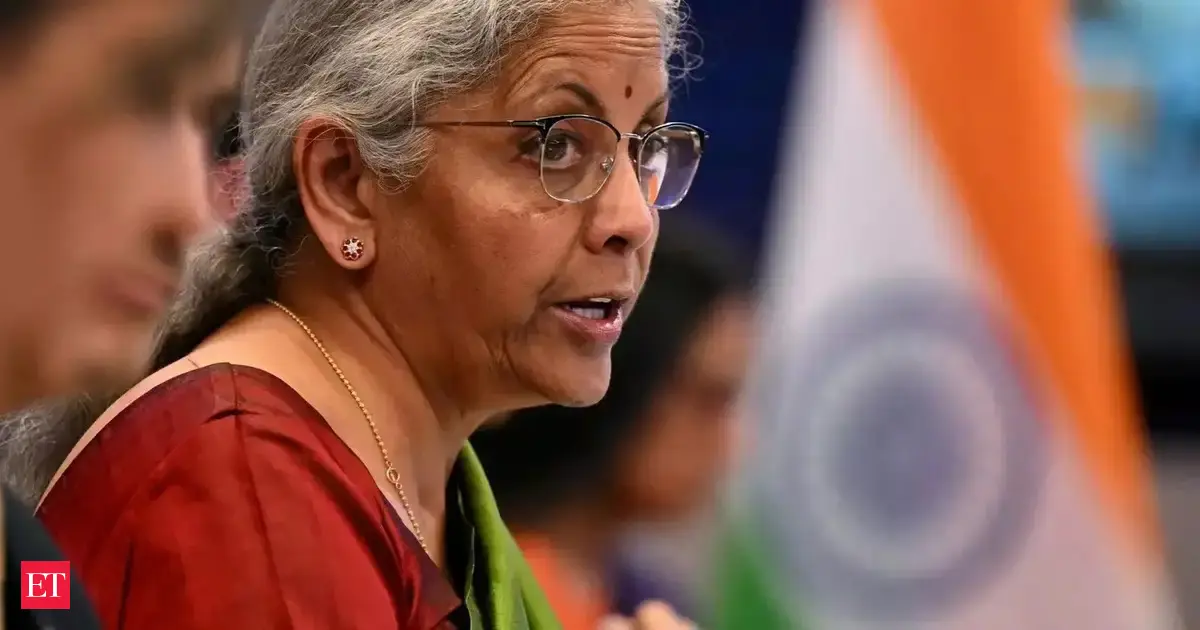
Finance Minister Nirmala Sitharaman is leading the preparation for the Union Budget 2026-27.
GK and monthly revision
Inside Sitharaman’s Budget 2026-27 war room: Check who all are part of finance minister's crew
Finance Minister Nirmala Sitharaman is actively preparing the Union Budget 2026-27, slated for presentation on February 1, with a dedicated team of senior officials. This core group, including key figures like Anuradha Thakur, Vumlunmang Vualnam, and V Anantha Nageswaran, manages crucial portfolios such as economic affairs, revenue, and expenditure. Understanding these officials and their roles is vital for competitive exams, as it provides insight into the administrative machinery driving national financial policy.
Revision structure
Monthly events and exam calendar context
Static GK and one-liner notes
Quiz and mock-test revision path
Key points
Exam-ready takeaways
The Union Budget 2026-27 is scheduled to be presented on February 1.
Key officials involved in the budget preparation include Anuradha Thakur, Arvind Shrivastava, and Vumlunmang Vualnam.
The team's responsibilities cover crucial areas like economic affairs, revenue, expenditure, and financial services.
V Anantha Nageswaran is identified as a key figure in the Finance Minister's budget crew.
Detailed analysis
Full exam-oriented breakdown
The Union Budget, presented annually by the Finance Minister, is arguably the most significant economic event in India, laying down the government's financial blueprint for the upcoming fiscal year. The recent news highlighting Finance Minister Nirmala Sitharaman's dedicated 'war room' for the 2026-27 Budget, scheduled for presentation on February 1, underscores the meticulous planning and extensive collaboration required for this monumental exercise. Understanding the individuals involved and their roles provides critical insight into the administrative machinery that shapes India's economic destiny. **Background Context and the Budget Process:** At its core, the Union Budget is the Annual Financial Statement of the Government of India, as mandated by Article 112 of the Constitution. It details the government's estimated receipts and expenditures for the financial year (April 1 to March 31). The preparation process is a complex, multi-month affair, typically commencing in September-October with internal consultations within ministries and departments, followed by pre-budget discussions with various stakeholders like industry associations, trade bodies, economists, and civil society groups. The shift to presenting the budget on February 1, initiated in 2017, allows for the completion of the parliamentary approval process before the new financial year begins, ensuring smooth implementation of policies from April 1. **Key Stakeholders and Their Roles:** Finance Minister Nirmala Sitharaman is the chief architect and presenter of the Budget. She leads the entire process, making final decisions on policy proposals, revenue targets, and expenditure allocations. However, she relies on a highly experienced team of civil servants and economic advisors. The article specifically names several key figures, each heading crucial departments within the Ministry of Finance: * **V Anantha Nageswaran:** As the Chief Economic Advisor (CEA), he provides crucial economic analysis and forecasts, influencing the macroeconomic framework of the budget. He is also responsible for preparing the Economic Survey, a comprehensive review of the Indian economy presented a day before the budget. * **Anuradha Thakur:** Likely associated with the Department of Public Enterprises (DPE) or a similar portfolio, her role would involve policies related to Public Sector Undertakings (PSUs) and their financial health, often impacting disinvestment targets or capital infusion plans. * **Arvind Shrivastava:** Could be involved in the Department of Revenue (DoR), which handles tax policy formulation, revenue collection, and administration of direct and indirect taxes. The budget is where major tax reforms and changes are announced. * **Vumlunmang Vualnam:** Potentially the Secretary, Department of Financial Services (DFS), overseeing banking, insurance, and financial markets. Policies related to financial inclusion, recapitalization of banks, or regulatory changes often fall under this department. * **M Nagaraju:** Likely from the Department of Investment and Public Asset Management (DIPAM), responsible for disinvestment, asset monetization, and strategic sale of public sector enterprises, which are critical for non-tax revenue generation. * **Arunish Chawla:** Could be the Secretary, Department of Economic Affairs (DEA), which is the nodal department for preparing the Budget. DEA formulates economic policy, manages foreign aid, and oversees capital markets. * **K Moses Chalai:** His role might be within the Department of Expenditure (DoE), which manages government spending, sets expenditure priorities, and monitors fiscal prudence. This department plays a vital role in ensuring efficient allocation and utilization of funds. **Significance for India:** The Union Budget is more than just an accounting statement; it's a powerful policy tool. It dictates the government's fiscal policy, influencing economic growth, inflation, employment, and poverty alleviation. Through taxation and expenditure, it mobilizes resources for infrastructure development, social welfare schemes (like MNREGA, PM-KISAN), defense, education, and healthcare. A well-crafted budget can boost investor confidence, attract foreign direct investment, and improve India's global economic standing. Conversely, a poorly managed budget can lead to fiscal instability, higher inflation, and slower growth. For instance, the commitment to fiscal consolidation, guided by the Fiscal Responsibility and Budget Management (FRBM) Act, 2003, is crucial for long-term economic stability. **Constitutional and Legal Framework:** Beyond Article 112, several other constitutional provisions underpin the budget process. Article 110 defines a 'Money Bill,' which the Budget essentially is, granting the Lok Sabha primary authority over financial matters. Article 265 states that no tax shall be levied or collected except by authority of law, emphasizing parliamentary approval for all taxation proposals. Article 266 deals with the Consolidated Fund of India, into which all revenues are credited, and from which all government expenditures are met, requiring parliamentary sanction. Article 280 establishes the Finance Commission, which recommends the distribution of tax revenues between the Union and states, directly impacting state finances, which are then reflected in the Union Budget. **Future Implications:** The Budget 2026-27 will be crucial in steering India towards its long-term developmental goals, including becoming a developed nation by 2047. It will likely focus on continued capital expenditure for infrastructure, support for manufacturing (e.g., through PLI schemes), green energy transition, and social sector development. The composition and priorities of this team will directly influence the government's approach to fiscal consolidation, job creation, inflation management, and equitable growth. The budget sets the tone for investment, consumption, and overall economic sentiment for the year, shaping India's trajectory in a dynamic global environment.
How to study
Turn news into exam marks
Revise monthly events by exam family instead of reading random updates.
Pair one-liners with mock tests so mistakes become the next revision list.
Keep state job pages, calendar pages and GK packs connected in one path.