

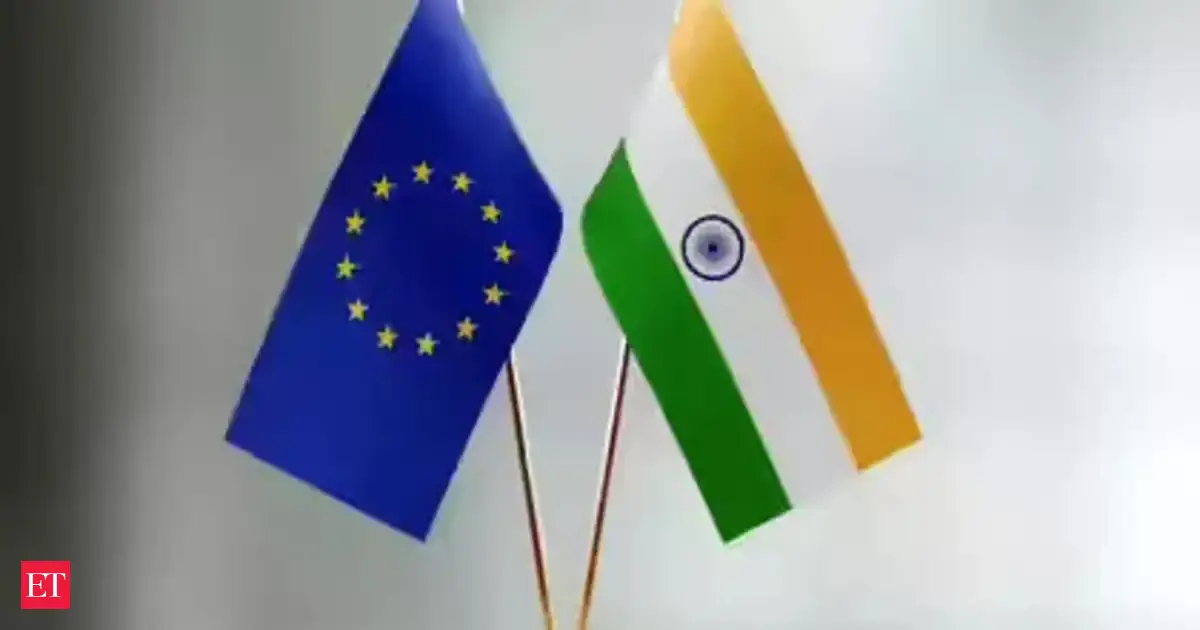
A proposed Free Trade Agreement (FTA) is under discussion between India and the European Union (EU).
GK and monthly revision
India, EU FTA to help boost apparel exports: AEPC
A proposed Free Trade Agreement (FTA) between India and the European Union (EU) is poised to significantly boost India's apparel exports. This pact offers the garment sector crucial zero-duty market access in the EU, a major development for the economy. It is expected to drive employment, support small businesses, and enhance India's global standing in apparel manufacturing, making it a key topic for economic policy questions in competitive exams.
Revision structure
Monthly events and exam calendar context
Static GK and one-liner notes
Quiz and mock-test revision path
Key points
Exam-ready takeaways
The Apparel Export Promotion Council (AEPC) stated this FTA will significantly boost India's apparel exports.
The agreement promises the Indian garment sector zero-duty market access in the European Union.
The FTA is expected to drive employment generation and support small businesses within India.
It aims to enhance India's global standing and competitiveness in apparel manufacturing.
Detailed analysis
Full exam-oriented breakdown
The proposed Free Trade Agreement (FTA) between India and the European Union (EU) represents a pivotal moment for India's external trade policy, particularly for its burgeoning apparel sector. This development is not merely a transactional agreement but a strategic move aimed at bolstering India's economic resilience, generating employment, and enhancing its global manufacturing footprint. **The Journey Towards an FTA: A Historical Perspective** India and the EU, two of the world's largest economies and democratic entities, have a long-standing relationship. Discussions for a comprehensive Broad-based Trade and Investment Agreement (BTIA) began way back in 2007, encompassing trade in goods, services, investment, and intellectual property rights. However, these negotiations were suspended in 2013 due to significant differences on key issues such as market access for automobiles, wines and spirits, and data security. After nearly a decade, both sides agreed to resume negotiations in June 2022, signaling a renewed commitment to a deeper economic partnership. This resumption was driven by a shared desire to diversify supply chains, reduce dependencies, and strengthen strategic autonomy, especially in the wake of global geopolitical shifts and the COVID-19 pandemic. **What's on the Table: Zero-Duty Access for Apparel** The core benefit highlighted by the Apparel Export Promotion Council (AEPC) is the promise of 'zero-duty market access' for Indian garment exports to the EU. Currently, Indian apparel exports face a tariff disadvantage, typically ranging from 9.6% to 12%, compared to competitors like Bangladesh, Vietnam, and Pakistan, which enjoy duty-free access under various preferential trade schemes (e.g., EU's 'Everything But Arms' initiative for LDCs, or specific FTAs). Eliminating these duties would immediately make Indian garments more competitive on price, allowing them to capture a larger share of the lucrative EU market, which is one of the world's largest importers of textiles and apparel. **Key Stakeholders and Their Interests** On the Indian side, key stakeholders include the **Government of India** (Ministry of Commerce & Industry, Ministry of Textiles), which aims to boost exports, attract investment, and create jobs. The **Apparel Export Promotion Council (AEPC)** acts as a crucial advocate for the industry, articulating its needs and potential gains. **Indian textile and apparel manufacturers**, from large integrated mills to small and medium enterprises (MSMEs), stand to gain significantly from increased orders and market access. The **millions of workers** employed in this labour-intensive sector, particularly women in rural and semi-urban areas, are also direct beneficiaries through job creation and improved livelihoods. On the EU side, the **European Commission** leads the negotiations on behalf of its 27 member states, seeking greater market access for European goods and services in India, protection for intellectual property, and adherence to environmental and labour standards. European consumers would benefit from a wider array of competitively priced products, while EU textile importers would gain more diverse sourcing options. **Why This Matters Immensely for India** This proposed FTA holds profound significance for India. Economically, a boost in apparel exports will directly contribute to India's GDP, improve its balance of payments by increasing foreign exchange earnings, and attract foreign direct investment into the textile sector. The textile and apparel industry is the second-largest employer in India after agriculture, providing livelihoods to over 45 million people directly and 100 million indirectly. Increased exports will lead to significant **employment generation**, aligning with the Directive Principles of State Policy (DPSP) in the Indian Constitution, specifically **Article 39** (right to an adequate means of livelihood) and **Article 43** (securing a living wage and conditions of work ensuring a decent standard of life, promoting cottage industries). It will particularly empower women, who constitute a large proportion of the workforce in this sector. Furthermore, the FTA will provide a vital impetus to **small businesses and MSMEs**, which form the backbone of India's garment manufacturing. By enhancing India's global standing and competitiveness, it supports national initiatives like 'Make in India' and 'Atmanirbhar Bharat', positioning India as a reliable and high-quality manufacturing hub. The legal framework governing foreign trade in India, primarily the **Foreign Trade (Development and Regulation) Act, 1992**, provides the executive powers to formulate and execute trade policies, making such FTAs crucial instruments. **Future Implications and Broader Themes** The successful conclusion of the India-EU FTA, especially with its initial focus on apparel, could set a precedent for deeper cooperation across other sectors like automobiles, pharmaceuticals, and services. It signifies India's proactive engagement in global trade, moving beyond multilateral forums to bilateral and regional agreements to secure its economic interests. However, challenges remain, including addressing non-tariff barriers (e.g., technical standards, sustainability norms, labor standards) and resolving differences on issues like data protection and intellectual property. From a geopolitical perspective, strengthening economic ties with the EU reinforces India's strategic autonomy and diversification of partnerships amidst evolving global power dynamics. The agreement would also underscore India's commitment to good governance and ease of doing business, as it necessitates aligning with international best practices and regulatory frameworks. In essence, the India-EU FTA, particularly its apparel component, is a strategic imperative that promises to unleash significant economic potential, create jobs, empower vulnerable sections of society, and elevate India's position on the global economic stage.
How to study
Turn news into exam marks
Revise monthly events by exam family instead of reading random updates.
Pair one-liners with mock tests so mistakes become the next revision list.
Keep state job pages, calendar pages and GK packs connected in one path.