

Indian cities currently contribute approximately 60% of the nation's Gross Domestic Product (GDP).
GK and monthly revision
Budget 2026: The future of Indian cities lies beyond metros
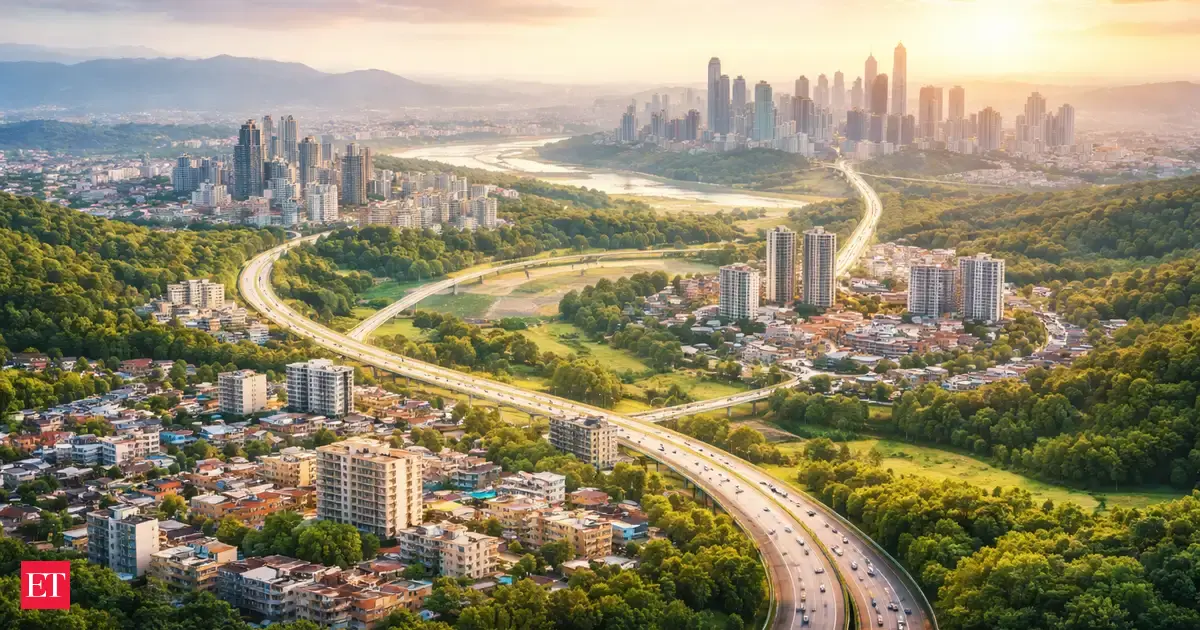
The article highlights the increasing importance of urbanisation in India, with cities currently contributing approximately 60% of the GDP. It emphasizes a policy shift towards guiding urban growth beyond major metros, making the Union Budget 2026 a crucial signal for future urban development strategies. This is significant for understanding India's economic growth drivers and future policy directions in urban planning and infrastructure development.
Revision structure
Monthly events and exam calendar context
Static GK and one-liner notes
Quiz and mock-test revision path
Key points
Exam-ready takeaways
India's urban population is projected to rise sharply, necessitating guided urbanisation policies.
The Union Budget 2026 is identified as a key policy signal for future urban development strategies.
The focus of urbanisation policy is shifting towards guiding growth beyond major metropolitan areas.
The news falls under the 'economy' category, indicating its relevance to national fiscal and development policies.
Detailed analysis
Full exam-oriented breakdown
India is currently undergoing a significant demographic and economic transformation, with urbanisation emerging as a primary driver of growth. The article's premise regarding the Union Budget 2026's potential focus on urban development beyond metros signals a crucial policy recalibration. Historically, India's urbanisation has been largely driven by its major metropolitan areas like Mumbai, Delhi, Bengaluru, and Chennai. These cities have become economic powerhouses, contributing approximately 60% to the nation's Gross Domestic Product (GDP). This growth, however, has often been accompanied by challenges such as severe infrastructure strain, congestion, pollution, housing shortages, and widening socio-economic disparities within these large urban agglomerations. The background to this policy shift lies in the recognition that while metros have been engines of growth, their capacity to absorb further population and economic activity is reaching saturation. Post-independence, urban planning in India, though evolving, often struggled to keep pace with rapid population growth and rural-urban migration. Early initiatives like the Town and Country Planning Organisation (TCPO) and later schemes like the Jawaharlal Nehru National Urban Renewal Mission (JNNURM, launched in 2005), aimed at integrated urban development. More recently, the Smart Cities Mission (launched 2015) and the Atal Mission for Rejuvenation and Urban Transformation (AMRUT, launched 2015) have focused on improving infrastructure and services in selected cities, including many smaller ones. The proposed shift in Budget 2026, as highlighted, suggests a more explicit and strategic push towards developing Tier-2 and Tier-3 cities as new growth centres. Key stakeholders in this urbanisation journey include the **Central Government**, particularly the Ministry of Housing and Urban Affairs, NITI Aayog (for policy formulation and strategic vision), and the Ministry of Finance (for budgetary allocations). **State Governments** play a crucial role in land-use planning, enacting state-specific urban development acts, and implementing central schemes. **Urban Local Bodies (ULBs)**, empowered by the 74th Constitutional Amendment Act of 1992, are at the forefront of local governance, service delivery, and infrastructure maintenance. The **private sector** is an indispensable partner for financing, developing, and operating urban infrastructure and housing. Finally, the **citizens** themselves, as residents, taxpayers, and beneficiaries, are central to the success of urban development initiatives. This policy direction holds immense significance for India. Economically, it promises to diversify growth engines, reducing over-reliance on a few metros and fostering more balanced regional development. By investing in smaller cities, new economic hubs can emerge, attracting industries and creating diverse employment opportunities. Socially, it can lead to improved living standards, better access to amenities, and a reduction in distress migration to already overcrowded metros. Environmentally, planned development in new urban centres can incorporate sustainable practices from the outset, leading to greener cities with better waste management and reduced carbon footprints. This aligns with broader themes of sustainable development and inclusive growth, crucial for India's aspirations to become a developed nation. The constitutional framework for urban governance is primarily provided by the **74th Constitutional Amendment Act, 1992**. This landmark amendment inserted Part IX-A into the Constitution, dealing with Municipalities. Articles 243P to 243ZG define the powers, functions, and composition of ULBs, making urban local self-governance a constitutional mandate. The Twelfth Schedule lists 18 functional areas for municipalities, including urban planning, regulation of land use, water supply, public health, and slum improvement. Furthermore, Article 280 (Finance Commission) mandates recommendations for measures needed to augment the Consolidated Fund of a State to supplement the resources of the Municipalities in the State. This constitutional backing is vital for decentralised urban development. Looking ahead, the future implications are substantial. We can expect increased budgetary allocations and policy impetus towards developing infrastructure in Tier-2 and Tier-3 cities. This includes improved connectivity (roads, railways, airports), digital infrastructure, affordable housing, public transportation, and social infrastructure like hospitals and educational institutions. There will likely be a focus on strengthening the capacity of ULBs through better financial devolution and human resource development. Challenges will persist, including land acquisition, securing adequate and sustainable funding, ensuring inter-agency coordination, and building political will at the local level. However, a guided, inclusive urbanisation strategy, extending beyond metros, is critical for India to harness its demographic dividend effectively and achieve equitable and sustainable growth in the coming decades. This shift will also be crucial for India's commitment to global goals like SDG 11 (Sustainable Cities and Communities).
How to study
Turn news into exam marks
Revise monthly events by exam family instead of reading random updates.
Pair one-liners with mock tests so mistakes become the next revision list.
Keep state job pages, calendar pages and GK packs connected in one path.