

Chief Election Commissioner (CEC) Gyanesh Kumar announced the upcoming rollout of Special Summary Revision (SIR) in remaining States.
GK and monthly revision
SIR rollout in remaining States soon: CEC Gyanesh Kumar
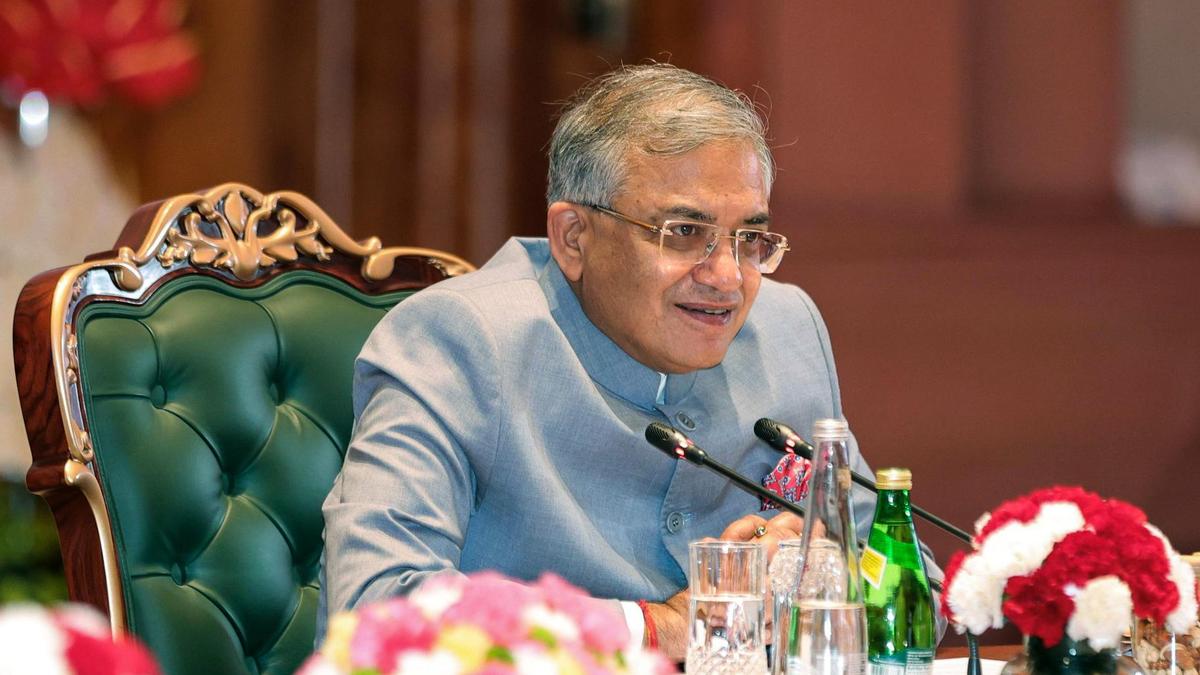
Chief Election Commissioner Gyanesh Kumar announced the imminent rollout of the Special Summary Revision (SIR) in the remaining states, coinciding with the Election Commission's foundation day, celebrated as National Voters' Day. This initiative is vital for updating electoral rolls, ensuring accurate voter data ahead of upcoming elections. Its significance lies in maintaining the integrity of India's democratic process and is crucial for understanding electoral reforms and the Election Commission of India's (ECI) functions for competitive exams.
Revision structure
Monthly events and exam calendar context
Static GK and one-liner notes
Quiz and mock-test revision path
Key points
Exam-ready takeaways
The announcement was made on the eve of the Election Commission of India's (ECI) foundation day.
The Election Commission's foundation day is observed annually as National Voters' Day.
The Special Summary Revision (SIR) exercise is currently underway in 12 States and Union Territories.
Special Summary Revision (SIR) is a process undertaken by the ECI to update and purify electoral rolls.
Detailed analysis
Full exam-oriented breakdown
The announcement by Chief Election Commissioner Gyanesh Kumar regarding the imminent rollout of the Special Summary Revision (SIR) in the remaining states, coinciding with the Election Commission of India's (ECI) foundation day, is a significant development in India's electoral landscape. This day, observed annually as National Voters' Day on January 25th, commemorates the ECI's establishment in 1950 and underscores the importance of every citizen's right to vote and participate in the democratic process. **Background Context and What Happened:** India, a vibrant democracy, relies heavily on accurate and updated electoral rolls to ensure free, fair, and credible elections. The electoral roll is essentially a list of all eligible voters in a constituency. Over time, this list needs to be updated due to various factors: new eligible voters turning 18, deaths, migrations, and changes in residential addresses. To maintain the purity and accuracy of these rolls, the Election Commission of India periodically conducts revision exercises. The Special Summary Revision (SIR) is one such intensive exercise. CEC Gyanesh Kumar's announcement highlights that this revision is already underway smoothly in 12 states and Union Territories, and will soon be extended to all other states, signaling a comprehensive effort to prepare for upcoming electoral challenges, including the crucial Lok Sabha elections. **Key Stakeholders Involved:** At the heart of this process is the **Election Commission of India (ECI)**, an autonomous constitutional body mandated by **Article 324** of the Constitution to superintend, direct, and control the preparation of electoral rolls and the conduct of elections. The **Chief Election Commissioner (CEC)** and Election Commissioners lead this body. Below the ECI, the **Chief Electoral Officers (CEOs)** at the state level, **District Election Officers (DEOs)**, and **Electoral Registration Officers (EROs)** are responsible for implementing the revision process on the ground. These officials, often drawn from the civil services, ensure that applications for inclusion, deletion, or modification are processed diligently. **Political parties** also play a crucial role; they are invited to appoint Booth Level Agents (BLAs) to assist in the verification process, scrutinize draft electoral rolls, and raise objections, thereby acting as a check on the system. Most importantly, the **citizens** themselves are key stakeholders, as their active participation in checking their details and applying for necessary changes is vital for the success of the SIR. **Significance for India:** This exercise holds immense significance for India's democratic fabric. Firstly, it ensures the **integrity of the democratic process**. An accurate electoral roll prevents fraudulent voting, minimizes errors, and builds public trust in the election outcomes. Secondly, it promotes **inclusion**, particularly for young voters who turn 18 and become eligible to vote. The SIR provides a dedicated window for them to register, ensuring their voice is heard. It also helps in updating the rolls for those who have moved or passed away, preventing the names of deceased or shifted voters from remaining on the list, which could otherwise be misused. This meticulous update is critical for upholding the 'one person, one vote' principle. The purity of electoral rolls directly impacts the fairness of elections, which is the bedrock of India's parliamentary democracy. Without accurate rolls, the very foundation of representation can be compromised, leading to disputes and undermining the legitimacy of elected governments. **Historical Context and Constitutional Provisions:** The ECI was established on January 25, 1950, a day before India became a Republic, underscoring the founders' commitment to democratic elections. The legal framework for electoral rolls is primarily laid out in the **Representation of the People Act, 1950**. This Act details the qualifications for voters, the preparation and revision of electoral rolls, and the delimitation of constituencies. The **Representation of the People Act, 1951**, complements this by governing the actual conduct of elections, including administrative machinery, election offences, and election disputes. Periodic revisions, whether special summary or continuous, have been a part of India's electoral history, adapting to population changes and technological advancements to ensure the most current and accurate voter information. **Broader Themes and Future Implications:** The Special Summary Revision is intrinsically linked to broader themes of **good governance** and **citizen participation**. It reflects the ECI's continuous efforts towards electoral reforms aimed at strengthening democracy. In recent years, the ECI has leveraged technology, such as online voter registration and the use of Electronic Photo Identity Cards (EPICs), to make the process more accessible and efficient. The upcoming rollout and completion of SIR across all states are crucial preparatory steps for the next cycle of elections, including the General Election to the Lok Sabha in 2024. A clean and updated electoral roll is fundamental for the smooth conduct of polls, accurate voter turnout data, and efficient resource allocation. Future implications include a more streamlined election process, reduced chances of electoral malpractice, and enhanced credibility of election results, ultimately reinforcing faith in India's democratic institutions. The ECI's proactive approach to electoral roll management demonstrates its commitment to ensuring that every eligible citizen has the opportunity to exercise their fundamental right to vote, thereby fortifying the democratic ethos of the nation.
How to study
Turn news into exam marks
Revise monthly events by exam family instead of reading random updates.
Pair one-liners with mock tests so mistakes become the next revision list.
Keep state job pages, calendar pages and GK packs connected in one path.