

The Republic Day Parade will showcase several 'firsts' in its upcoming edition.
GK and monthly revision
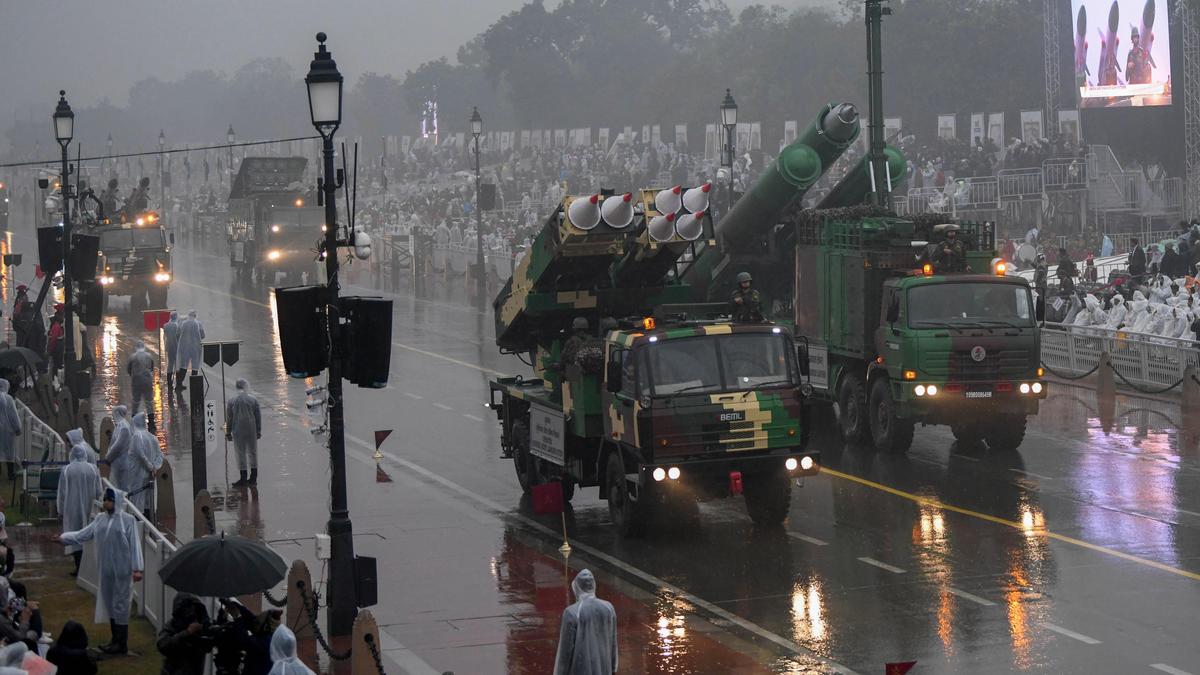
Republic Day Parade to see many firsts: Suryastra system, Bhairav Battalion, Bactrian camels
The upcoming Republic Day Parade is set to feature several 'firsts', including the Suryastra system, Bhairav Battalion, and Bactrian camels, with approximately 6,000 defence personnel participating. This event is significant for competitive exams as it highlights advancements in India's defence capabilities and unique cultural inclusions. Specific details about new inductions and participant numbers are potential MCQ questions, making it crucial for general awareness preparation.
Revision structure
Monthly events and exam calendar context
Static GK and one-liner notes
Quiz and mock-test revision path
Key points
Exam-ready takeaways
A new military system, the Suryastra system, is slated for inclusion in the parade.
The Bhairav Battalion will be among the new units participating in the parade.
Bactrian camels will make their debut appearance in the Republic Day Parade.
Approximately 6,000 defence personnel are expected to be part of the parade.
Detailed analysis
Full exam-oriented breakdown
The Republic Day Parade, held annually on January 26th, commemorates the date in 1950 when the Constitution of India came into effect, establishing India as a sovereign socialist secular democratic republic. It is not merely a ceremonial event but a profound display of India's military prowess, cultural diversity, and national achievements. This grand spectacle on Kartavya Path (formerly Rajpath) in New Delhi serves as a powerful symbol of national unity, pride, and the democratic ethos of the nation. Each year, the parade introduces new elements, reflecting the country's progress and evolving strategic priorities. The upcoming parade, featuring 'firsts' like the Suryastra system, Bhairav Battalion, and Bactrian camels, continues this tradition, offering a fresh perspective on India's defence capabilities and unique cultural tapestry. The inclusion of the 'Suryastra system' is particularly significant, underscoring India's unwavering commitment to indigenous defence production and technological self-reliance under the 'Atmanirbhar Bharat Abhiyan' (Self-Reliant India Campaign). While specific details of the Suryastra system are yet to be fully revealed, its debut suggests a new, advanced weapon system or defence technology developed within India. This aligns with the government's Defence Acquisition Procedure (DAP) 2020, which prioritizes ‘Buy Indian – IDDM’ (Indigenously Designed, Developed and Manufactured) acquisitions. Showcasing such systems on a national platform like the Republic Day Parade not only instills confidence among the citizens but also sends a strong message to potential adversaries about India's growing defence capabilities and its resolve to protect its sovereignty and territorial integrity. The participation of the 'Bhairav Battalion' marks another 'first', highlighting the continuous evolution and specialization within the Indian Armed Forces. Battalions are fundamental operational units, and the introduction of a new one suggests either a new specialized force, a re-organization, or the formal induction of a unit designed to tackle specific contemporary security challenges. This could be related to border security, counter-insurgency operations, or a specialized combat role, reflecting the dynamic nature of India's security landscape and the military's adaptability. The presence of around 6,000 defence personnel further emphasizes the scale and precision of India's military training and discipline, a testament to the dedication of its armed forces. Perhaps one of the most visually striking and culturally unique 'firsts' is the inclusion of 'Bactrian camels'. Unlike the more common Dromedary (single-humped) camels often seen with the Border Security Force (BSF) contingents, Bactrian camels are two-humped and are primarily found in colder, high-altitude desert regions like Ladakh. Their inclusion is symbolic, representing the diversity of India's terrain and the varied roles of its defence personnel across different geographical challenges. It also subtly highlights India's presence and operational capabilities in the challenging terrains of the Himalayas, particularly along its northern borders. This cultural inclusion adds a distinct regional flavour to the national parade, celebrating the vast geographical and cultural spectrum of the nation. Key stakeholders involved in orchestrating this grand event include the Ministry of Defence, which is the primary organizer; the three services of the Indian Armed Forces (Army, Navy, Air Force) and various paramilitary forces, whose personnel form the core of the parade; and organizations like the Defence Research and Development Organisation (DRDO), which are crucial for developing indigenous defence systems like Suryastra. The President of India, as the Supreme Commander of the Armed Forces (Article 53(2)), presides over the event, taking the salute. The Prime Minister, along with other dignitaries, also attends. The event is a massive logistical and ceremonial undertaking that involves multiple government agencies. For India, these 'firsts' matter significantly. They reinforce national pride and unity, showcasing military strength and cultural heritage on a global stage. The emphasis on indigenous systems like Suryastra aligns with India's strategic autonomy, reducing dependence on foreign suppliers and bolstering its defence industrial base. This contributes not only to national security but also to economic growth through job creation and technological advancement. Constitutionally, the Republic Day parade upholds the spirit of the Preamble, celebrating India as a 'Republic' and affirming the fundamental duties of citizens, including to 'uphold and protect the sovereignty, unity and integrity of India' and to 'defend the country and render national service when called upon to do so' (Article 51A). The parade also serves as a diplomatic platform, with foreign heads of state often invited as chief guests, strengthening bilateral ties and enhancing India's soft power. Looking ahead, the future implications are clear: a continued push towards 'Make in India' in defence, leading to greater self-reliance and potential for defence exports. The constant modernization and specialization of military units will ensure India remains prepared for evolving security threats. The Republic Day Parade will continue to be a powerful annual reminder of India's journey as a democratic republic, its military might, and its rich cultural tapestry, evolving to reflect the nation's progress and aspirations.
How to study
Turn news into exam marks
Revise monthly events by exam family instead of reading random updates.
Pair one-liners with mock tests so mistakes become the next revision list.
Keep state job pages, calendar pages and GK packs connected in one path.