

Tamil Nadu's Health and Family Welfare Department received the U.N. Interagency Task Force Awards (UNIATF) for 2024.
GK and monthly revision
Even BJP government has adopted Tamil Nadu’s schemes, says CM Stalin
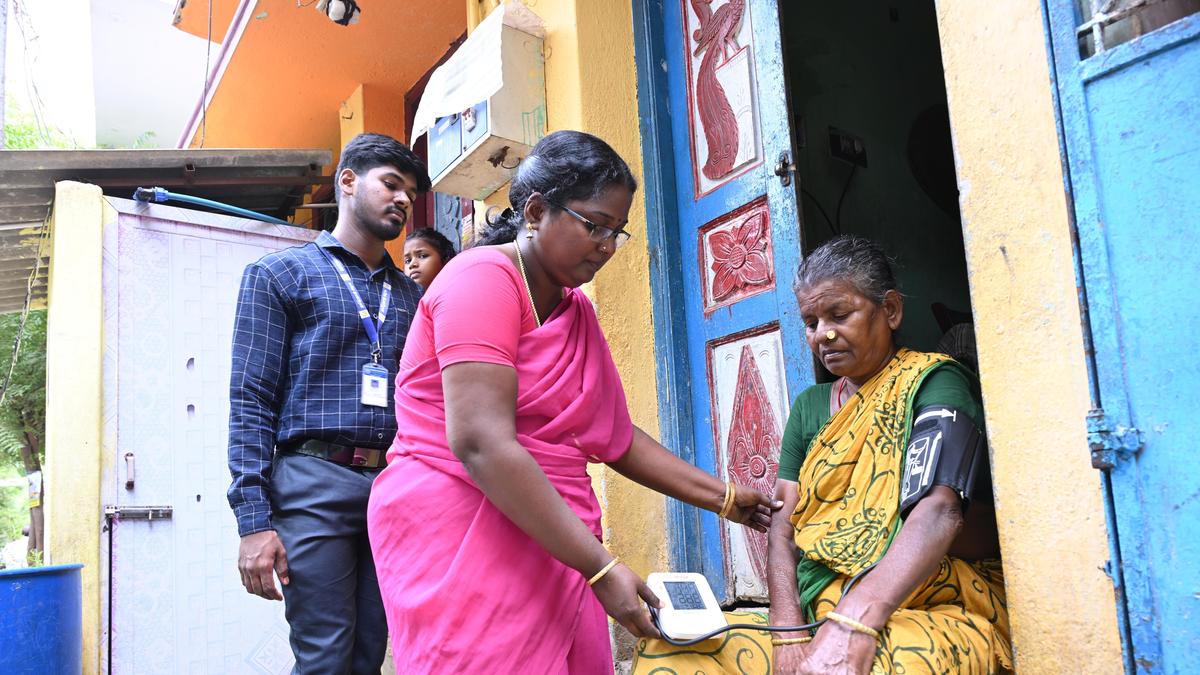
Tamil Nadu's Health and Family Welfare Department has won the prestigious U.N. Interagency Task Force Awards (UNIATF) for 2024 in the Ministries of Health category. This recognition is for its flagship scheme, 'Makkalai Thedi Maruthuvam', highlighting the state's effective healthcare delivery model. This achievement is significant for competitive exams as it showcases international recognition for a state-level health initiative, making it relevant for questions on government schemes and global awards.
Revision structure
Monthly events and exam calendar context
Static GK and one-liner notes
Quiz and mock-test revision path
Key points
Exam-ready takeaways
The award was conferred in the specific category of 'Ministries of Health'.
The flagship scheme recognized is 'Makkalai Thedi Maruthuvam'.
The award acknowledges the state's effective healthcare delivery and public health initiatives.
Chief Minister M.K. Stalin mentioned that even the BJP government has adopted Tamil Nadu's schemes.
Detailed analysis
Full exam-oriented breakdown
The recognition of Tamil Nadu's 'Makkalai Thedi Maruthuvam' (MTM) scheme with the prestigious U.N. Interagency Task Force Awards (UNIATF) for 2024 is a landmark achievement, underscoring the state's innovative approach to public health delivery. This award, specifically in the 'Ministries of Health' category, highlights an effective model that holds significant lessons for India's broader healthcare landscape. **Background Context and What Happened:** Launched in August 2021 by Chief Minister M.K. Stalin, the 'Makkalai Thedi Maruthuvam' (meaning 'Healthcare at People's Doorsteps') scheme was conceived as a proactive response to the growing burden of non-communicable diseases (NCDs) and the need for accessible healthcare, especially in the wake of the COVID-19 pandemic. The scheme aims to bring essential healthcare services directly to the homes of citizens, particularly focusing on the elderly, persons with disabilities, and those suffering from chronic conditions like hypertension, diabetes, and certain cancers. It involves a cadre of healthcare professionals, including nurses, physiotherapists, and community health workers, who conduct doorstep screenings, provide medication refills, offer palliative care, and facilitate referrals to higher-level facilities when necessary. The core idea is to shift from a reactive, hospital-centric model to a proactive, community-based, preventive, and early intervention approach. The UN Interagency Task Force Awards, established to recognize outstanding contributions to NCD prevention and control, have acknowledged MTM's impact and effectiveness, positioning it as a global best practice. **Key Stakeholders Involved:** At the forefront is the **Tamil Nadu Government**, specifically its **Health and Family Welfare Department**, which conceptualized, funded, and meticulously implemented the scheme. The political will and administrative efficiency demonstrated by Chief Minister M.K. Stalin and his team have been crucial. The **healthcare workers** – including village health nurses, auxiliary nurse midwives, and physiotherapists – are the backbone of MTM, directly interacting with beneficiaries and delivering services at their doorsteps. The **beneficiaries** themselves, numbering in the millions, are central to the scheme's success, actively participating in screenings and adhering to treatment protocols. Lastly, the **United Nations Interagency Task Force (UNIATF)**, comprising various UN agencies like WHO, UNDP, and UNICEF, acts as the recognizing body, promoting global efforts against NCDs and identifying successful models like MTM. **Why This Matters for India:** This international recognition is immensely significant for India. Firstly, it provides a validated model for other states grappling with similar healthcare challenges, particularly the rising prevalence of NCDs which account for a substantial portion of mortality and morbidity in India. CM Stalin's statement about the BJP government adopting Tamil Nadu's schemes, while political, underscores the replicability and perceived effectiveness of such initiatives. Secondly, MTM strengthens India's commitment to **comprehensive primary healthcare**, aligning with the vision of the National Health Policy 2017 and the Ayushman Bharat Health and Wellness Centres (AB-HWCs). By decentralizing healthcare, it reduces the burden on tertiary hospitals and makes healthcare more equitable and accessible. Thirdly, it burnishes India's image on the global stage as a nation capable of developing and implementing effective, large-scale public health interventions, contributing positively to its soft power and demonstrating progress towards Sustainable Development Goal 3 (Good Health and Well-being). **Constitutional and Policy References:** Public health and sanitation fall under the **State List** (Entry 6) of the Seventh Schedule of the Indian Constitution, giving states primary responsibility for healthcare delivery. However, the Union government also plays a crucial role in policy formulation and funding. The MTM scheme deeply resonates with the **Directive Principles of State Policy (DPSP)**, particularly **Article 47**, which mandates the State to raise the level of nutrition and the standard of living and to improve public health. Furthermore, the scheme implicitly upholds the spirit of **Article 21 (Right to Life)**, which various Supreme Court judgments have interpreted to include the right to health. Nationally, MTM complements initiatives like the **National Health Mission (NHM)**, which aims to provide accessible, affordable, and quality healthcare, and the **Ayushman Bharat Pradhan Mantri Jan Arogya Yojana (PMJAY)**, by strengthening the preventive and primary care aspects at the community level. **Future Implications:** The success of MTM could serve as a blueprint for scaling up doorstep healthcare services across India. It might encourage greater investment in primary and preventive care, shifting focus from curative to proactive health management. The scheme's data-driven approach could also inform future policy decisions, leading to more targeted interventions for specific disease burdens. Furthermore, such successful state-led initiatives reinforce the principle of cooperative federalism, where states innovate and share best practices, contributing to national development goals. The international recognition could also attract further global partnerships or funding for similar health initiatives in India, ultimately leading to improved health outcomes and a more resilient healthcare system for the country.
How to study
Turn news into exam marks
Revise monthly events by exam family instead of reading random updates.
Pair one-liners with mock tests so mistakes become the next revision list.
Keep state job pages, calendar pages and GK packs connected in one path.