

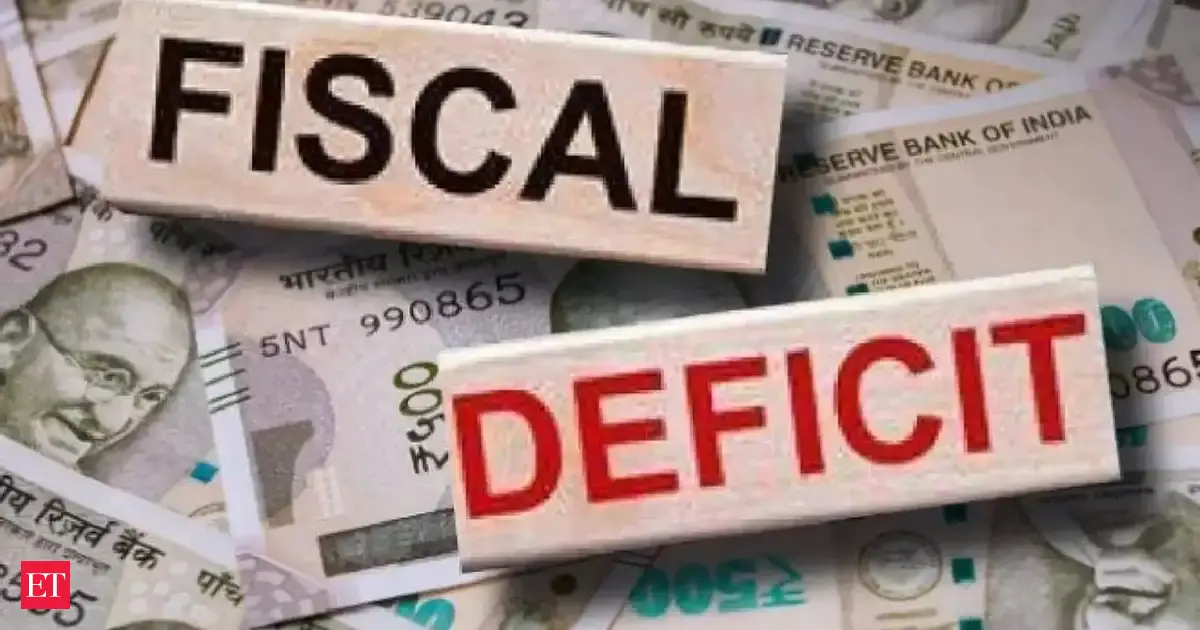
India's states' consolidated fiscal deficit widened to 3.3% of GDP in Fiscal Year 2025 (FY25).
GK and monthly revision
States' consolidated fiscal deficit widens 0.3 pc to 3.3 per cent in FY25: RBI
India's states' consolidated fiscal deficit is projected to widen to 3.3% of GDP in Fiscal Year 2025 (FY25), an increase of 0.3%. This expansion is primarily due to increased state borrowing under a central government scheme aimed at boosting capital investment. This trend highlights states' continued focus on capital expenditure, which is budgeted at 3.2% of GDP for FY26, impacting India's overall fiscal health and economic growth trajectory.
Revision structure
Monthly events and exam calendar context
Static GK and one-liner notes
Quiz and mock-test revision path
Key points
Exam-ready takeaways
The fiscal deficit saw an increase of 0.3 percentage points in FY25 compared to the previous period.
The widening deficit is attributed to states borrowing more under a central government scheme for capital investment.
Capital expenditure for states is budgeted at 3.2% of GDP in Fiscal Year 2026 (FY26).
This assessment regarding states' fiscal health and deficit was reported by the Reserve Bank of India (RBI).
Detailed analysis
Full exam-oriented breakdown
India's states play a pivotal role in the nation's economic development, being responsible for a significant portion of public expenditure, particularly in crucial sectors like health, education, and infrastructure. Understanding their fiscal health is paramount for assessing India's overall economic stability and growth trajectory. The Reserve Bank of India's (RBI) projection that states' consolidated fiscal deficit will widen to 3.3% of GDP in Fiscal Year 2025 (FY25), an increase of 0.3 percentage points, signals an important shift in fiscal management that warrants detailed examination. The background to this development lies in a concerted effort by both the central and state governments to boost capital expenditure. Capital expenditure, often referred to as CapEx, involves investments in assets like roads, bridges, hospitals, and educational institutions. These investments are crucial for creating long-term productive capacity, generating employment, and enhancing the economy's supply side, thereby fostering sustainable economic growth. Following the economic slowdown caused by the COVID-19 pandemic, there has been a strong push to revive growth, with capital expenditure identified as a key multiplier. The central government introduced schemes, such as the 'Scheme for Special Assistance to States for Capital Investment,' to incentivize states to increase their CapEx. This scheme provides interest-free loans to states for 50 years, specifically for capital projects, thereby easing their borrowing burden for such investments while encouraging them to take on more. The article highlights that the widening deficit is primarily due to states borrowing more under this central government scheme, with capital expenditure budgeted at 3.2% of GDP in FY26, indicating a continued focus. Key stakeholders in this fiscal landscape include the **States** themselves, who are the primary actors incurring these deficits and undertaking the capital investments. Their fiscal prudence and effective utilization of borrowed funds directly impact the quality of infrastructure and public services. The **Central Government** acts as a facilitator and a major policy driver, designing schemes like the capital investment assistance program to guide states' spending in alignment with national economic objectives. The **Reserve Bank of India (RBI)** is another critical stakeholder, serving as the nation's central bank. Its role extends beyond monetary policy to include assessing fiscal health, providing financial stability reports, and advising on macroeconomic trends. The RBI's projections are crucial for policymakers and market participants alike. Furthermore, **Finance Commissions**, constitutionally mandated bodies under Article 280, play a vital role by recommending the distribution of taxes between the Union and the States and the principles governing grants-in-aid to the States, thereby influencing their revenue streams and fiscal capacity. This widening deficit holds significant implications for India. Economically, while increased capital expenditure is beneficial for long-term growth, a widening fiscal deficit can lead to higher public debt. If not managed prudently, this could crowd out private investment by increasing interest rates, leading to inflationary pressures, and potentially impacting India's sovereign credit rating. Politically, it underscores the dynamics of fiscal federalism, where the Centre influences state spending patterns through schemes and financial incentives. Socially, well-executed capital projects can improve public services and infrastructure, directly benefiting citizens, but poorly managed projects or excessive debt could lead to future austerity measures. Historically, India has grappled with fiscal discipline, leading to the enactment of the Fiscal Responsibility and Budget Management (FRBM) Act in 2003, which aimed to bring down fiscal deficits. States also adopted their own FRBM-like legislations to ensure fiscal prudence. However, events like the global financial crisis and the pandemic have necessitated deviations from these targets, highlighting the need for flexibility while maintaining a long-term commitment to fiscal health. Several constitutional provisions and policies are directly relevant. **Article 293** of the Indian Constitution governs the borrowing powers of states, requiring them to obtain the consent of the Central Government if they owe outstanding loans to the Centre or have received a guarantee from the Centre. This provision gives the Union government significant control over states' borrowing. The aforementioned **Article 280** establishes the Finance Commission, which periodically reviews Centre-state financial relations. The recommendations of the 15th Finance Commission, for instance, set out specific borrowing limits and conditions for states. The 'Scheme for Special Assistance to States for Capital Investment' is a key policy instrument currently driving this trend. The overall impact on India's macroeconomic stability and the balance between growth-oriented spending and fiscal prudence will be crucial. Looking ahead, the future implications are multi-faceted. While the immediate boost to capital expenditure is positive for economic growth, states must ensure efficient and timely execution of projects to realize the intended benefits. The increased debt burden needs careful monitoring to ensure debt sustainability. The upcoming 16th Finance Commission will likely have to deliberate on the evolving fiscal landscape of states, including their debt levels and revenue requirements, especially in the post-GST compensation era. The balance between allowing states fiscal space for development and ensuring overall macroeconomic stability will remain a critical challenge for India's policymakers. The effectiveness of this strategy will be judged by its ability to translate increased borrowing into tangible, productive assets that drive sustained economic growth without compromising long-term fiscal health.
How to study
Turn news into exam marks
Revise monthly events by exam family instead of reading random updates.
Pair one-liners with mock tests so mistakes become the next revision list.
Keep state job pages, calendar pages and GK packs connected in one path.