

The gag order was issued by the Madras High Court.
GK and monthly revision
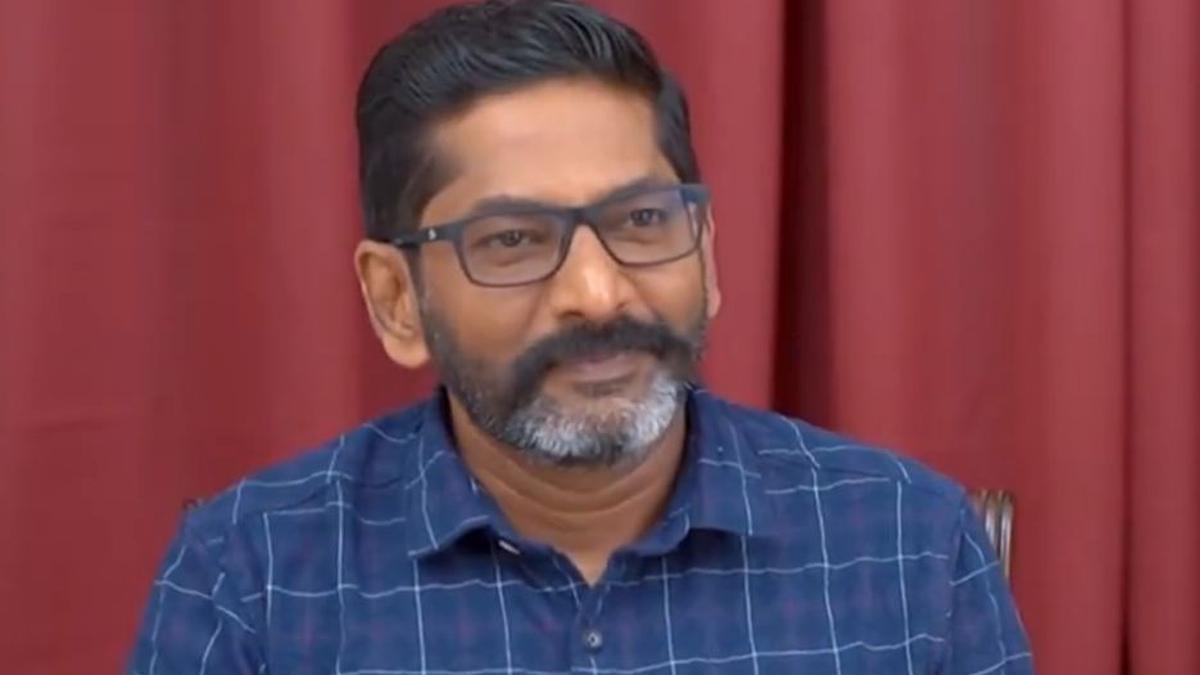
Madras High Court imposes gag order against ‘Savukku’ Shankar
The Madras High Court has imposed a gag order on 'Savukku' Shankar, prohibiting him from making any statements or comments regarding criminal cases pending against him across print, electronic, and social media. This judicial directive is significant for competitive exams as it highlights the judiciary's power to balance freedom of speech (Article 19(1)(a)) with the imperative of upholding the integrity of judicial proceedings and preventing prejudice in ongoing legal matters. It underscores the limitations on free expression in specific contexts.
Revision structure
Monthly events and exam calendar context
Static GK and one-liner notes
Quiz and mock-test revision path
Key points
Exam-ready takeaways
The directive was imposed against an individual identified as 'Savukku' Shankar.
The order specifically prohibits comments on criminal cases pending against 'Savukku' Shankar.
The restriction applies to all forums, including print, electronic, and social media.
This judicial action highlights the balance between freedom of speech (Article 19(1)(a)) and the administration of justice.
Detailed analysis
Full exam-oriented breakdown
The Madras High Court's recent imposition of a gag order against 'Savukku' Shankar, prohibiting him from commenting on criminal cases pending against him across all media platforms, is a crucial development that underscores the delicate balance between fundamental rights and the integrity of judicial processes in India. This incident offers a rich case study for competitive exam aspirants to understand the interplay of constitutional provisions, judicial powers, and media freedom. **Background Context and 'Savukku' Shankar:** 'Savukku' Shankar, whose real name is A. Shankar, is a prominent figure known for his critical and often controversial commentary on political affairs, bureaucracy, and the judiciary in Tamil Nadu. He gained initial prominence as a whistleblower, allegedly leaking details of corruption, and later established himself as an independent journalist and political commentator. Over the years, Shankar has faced numerous legal challenges, including defamation suits and contempt of court proceedings, stemming from his outspoken nature and strong allegations against public figures and institutions. His history includes convictions for contempt of court, demonstrating a pattern of judicial scrutiny over his public statements. The current gag order arises from a context where his comments about ongoing criminal cases are perceived by the judiciary as potentially prejudicing the proceedings or undermining public trust in the justice system. **The Madras High Court's Directive:** What transpired was a direct judicial intervention by the Madras High Court. The court issued an injunction, effectively a gag order, preventing 'Savukku' Shankar from making any statements or comments, whether oral or written, concerning the criminal cases pending against him. The scope of this prohibition is broad, covering print media, electronic media, and social media platforms. The court's rationale typically revolves around preventing the dissemination of information that could influence public opinion, tamper with witnesses, or otherwise impede a fair trial. Such orders are generally issued when the court perceives a clear and present danger to the administration of justice. **Key Stakeholders Involved:** 1. **The Madras High Court:** As the judicial authority, it is the primary stakeholder, exercising its inherent powers as a 'Court of Record' (Article 215 of the Constitution) and its powers under the Contempt of Courts Act, 1971, to ensure the fair and impartial administration of justice. Its role is to protect the judicial process from external interference and maintain its dignity. 2. **'Savukku' Shankar:** The individual against whom the order is issued. His interest lies in exercising his fundamental right to freedom of speech and expression (Article 19(1)(a)) and potentially defending himself publicly against allegations. However, this right is subject to reasonable restrictions. 3. **The Public/Media:** The broader public and media organizations are also stakeholders, as such orders can be seen as impinging on the public's right to information and media freedom. The media plays a crucial role in reporting on legal proceedings, but this role must be balanced with the need for fair trials. **Why This Matters for India:** This incident is highly significant for India as it highlights a perpetual tension at the heart of democratic governance: the balance between individual liberties, particularly freedom of speech, and the imperative of maintaining the sanctity and efficiency of judicial processes. Article 19(1)(a) of the Indian Constitution guarantees freedom of speech and expression, but Article 19(2) explicitly allows for 'reasonable restrictions' on this right in the interests of, among other things, 'contempt of court,' 'defamation,' and 'public order.' The gag order against Shankar falls squarely within this framework. It underscores that while free speech is vital for a vibrant democracy, it is not absolute and cannot be exercised in a manner that prejudices ongoing legal proceedings or undermines the authority of the courts. This case also brings to the fore the 'sub judice' rule, a legal principle that prohibits public discussion of matters currently under judicial consideration to prevent prejudice to a fair trial. For India, this matters because it impacts public discourse, especially on social media, concerning legal matters and the conduct of public figures. **Historical Context and Broader Themes:** The concept of contempt of court has deep historical roots, aimed at protecting the judiciary from unwarranted attacks and ensuring that justice is administered without fear or favour. The Contempt of Courts Act, 1971, codified the law relating to contempt in India, distinguishing between civil and criminal contempt. Criminal contempt includes acts that scandalize or tend to scandalize, or lower or tend to lower the authority of any court; or prejudice, or interfere or tend to interfere with the due course of any judicial proceeding. Historically, Indian courts have often used contempt powers to curb speech deemed to be interfering with justice, especially in high-profile cases. This case connects to broader themes of media ethics, judicial activism versus judicial restraint, and the evolving landscape of digital media where information spreads rapidly, often without verification, posing new challenges to judicial administration. **Future Implications:** This gag order could set a precedent for how courts deal with outspoken commentators and social media influencers who comment on ongoing legal cases. It reinforces the judiciary's power to regulate public discourse when it directly impacts judicial proceedings. In the future, we might see more such orders, particularly as social media continues to be a primary forum for public opinion formation. This could lead to increased caution among commentators, journalists, and the public when discussing sub judice matters. It also prompts a debate on the scope of 'reasonable restrictions' under Article 19(2) and whether such orders might be perceived as stifling legitimate criticism or investigative journalism. The long-term implication is a continuous negotiation between the right to free expression and the fundamental right to a fair trial, ensuring that neither is unduly compromised in the digital age. It emphasizes the need for responsible reporting and commentary, particularly when legal matters are involved.
How to study
Turn news into exam marks
Revise monthly events by exam family instead of reading random updates.
Pair one-liners with mock tests so mistakes become the next revision list.
Keep state job pages, calendar pages and GK packs connected in one path.